Bambu Lab patents a rapid assembly system for 3D printers
Shenzhen Tuozhu Technology, the company behind the Bambu Lab brand, has filed a patent application for a new method of assembling 3D printers. The system aims to simplify assembly and reduce shipping costs.
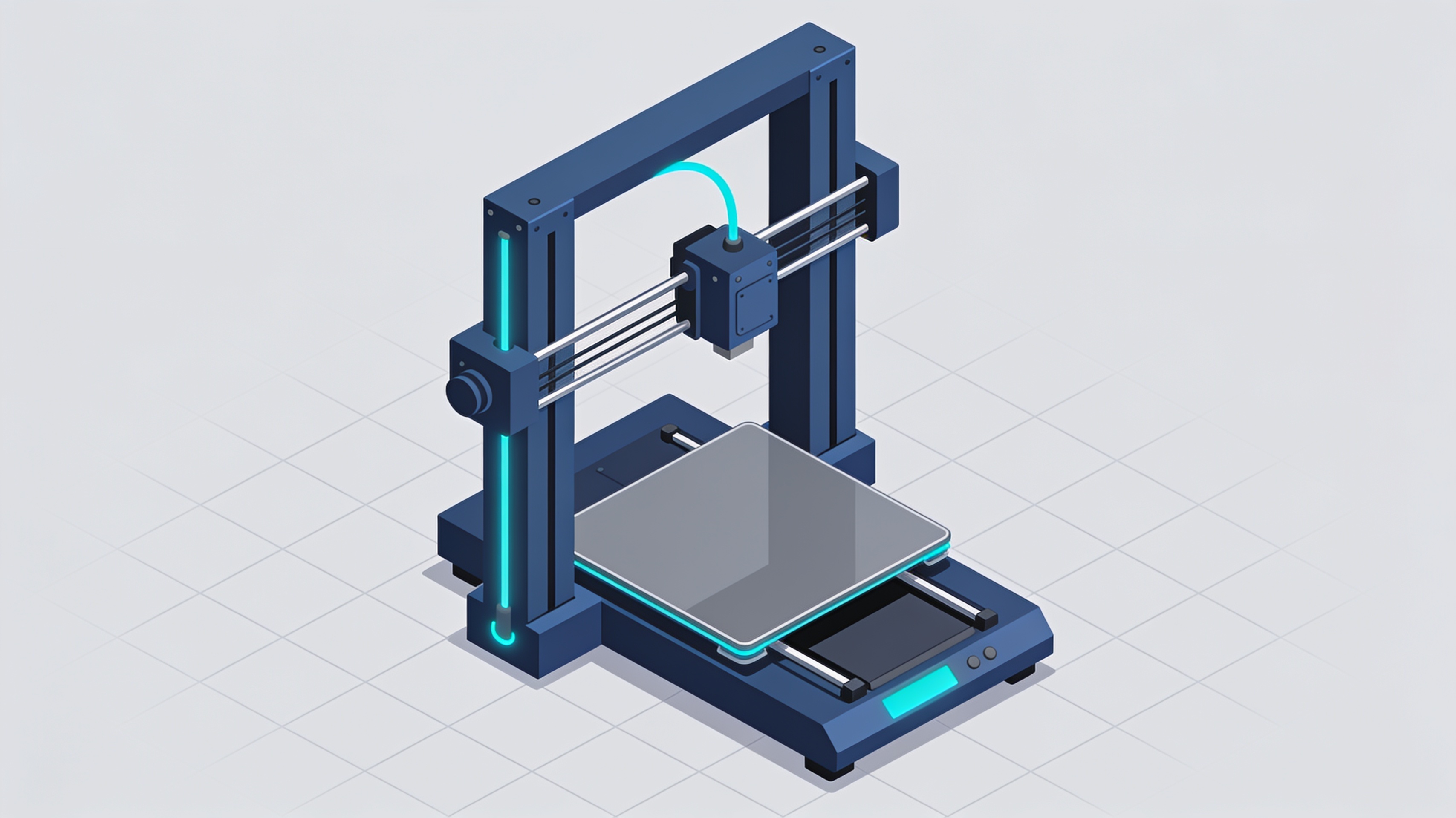
Application CN122422127A describes a 3D printer built around two vertical columns, a mounting seat, a base, and a print platform that slides into the rear of the base. L’innovazione potrebbe tradursi in risparmi significativi per l’azienda e in una migliore esperienza per gli utenti.
A modular design to reduce time and costs
The patent focuses on the machine’s assembly method, with the aim of simplifying both factory production and final assembly by the operator.
The patent drawing shows a closed or semi-closed Cartesian FFF configuration. Two vertical uprights support an upper gantry, while the base contains the lower structure and the print platform.
The platform is designed to slide into position from the rear. This approach eliminates the need for the customer to connect components under or inside the machine during initial assembly.
- Sliding print platform that inserts from the rear
- Two vertical columns with overhead gantry
- Modular design for simplified assembly
- Possible reduction in shipping and packaging costs
The competitive context of assembly
The assembly of desktop 3D printers has become a crucial competitive factor, with manufacturers seeking to reduce setup times to attract new users.
Many machines still arrive as kits or require significant setup. Other models have progressively shifted toward pre-assembled systems that can be unpacked, calibrated, and put online quickly.
Bambu Lab has been one of the companies pushing in this direction. The goal is to attract beginner buyers who do not want to deal with the complexity of building a 3D printer from scratch.
A sliding platform connection could further simplify the final assembly sequence. The manufacturer could ship a more complete base and have the platform attach through a precision mechanical interface.
Advantages for production and logistics
In addition to benefits for the end user, the modular design could offer significant advantages in the production and distribution phase.
An architecture with a modular platform and base could facilitate final assembly in the factory. It could also reduce packaging complexity or allow a common frame to support different printer configurations.
A design that reduces assembly time both in the factory and after delivery can simultaneously improve costs and the first-use experience. For a company that produces high volumes, even small savings per unit can translate into significant figures.
Filing a patent does not confirm that Bambu Lab will actually release a machine with this exact configuration. Companies file patents for possible product directions, defensive coverage, and production ideas that may never become visible in a commercial system.
Future perspectives
With the increasing availability of higher print speeds, other aspects of the user experience are becoming competitive differentiators. Assembly and initial setup represent the first point of contact between the user and the machine.
A system that minimizes initial frustration and reduces the time needed for the first print can significantly influence product perception. This is particularly relevant for the consumer market and first-time users.
It remains to be seen whether and when this patented technology will be implemented in commercial products. However, the patent filing clearly indicates Bambu Lab's strategic direction towards greater assembly simplicity and potential operational cost optimizations.
article written with the help of artificial intelligence systems
Q&A
Who filed the patent for the new assembly system?
The patent was filed by Shenzhen Tuozhu Technology, the company behind the Bambu Lab brand. The specific application is identified by code CN122422127A.
How does the print bed insertion mechanism work?
The print bed is designed to slide into position from the rear of the printer base. This eliminates the need to connect components underneath or inside the machine during assembly.
What are the main logistical advantages of this modular design?
The modular design aims to simplify factory production and significantly reduce shipping and packaging costs. It also allows shipping a more complete base, reducing final assembly complexity.
What mechanical configuration does the patent drawing describe?
The patent illustrates a Cartesian FFF configuration, enclosed or semi-enclosed, supported by two vertical pillars and an upper gantry. The lower structure is integrated into the base housing the sliding bed.
Why has rapid assembly become a crucial competitive factor?
Manufacturers seek to reduce setup times to attract beginner users who want to avoid the complexity of building a printer from scratch. Pre-assembled systems enable quick calibration and online deployment.