Come costruire un’economia industriale in 3D?
How to build a resilient and sovereign industrial economy? The example of Roboze's expansion in Saudi Arabia offers a concrete plan based on technology, local materials, and skills development.
Roboze enters the SABIC ecosystem to introduce advanced manufacturing technologies in the Kingdom. The goal is to reduce dependence on global supply chains through local, on-demand production of critical components for aerospace, defense, and energy.
The Italian company is evaluating local production of high-performance materials and investing in the training of Saudi talent to ensure the sustainability and future growth of the industrial ecosystem.
The strategy of technological integration
Roboze brings high-performance 3D printing technologies to the Kingdom for critical sectors, in line with the Saudi industrial vision.
Roboze's entry into SABIC's Home of Innovation™ program represents more than a commercial expansion. It is a model of industrial integration that connects advanced manufacturing technologies, high-performance materials, and local training.
The SABIC program acts as a platform to connect research, market, local companies, and industrial users. Its function is to foster concrete applications in the sectors identified by the Saudi National Industrial Strategy, with a focus on local development and the creation of new production capabilities.
- Aerospace and defense for mission-critical components
- Energy and petrochemical infrastructure
- Mobility and industrial infrastructure
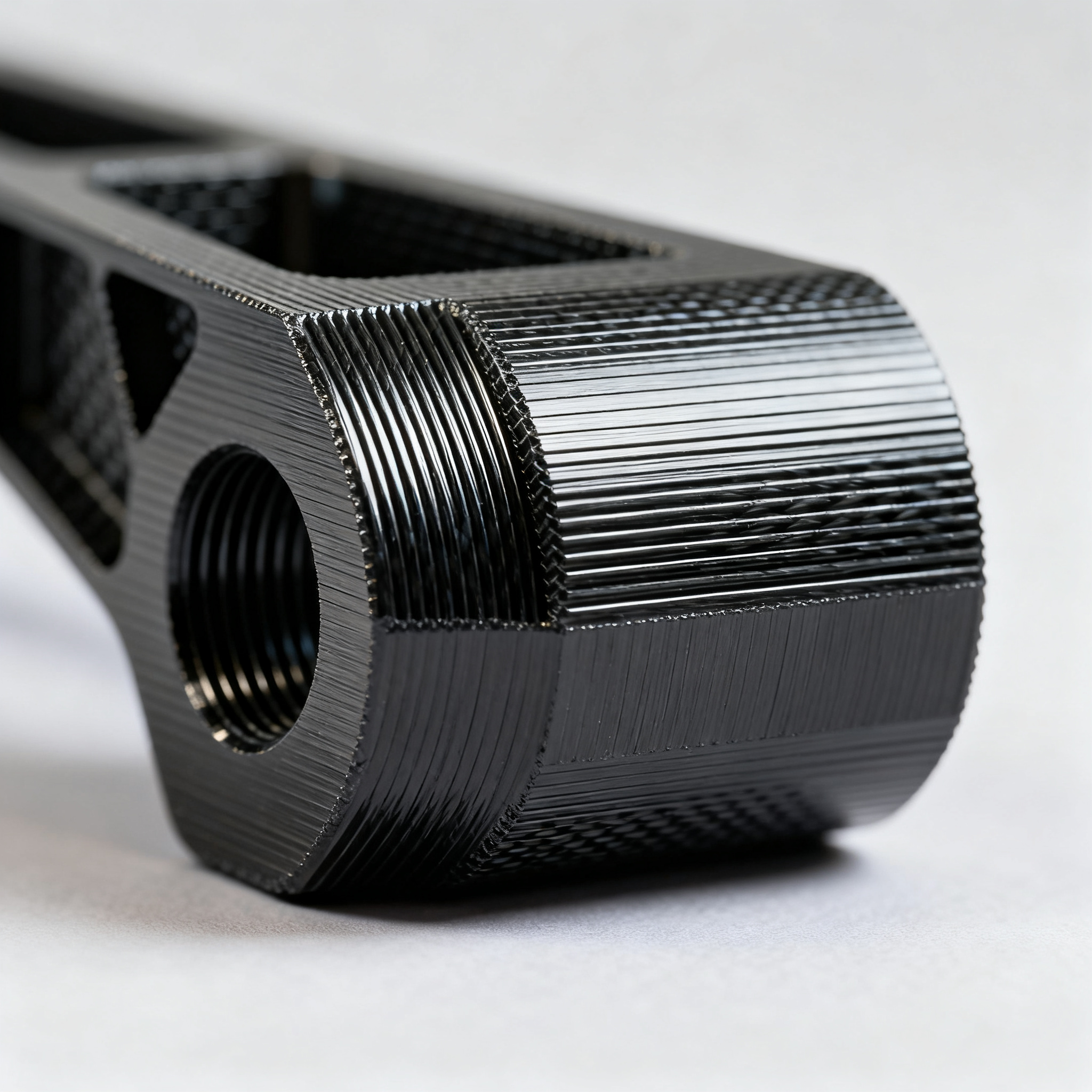
Roboze works on high-performance materials such as PEEK, PEKK, Carbon PEEK, Carbon PA PRO and ULTEM™ 9085. These polymers and composites withstand mechanical loads, high temperatures and aggressive environments and are proposed as an alternative to metal in many industrial applications.
The presence of SABIC makes the project relevant because the Saudi group is one of the major global players in chemicals and materials. Without qualified resins, filaments or pellets, the machine remains confined to limited use.
Distributed production and industrial resilience
The local on-demand production model aims to reduce lead times and improve strategic self-sufficiency.
Roboze's strategy aims to transform supply chains from globally dependent models to digitally distributed production ecosystems, capable of producing mission-critical parts on demand, where and when needed.
For industries such as oil & gas, energy, defense and aerospace, producing close to the point of use reduces downtime and tied-up inventory. Dependence on long logistics chains decreases dramatically.
Distributed production model
- Digitalization of inventories: transformation of physical catalogs into digital databases of printable components.
- On-demand production: local manufacturing of necessary parts, eliminating stock and physical warehouses.
- Component qualification: validation of materials and processes to ensure repeatability and regulatory compliance.
Roboze has already launched initiatives in the Middle East. The collaboration with SLB concerns local production in Saudi Arabia of qualified non-metallic components for the energy sector. The partnership with Immensa covers Saudi Arabia, United Arab Emirates, Kuwait, and other markets in the region.
Roboze has a facility in Riyadh with solutions dedicated to on-demand production of components in the Kingdom. The initiative includes qualification processes, inventory digitalization, and training through the Roboze Academy.
Local human capital development
Training Saudi talents on advanced technologies is essential to make the ecosystem sustainable over time.
An industrial 3D printer alone does not create a supply chain. It requires technicians capable of designing parts, validating materials, defining process parameters, and controlling quality. The training of engineers, operators, and production managers becomes part of the industrial project.
Roboze investe nello sviluppo di talenti locali attraverso programmi dedicati di formazione, qualificazione e trasferimento di conoscenze. L’obiettivo è formare la prossima generazione di ingegneri, tecnici e leader manifatturieri sauditi.
Technology transfer without local skills development creates dependence on external suppliers. Training guarantees operational autonomy and internal innovation capacity, essential elements for true industrial sovereignty.
As stated by Alessio Lorusso, founder and CEO of Roboze: “Manufacturing is becoming a strategic capability for nations. The future belongs to countries capable of producing mission-critical technologies locally, quickly, and autonomously.”
Saudi Arabia is trying to build local industrial skills in various sectors. The goal is to reduce dependence on oil as the only economic lever and increase the weight of manufacturing, logistics, energy, and production technologies.
Conclusion
Roboze's modular and technological approach in Saudi Arabia offers a replicable playbook for building resilient industries. The model integrates advanced production technologies, high-performance materials, and local skills development.
The strategy is not limited to the installation of technologies, but includes material qualification, inventory digitalization, technical training, and building a distributed network of production capabilities. For large industrial groups, the value lies in the entire system, not in the single machine.
Do you want to understand how your company can integrate a similar model? Analyze the synergies between technology and local training to build strategic production capabilities.
article written with the help of artificial intelligence systems
Q&A
What is the main objective of Roboze's entry into the SABIC ecosystem in Saudi Arabia?
The objective is to reduce dependence on global supply chains through local and on-demand production of critical components for the aerospace, defense, and energy sectors. The initiative introduces high-performance 3D printing technologies into the Kingdom, aligning with the Saudi industrial vision of local development and creation of new production capabilities.
What kind of materials does Roboze use and why are they relevant to industry?
Roboze works with high-performance polymers and composites such as PEEK, PEKK, Carbon PEEK, Carbon PA PRO, and ULTEM 9085. These materials withstand mechanical loads, high temperatures, and harsh environments, positioning them as an alternative to metal in many mission-critical industrial applications.
How does the distributed production model promoted by Roboze work?
The model is based on inventory digitalization, transforming physical catalogs into digital databases of printable components, and on local on-demand production that eliminates stock and physical warehouses. It also includes material and process qualification to ensure repeatability and regulatory compliance, drastically reducing dependence on long logistics chains.
Why is the training of local talent considered strategic in Roboze's project?
Training Saudi engineers, operators, and production managers ensures operational autonomy and internal innovation capabilities, avoiding dependence on external suppliers. Without local skills in design, material validation, and quality control, the 3D printer would remain an isolated tool rather than generating a true sustainable industrial chain.
How can Roboze's approach in Saudi Arabia be defined as a 'replicable playbook'?
The modular approach integrates advanced production technologies, high-performance materials, component qualification, inventory digitalization, and local skills development. This complete system, which builds a distributed network of strategic production capabilities, can be adapted to other national contexts to build resilient and sovereign industries.