
Additive Manufacturing in Industry and Commerce: A Revolution in Progress
Introduction to Additive Technologies
Additive manufacturing, commonly known as 3D printing, is undergoing a phase of unprecedented technological maturation, consolidating concrete applications in the industrial world and redefining traditional production paradigms. In 2025, this technology has proven to be much more than a prototyping tool, establishing itself as a strategic solution for production in critical sectors such as defense, aerospace, automotive, and energy.
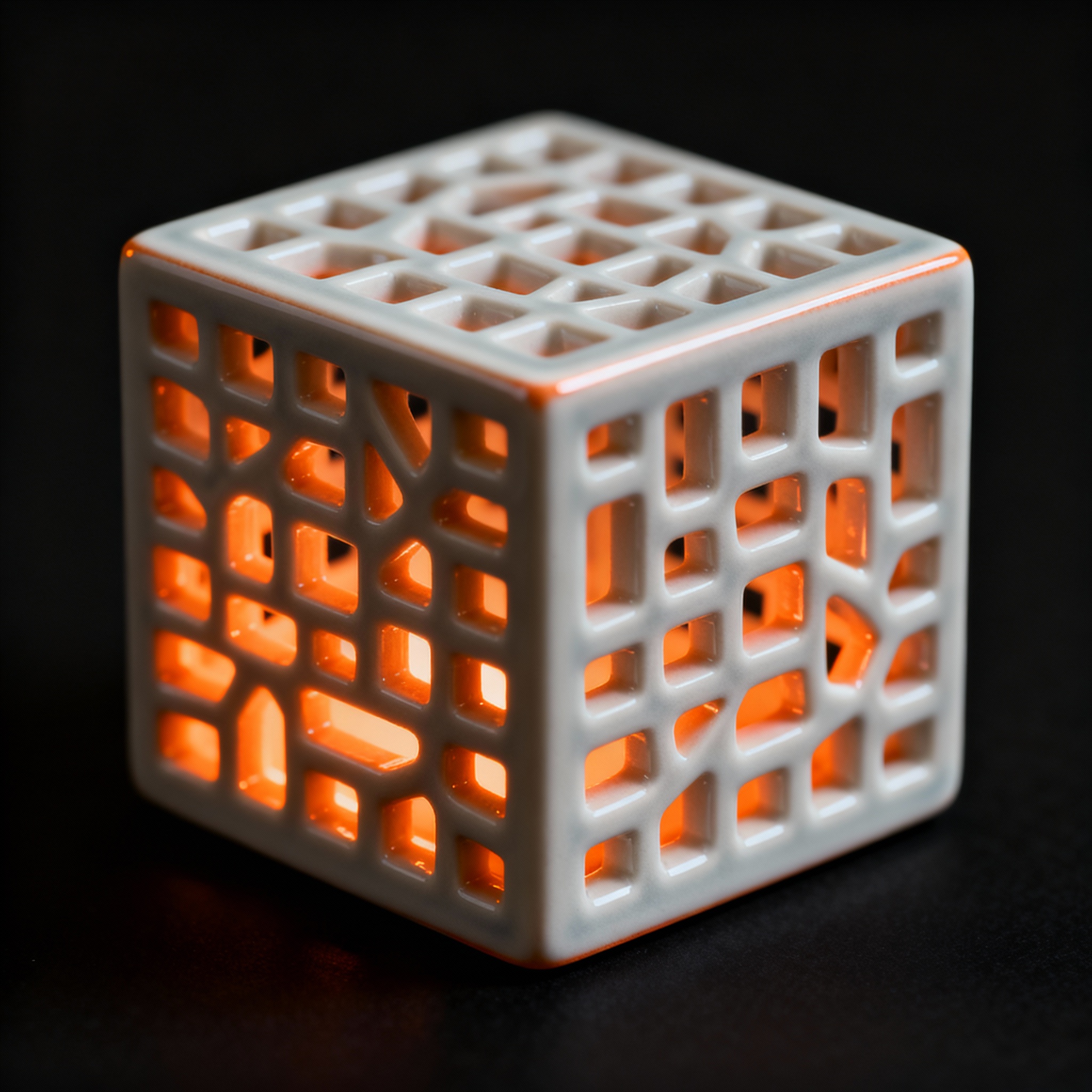
One of the most significant innovations concerns the integration of advanced ceramic materials into additive production. The Catalan Institute of Energy Research (IREC) has inaugurated Merce Lab, the world's first pilot plant dedicated to the production of hydrogen technologies through ceramic 3D printing. This project represents a turning point in the application of additive manufacturing to strategic sectors such as energy, where solid oxide cells (SOC) can operate both as fuel cells and as electrolyzers, offering higher efficiencies than polymer-based technologies.
The production process developed by IREC begins with the preparation of “ceramic inks” that are used to print the SOC cells, which are subsequently subjected to a sintering process at very high temperatures to compact the material and ensure strength and stability. This combination of additive manufacturing and advanced ceramic processes enables the creation of complex geometries that offer superior performance, while reducing material use and enabling lightweight and compact designs.
The growth of ceramic additive manufacturing also offers significant advantages in terms of sustainability. By increasing energy density, these cells are particularly interesting for sectors such as maritime transport, aviation, and large-scale renewable energy storage. For industry, this translates into more efficient devices, with potentially lower costs, estimated by the project at around 800 euros per kilowatt, and a more sustainable production process that avoids the use of materials such as cobalt or nickel.
At the same time, the market has witnessed a growing influence of Asian manufacturers, no longer limited to the desktop segment but also extended to the industrial sector. Companies such as Bambu Lab have demonstrated an extraordinary capacity for commercial penetration, successfully expanding into industrial and educational environments. In 2025, Bambu Lab's influence continued to grow, reflecting broader demand for reliable, intuitive solutions with a strong quality-price ratio.
Industrial Applications of Additive Manufacturing
The hybrid manufacturing sector, which combines 3D printing and CNC machining, is emerging as one of the most promising segments of industrial additive manufacturing. Leading companies such as Meltio, DMG Mori, and Mazak are driving a market worth 3.1 billion dollars, reducing material waste by up to 97% and creating a new standard for industrial production.
This hybrid technology makes it possible to drastically reduce production times: processes that traditionally required 10 weeks can now be completed in just 72 hours. The combination of additive deposition and subtractive machining makes it possible to leverage the advantages of both technologies, creating components with complex geometries while maintaining extremely precise dimensional tolerances.
In the automotive sector, sustainability is becoming a fundamental driver for the adoption of additive manufacturing. The strategic partnership between CNPC Powder and automotive supplier Brose represents a concrete example of circular economy applied to industrial production. This collaboration converts steel scrap from Brose's Chinese production lines into iron-based powders for additive manufacturing.
Using advanced production methods, including AMP and PS spheroidization technologies, CNPC Powder produces metal powders with high sphericity, flowability, stable particle size distribution, low oxygen content, and compliance with international quality standards such as IATF 16949. The closed-loop process reduces dependence on raw materials and helps minimize industrial waste, supporting Brose's environmental, social, and governance (ESG) objectives.
The new Green Steel material, produced entirely from stamping scrap from Brose's pressing plants, maintains the chemical composition and mechanical properties of conventional sheet metal components. This makes it possible to meet machine compatibility requirements while supporting circular economy initiatives.
Brose, a private German company with around 31,000 employees at sixty-eight locations in twenty-four countries, develops and produces vehicle systems including doors, tailgates, seats, and electric motors with power ratings from 200 watts to 14 kilowatts for applications such as steering, thermal management, and e-scooters. The company leverages additive manufacturing to accelerate product development by ensuring that prototypes match series production materials.
In the aerospace sector, the maturity of 3D printing has been particularly evident in the production of engines and other critical components. During 2025, multiple companies conducted tests and validations of rocket engines incorporating 3D-printed parts into operational systems. Examples from New Frontier Aerospace, POLARIS Spaceplanes, AVIO SpA, and Agnikul Cosmos demonstrate that additive manufacturing is now fully integrated into aerospace programs.
Economic Impact and Competitive Advantages
The economic impact of additive manufacturing manifests across multiple dimensions: reduced production costs, accelerated development times, minimized waste, and the creation of new business models.
Hybrid manufacturing represents a paradigmatic example of these advantages. Reducing material waste by up to 97% not only brings direct economic savings but also contributes to environmental sustainability goals that are becoming increasingly critical for corporate competitiveness. The ability to complete production processes in 72 hours instead of 10 weeks enables companies to respond more quickly to market demands and significantly reduce inventory costs.
In the context of the circular economy, the partnership between CNPC Powder and Brose demonstrates how additive manufacturing can transform production waste into valuable resources. This approach not only reduces raw material costs but also creates added value from materials that would otherwise be destined for disposal. Converting stamping scrap into high-quality metal powders represents a replicable model in other industrial sectors.
Innovation in the energy sector, as demonstrated by IREC's Merce Lab project, promises to significantly reduce the costs of hydrogen technologies. With estimated costs of around 800 euros per kilowatt, solid oxide cells produced through additive manufacturing could accelerate the transition to an economy based on clean hydrogen. This has far-reaching economic implications, considering the central role that hydrogen is set to play in decarbonizing sectors that are difficult to electrify.
The growth of Asian manufacturers in the additive manufacturing market is also redefining global competitive dynamics. Companies such as Bambu Lab have demonstrated that it is possible to compete effectively by offering solutions with a strong quality-price ratio, pushing traditional manufacturers to rethink their positioning strategies. This competitive pressure is accelerating innovation and making additive technologies more accessible to a broader audience.
In the defense sector, the formal recognition of additive manufacturing as critical infrastructure by the United States Department of Defense has created new economic opportunities for additive technology suppliers that meet rigorous standards of security, traceability, and certification.
Challenges and Barriers to Adoption
Despite significant progress, the widespread adoption of additive manufacturing in industry still has to face several technical, economic, and regulatory challenges.
One of the main barriers concerns the standardization and certification of processes and materials. In the defense sector, the approval of the National Defense Authorization Act (NDAA) in the United States established for the first time that additive manufacturing is formally recognized as critical infrastructure, subject to clearly defined standards for security, traceability, certification, and scalability. This legislation prohibits the United States Department of Defense from using additive manufacturing systems produced, developed, or connected to entities in countries such as China, Russia, Iran, or North Korea.
Although this regulation is necessary to ensure national security, it also creates complexity for companies that must navigate increasingly stringent regulatory requirements. The need to demonstrate compliance with these standards can represent a significant barrier, especially for small and medium-sized enterprises that may not have the resources to implement the required traceability and certification systems.
In the energy sector, IREC's Merce Lab project highlights the technical challenges associated with producing complex ceramic components. The very high-temperature sintering process requires specialized expertise and extremely precise process controls. The transition from pilot scale to large-scale industrial production represents a significant challenge that will require further investment in research and development.
Material qualification remains an important obstacle. In the case of the partnership between CNPC Powder and Brose, the Green Steel material is still under evaluation for future volume production. This qualification process can take years of testing and validation before recycled materials can be used in safety-critical applications.
Another challenge concerns workforce training. Additive manufacturing requires skills that combine knowledge of materials engineering, computer-aided design, process control, and post-processing. The shortage of qualified personnel can slow the adoption of the technology, especially in traditional sectors where these skills are not yet widespread.
Initial investment costs still represent a barrier, especially for the most advanced technologies. Although the total cost of ownership can be competitive considering long-term operational savings, the initial investment required to purchase high-quality industrial systems can be prohibitive for many companies.
Future Trends and Market Prospects
The future of additive manufacturing in industry and commerce is characterized by several converging trends that promise to further accelerate adoption and innovation.
Hybrid manufacturing will continue to grow as a market segment, with the sector already worth $3.1 billion and showing prospects for significant expansion. The integration of additive and subtractive processes into unified systems represents the natural evolution of industrial production, combining the advantages of both technologies to create more complete and efficient solutions.
In the energy sector, IREC's Merce Lab project represents only the beginning of a broader application of additive manufacturing to hydrogen technologies. With the creation of a future spin-off, Oxhyd Energy, and collaboration with national and international companies, this initiative aims to drive industrialization and serve as a model for democratizing access to clean and sustainable energy. Solid oxide cells produced through ceramic 3D printing are particularly interesting for sectors such as maritime transport, aviation, and large-scale renewable energy storage.
The circular economy will become an increasingly important driver for the adoption of additive manufacturing. The partnership between CNPC Powder and Brose represents a replicable model that transforms production waste into valuable resources. CNPC Powder already has extensive experience in recycling programs, producing materials such as recycled Ti6Al4V Grade 23 100% powders with SCS certification and high-sphericity AlSi10Mg powders. This trend aligns with growing regulatory and market pressure for more sustainable production practices.
In the aerospace sector, the vision of 3D printing in zero gravity remains very much alive. After the first metal 3D printing operation conducted in space by the European Space Agency at the end of 2024, multiple additional tests were conducted during 2025 to determine which materials and processes can work effectively under microgravity conditions. This is a trend set to continue in 2026, according to announcements of projects such as that of Auburn University in the United States, which plans to 3D print semiconductors in zero gravity next year.
The growth of Asian manufacturers will continue to redefine the competitive dynamics of the market. The expansion of companies such as Bambu Lab into industrial and educational environments reflects broader demand for reliable, intuitive solutions with a strong quality-price ratio. This trend is pushing other manufacturers to rethink their positioning strategies and is making additive technologies more accessible.
In the defense sector, the formal recognition of additive manufacturing as critical infrastructure will have a direct impact on technology choices and overall market dynamics. This new regulatory framework confirms that additive manufacturing is now firmly integrated into the defense industrial ecosystem and is no longer seen simply as an experimentation tool.
The construction sector continues to stand out as a growing and increasingly mature application. In 2025, the sector saw a strong push toward more sustainable materials, including recycled mixes and formulations with a lower environmental impact, reflecting the broader global shift toward a circular economy. One construction player that attracted particular attention this year was Caracol, the Italian company specializing in large-scale robotic additive manufacturing, which raised $40 million to accelerate its international expansion, particularly in the United States, the European Union, and the Middle East.
Conclusion: The Future of Industry Is Additive
Additive manufacturing reached a decisive turning point in 2025, definitively moving from the experimentation phase to strategic integration in industrial production processes. Evidence gathered from the most advanced sectors – from energy to automotive, from aerospace to defense – shows that this technology is no longer a future promise, but an operational reality that is redefining the paradigms of modern manufacturing.
The economic advantages are tangible and measurable: waste reduction of up to 97%, production times reduced from weeks to days, transformation of waste into valuable resources through the circular economy. But beyond the immediate economic benefits, additive manufacturing is enabling innovations that were simply impossible with traditional technologies, from hydrogen cells with complex geometries to high-performance aerospace components.
The challenges remain significant – standardization, certification, workforce training, initial investments – but the direction is clear. Industry is investing massively in these technologies, governments are recognizing them as critical infrastructure, and the supplier ecosystem is expanding and diversifying rapidly.
2025 can be described as a period of maturity and adjustment for additive manufacturing, a year in which the industry consolidated concrete applications, diversified its material offerings, and underwent a reconfiguration of the main players. Looking to the future, it is clear that additive manufacturing will continue to evolve toward more complete and customized solutions for industrial needs, consolidating its role as a fundamental pillar of the fourth industrial revolution.
article written with the help of artificial intelligence systems
Q&A
What is the main innovation introduced by the Catalan Institute IREC in the field of ceramic additive manufacturing?
IREC has launched Merce Lab, the world’s first pilot plant that uses ceramic 3D printing to produce solid-oxide cells (SOCs) for hydrogen. SOCs can operate both as fuel cells and as electrolyzers with efficiencies higher than polymer technologies.
How does hybrid manufacturing (3D + CNC) contribute to industrial sustainability?
Hybrid manufacturing cuts material waste by up to 97 % and shortens production lead times from ten weeks to 72 hours. By combining additive deposition and subtractive machining, complex components with extremely tight tolerances are obtained, reducing costs and inventory.
How does the CNPC-Brose partnership create a circular economy loop in the automotive sector?
Steel scrap from Brose production lines in China is converted into high-sphericity iron powders for 3D printing. The resulting Green Steel retains the mechanical properties of traditional sheet metal, reducing dependence on virgin raw materials and industrial waste.
What are the main regulatory barriers to additive manufacturing adoption in the United States?
The NDAA has classified AM as critical infrastructure: it imposes strict standards for security, traceability and certification and prohibits the Department of Defense from using systems linked to China, Russia, Iran or North Korea. This increases complexity, especially for SMEs.
Why does material qualification remain an obstacle to scaling additive manufacturing?
Materials such as Green Steel must undergo years of testing and validation before use in safety-critical applications. In addition, high-temperature ceramic sintering requires specialized skills and precise process controls, slowing the transition from pilot to volume production.
What economic advantage do 3D-printed SOC cells offer over traditional hydrogen technologies?
3D-printed SOC cells cost about €800 per kilowatt, potentially lower than conventional solutions, and use no cobalt or nickel. Their increased power density makes them ideal for maritime transport, aviation and large-scale renewable storage, accelerating the hydrogen transition.


