
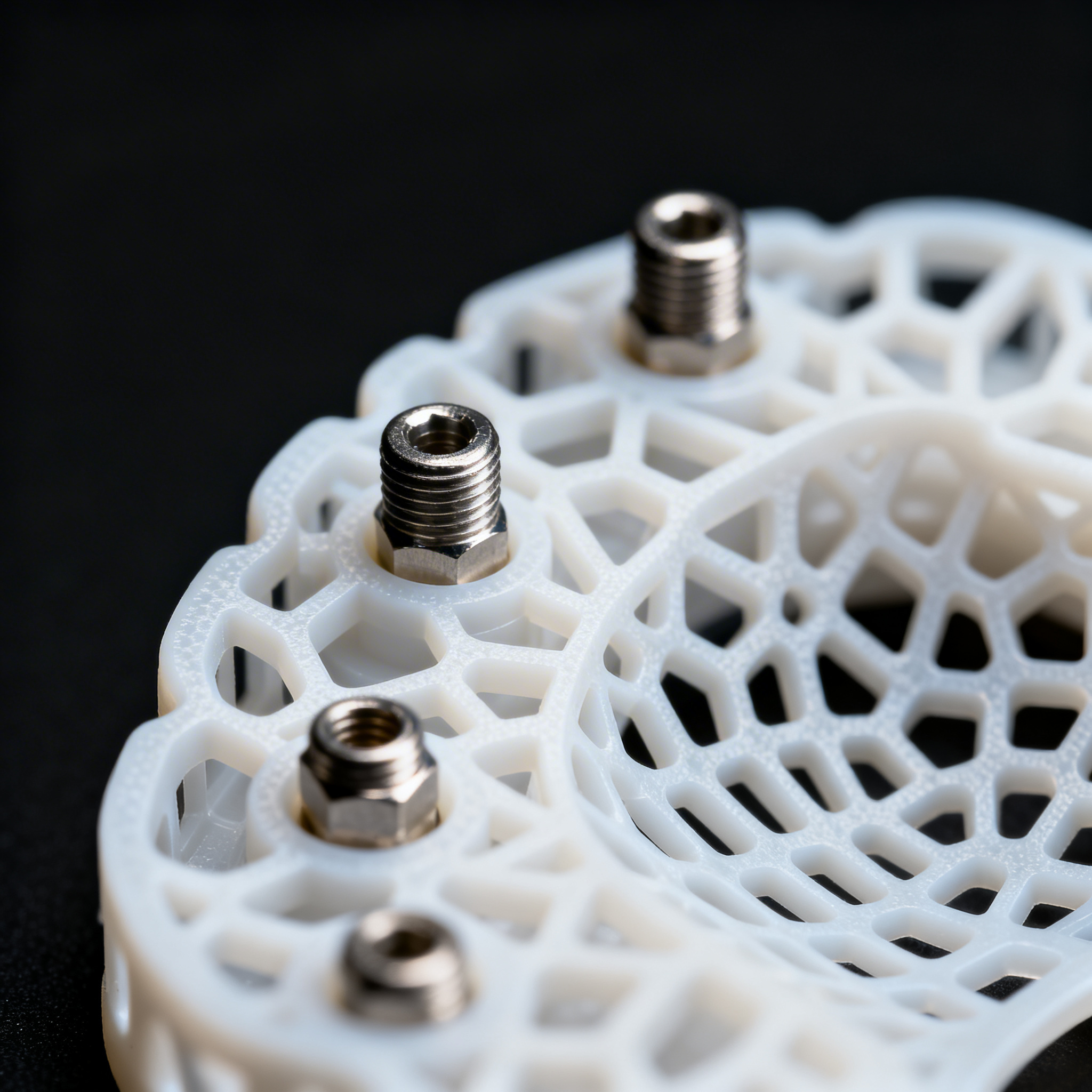
How 3D Printing is Transforming Dentistry: Technologies, Materials, and Clinical Applications
3D printing is revolutionizing dentistry, enabling rapid and customized production of custom-made devices directly in the practice or laboratory, drastically reducing time and costs compared to traditional methods.
The integration of 3D printing into dental workflows represents a technological breakthrough today that is radically transforming the way dental devices are produced. From intraoral scanning to delivery of the final device, the fully digitalized process makes it possible to achieve precise, customized results in record time, overcoming the limitations of conventional techniques such as manual casting and CNC milling.
Digital Workflow in Dentistry: From Scanning to Printing
A fully digitalized workflow makes it possible to obtain precise models and customized devices in record time, simplifying existing processes and improving communication between laboratory and practice.
Digital dentistry is transforming traditional clinical processes. By integrating 3D printing into the laboratory or practice, it is possible to go from scanning to physical model even more quickly and efficiently. The digital workflow simplifies existing processes and enables improved communication between dental laboratory and dental practice.
What once required two weeks can now be completed in about 70 minutes. A patient who needs a crown can undergo intraoral scanning, the device is designed and 3D printed while they wait, and then placed before they leave the practice. Impressions can be captured digitally, manipulated on screen as needed, and then printed within a few hours.
The production of accurate and consistent orthodontic models requires less labor. Devices such as bite splints, appliances, and surgical guides can be created from the provided digital model and then printed for direct use by the patient, increasing patient satisfaction while saving waiting time and chair time.
3D printing technologies used in dentistry
SLA, DLP, and PolyJet technologies stand out for their precision and versatility in the production of dental devices, offering rapid production times, high fitting accuracy, and customization at scale.
Dental laboratories use various additive technologies, including SLA (stereolithography), DLP (digital light processing), and PolyJet to produce highly accurate dental components directly from digital impressions. These technologies offer faster production times, high precision and fit, as well as customization at scale.
For denture bases and try-ins, resin processes such as DLP and SLA dominate discussions today. DLP platforms can nest many arches per build, and some laboratories stack builds to run unattended. PolyJet technology uses multi-material printing to mimic bone, teeth, nerves, and soft tissue, replicating the biomechanical behavior of these structures and providing realistic haptic feedback for drilling, cutting, suturing, and implant placement.
Frameworks for removable partial dentures are increasingly designed digitally and produced via printed patterns for casting or direct metal using laser powder bed fusion (LPBF). Both approaches are considered valid, with selection guided by equipment access, finishing expertise, and cost per piece.
Biocompatible materials for dental applications
The use of photopolymerizable resins and certified powders ensures safety and compliance with medical regulations, enabling the production of devices that can be used directly by the patient.
It is possible to print with ceramics, thermoplastics, and metals depending on the chosen 3D printing technology. Many dental resins are available for use with SLA printers and nylon powders for SLS printers. Material portfolios now include pink base resins, various tooth shades, and transparent resins for occlusal splints.
Printed denture systems have reached competitive levels thanks to specialized biocompatible resins, more rigorous process controls, and software optimized for occlusion and aesthetics. The mechanical properties of printed bases are approaching clinical thresholds, although milled PMMA often retains an advantage in terms of fracture and wear resistance.
The average lifespan of 3D-printed crowns is currently about 5 years, but it can depend on the patient's oral health. As 3D printing materials and knowledge advance, lifespans will increase as well. Resin management, thorough washing, and controlled post-polymerization are essential to minimize deformation and maintain fit.
Practical applications: surgical guides, study models, and prostheses
3D printing enables the precise fabrication of surgical guides, orthodontic models, and custom partial dentures, as well as devices for complex cases such as atrophic jaws and bone grafts.
Using 3D printing as part of a digital dentistry workflow, it is possible to produce cost-effectively and customized on a large scale a wide range of dental products: biocompatible surgical guides, diagnostic models, bite splints, aligner models, complete dentures, indirect bonding trays, Hawley retainers, casting and pressing patterns, custom impression trays, permanent and temporary restorations, occlusal splints, and more, directly in-house at the push of a button.
Models can be used for complex cases such as atrophic jaws, maxillary sinus lifts, and bone grafting procedures, as well as for dental extractions, implant placement, periodontal surgery, endodontic surgery, and sinus augmentation. Professionals can use CBCT scan data (cone beam computed tomography) to create specific models.
The routine use of printed try-ins represents clear progress. Laboratories can print diagnostic setups in a few hours, make chairside adjustments, and transfer those changes back into CAD for faster and more predictable delivery. Production denture bases and tooth sets are also printed and then bonded, enabling same-day or next-day turnaround in some workflows.
Competitive advantages over traditional methods
Reduced turnaround times, greater customization, and less material waste make 3D printing more efficient than CNC milling or manual production, with significant cost savings.
3D printing can produce complex designs, such as undercuts, that are difficult to produce with milling. This capability overcomes the limitations of traditional milling, offering greater design freedom. Almost every 3D-printed device is less expensive than conventional alternatives, with exceptions for some larger devices such as dentures and night guards, where the cost is about the same.
An automated process without the burden on a technician or an outsourced laboratory contributes to cost savings, as does the reduction in appointments. Once a patient's device has been produced digitally, a record of that device always remains available, making it possible to easily make changes or reprint a replacement as needed.
Productivity gains are substantial. Some automated systems can clean up to 150 dental models in less than 10 minutes. One laboratory reported being able to clean 20 times more parts than before, achieving 100% quality consistency compared to the 70-80% achieved with manual methods.
Conclusion
3D printing today represents an essential technological breakthrough for dental laboratories and practices that want to improve the efficiency and quality of the services they offer, with tangible benefits in terms of time, costs, and clinical outcomes.
The adoption of 3D printing in dentistry is no longer a question of “if,” but of “when.” The technology has reached a level of maturity that offers concrete and measurable advantages: from drastically reduced turnaround times to the possibility of extreme customization, from decreased material waste to improved patient satisfaction.
3D printing saves time and money while offering control and flexibility over the entire treatment process. Professionals who integrate this technology into their workflows can offer faster, more precise, and accessible services, positioning themselves competitively in the modern dental market.
Explore certified 3D printing solutions for the dental sector and evaluate integration into your clinical or production workflow. The initial investment is quickly offset by operational savings and the ability to offer superior service to patients, with devices produced in shorter times and with high, reproducible quality standards.
article written with the help of artificial intelligence systems
Q&A
What are the main advantages of 3D printing in dentistry compared to traditional methods?
3D printing drastically reduces time and costs, allows rapid production of customized devices, and offers greater precision. Additionally, it enables achieving results in record time, overcoming the limitations of manual casting and CNC milling.
Which 3D printing technologies are most commonly used in dentistry and why?
SLA, DLP, and PolyJet technologies are the most widespread due to their precision, versatility, and ability to produce highly accurate dental devices. They offer fast production times, high fitting accuracy, and the possibility of large-scale customization.
What types of dental devices can be produced with 3D printing?
Orthodontic models, surgical guides, partial prostheses, occlusal splints, bonding trays, retention appliances, and temporary and permanent restorations can be produced. These devices can be created directly in the dental office in very short times.
What materials are used in 3D printing for dental applications?
Biocompatible photopolymerizable resins, nylon powders, ceramics, thermoplastics, and metals are used. Materials must be certified and compliant with medical regulations to ensure safety and clinical suitability.
How does 3D printing contribute to improving the patient experience?
3D printing allows for reduced waiting times, greater device precision, and custom-made solutions. For example, a patient can receive a crown designed and printed during the same appointment, improving satisfaction and reducing the number of visits.


