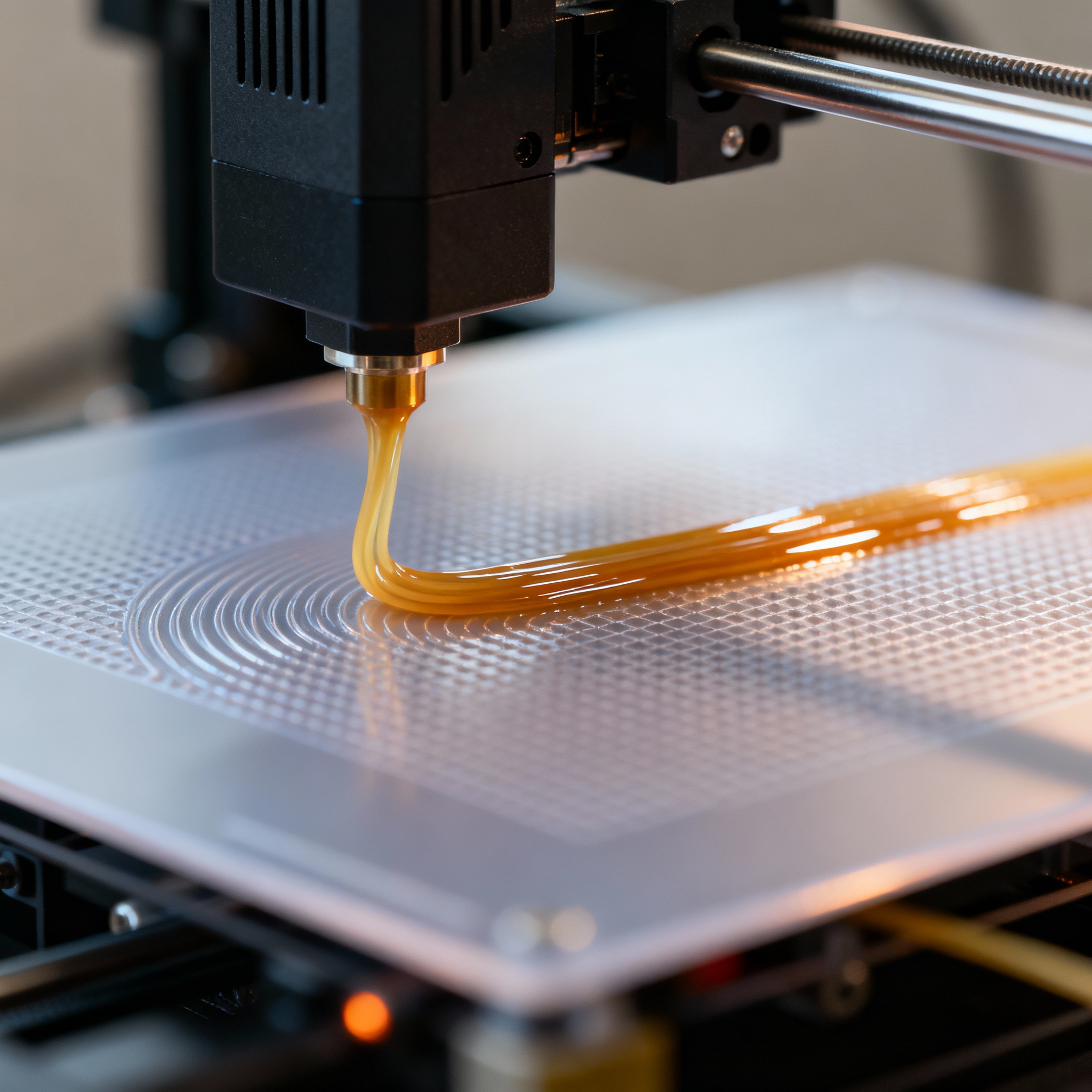
Exponential growth of 3D printing in the consumer and hobbyist sector in 2026
The consumer 3D printer market is experiencing unprecedented expansion. In the third quarter of 2025, global shipments of entry-level printers (under $2,500) increased by 181% year-over-year, driving the overall growth of the sector. The boom is fueled primarily by Chinese manufacturers: Bambu Lab and Creality alone account for 571% of shipments in this price range. China produced over 5 million 3D printers in 2025, a 331% increase compared to the previous year, confirming its status as the world's epicenter of consumer production.
Expanding market: 2026 data and trends
The numbers speak clearly: consumer 3D printing is growing at exponential rates, exceeding every forecast. According to CONTEXT, while the professional ($2,500-$20,000) and mid-range ($20,000-$100,000) segments recorded contractions of 141% and 131% respectively, the entry-level segment showed extraordinary resilience, with a 181% increase in global shipments.
Chinese production reached 5.03 million units in 2025, peaking at 572,000 machines in December alone. The United States remains the main export market with 2 million units imported, followed by Germany with 1 million. The value of Chinese exports reached $1.6 billion, up 391% year-over-year.
Projections indicate compound annual growth rates above 201%: the global market will grow from the current $40 billion to over $170-250 billion by the mid-2030s. This is no longer just enthusiasm, but concrete and widespread adoption.
Accessible technologies and new materials for home users
Economic accessibility is the main driver of the consumer segment. Printers under $2,500 now offer performance once reserved for professional machines, bringing the technology closer to hobbyists, students, and small entrepreneurs.
Vat photopolymerization systems show particular resilience in the professional-entry-level segment: Formlabs holds about 401% market share. The technology guarantees an excellent quality-price ratio for applications requiring fine details and smooth surfaces.
Material extrusion (FFF/FDM) dominates the hobbyist segment thanks to ease of use and low material costs. Chinese manufacturers have perfected these systems by integrating automatic leveling, filament sensors, and intuitive interfaces, drastically lowering the barrier to entry.
Creative applications and innovative projects by hobbyists
The maker community demonstrates how 3D printing can become a concrete entrepreneurial opportunity. An American teenager created Cruise Cup, an e-commerce business generating $300,000 in monthly revenue, starting from a few bedroom printers and expanding to a warehouse with over 130 machines to produce custom coasters.
All3DP recorded 8 million users in 2025, confirming enormous interest in educational content, reviews, and shared projects. PrintPal, an AI-based 3D modeling platform, surpassed 100,000 users in eight months, demonstrating how AI is breaking down technical barriers to 3D design.
Hobbyists are exploring increasingly sophisticated applications: custom components for drones and robotics, jewelry and art objects, custom aids and prosthetics. The spread of STEM education in schools is training a new generation already familiar with digital workflows and additive manufacturing.
Challenges and opportunities for consumer 3D printer manufacturers
The consumer market presents unique challenges. Strong price competition, driven by Asian manufacturers, is squeezing margins and forcing Western companies to rethink their strategies. Geopolitical tensions add uncertainty: in the United States, pressure is growing to limit the import of Chinese printers, and regulations already prohibit the use of Chinese equipment in government projects.
The situation creates opportunities for Western manufacturers, but raises doubts about production capacity. If the 2 million Chinese printers imported annually in the USA were to be replaced by local production, few American manufacturers could fill the void, risking a slowdown in adoption.
Established manufacturers are reacting by diversifying their portfolios: Raise3D launched its first SLS printer, HP entered the industrial filament market, Bambu Lab dominates the consumer sector with the new H2D and H2S, combining innovation, ease of use, and competitive prices. The challenge remains maintaining quality and reliability while lowering costs, without compromising the user experience.
Future prospects for the hobbyist sector
The future of consumer 3D printing appears bright, supported by long-term structural trends. Integration into STEM programs is expanding the base of skilled users. Military experience in additive manufacturing is transferring to the civilian sector, bringing skills and innovative applications.
AI further democratizes access, making 3D model creation possible even without CAD skills. Mainstream media attention and the quality of educational content on YouTube increase public understanding.
Large-scale applications – dental aligners, custom glasses, bespoke footwear, jewelry – demonstrate that 3D printing can compete economically with traditional methods even on millions of pieces, transforming the perception from a niche tool to a mainstream manufacturing solution.
The industry is undergoing a natural selection that will define the leaders of the next phase. Companies that combine technological innovation, ease of use, affordable pricing, and community support will lead the expansion, bringing 3D printing from the garage to mass adoption.
article written with the help of artificial intelligence systems
Q&A
- How much did the entry-level segment of 3D printers grow in Q3 2025 and who holds the majority of shipments?
- Global shipments of entry-level printers increased by 181% year-over-year. Bambu Lab and Creality alone cover 57% of shipments in this price range.
- What is the Chinese production volume of consumer 3D printers in 2025 and what is the export value?
- China produced over 5 million 3D printers in 2025, +33% compared to 2024. The value of exports reached 1.6 billion dollars, with a 39% year-over-year increase.
- How do Western manufacturers react to the price competition from Chinese brands?
- They face compressed margins and geopolitical pressures; some diversify the portfolio (Raise3D with SLS, HP with filaments) while others, like Bambu Lab, consolidate consumer leadership with new H2D/H2S models at competitive prices.
- Which technologies dominate the hobbyist market and why are they accessible?
- FFF/FDM extrusion dominates thanks to low costs and simplicity; Chinese manufacturers have perfected it with automatic leveling, sensors, and intuitive interfaces. Vat photopolymerization (Formlabs ≈ 40% share) offers fine details at entry-level prices.
- What role does artificial intelligence play in the expansion of domestic 3D printing?
- Platforms like PrintPal, with over 100,000 users in eight months, use AI to simplify 3D modeling, breaking down technical barriers and allowing even non-CAD experts to create printable models.
- What are the main threats to mass adoption in the US and how could they influence the market?
- Pressure is growing to limit imports of Chinese printers and government regulations prohibit their use; if the 2 million annual units were to be replaced by local production, few US manufacturers could fill the gap, slowing adoption.