
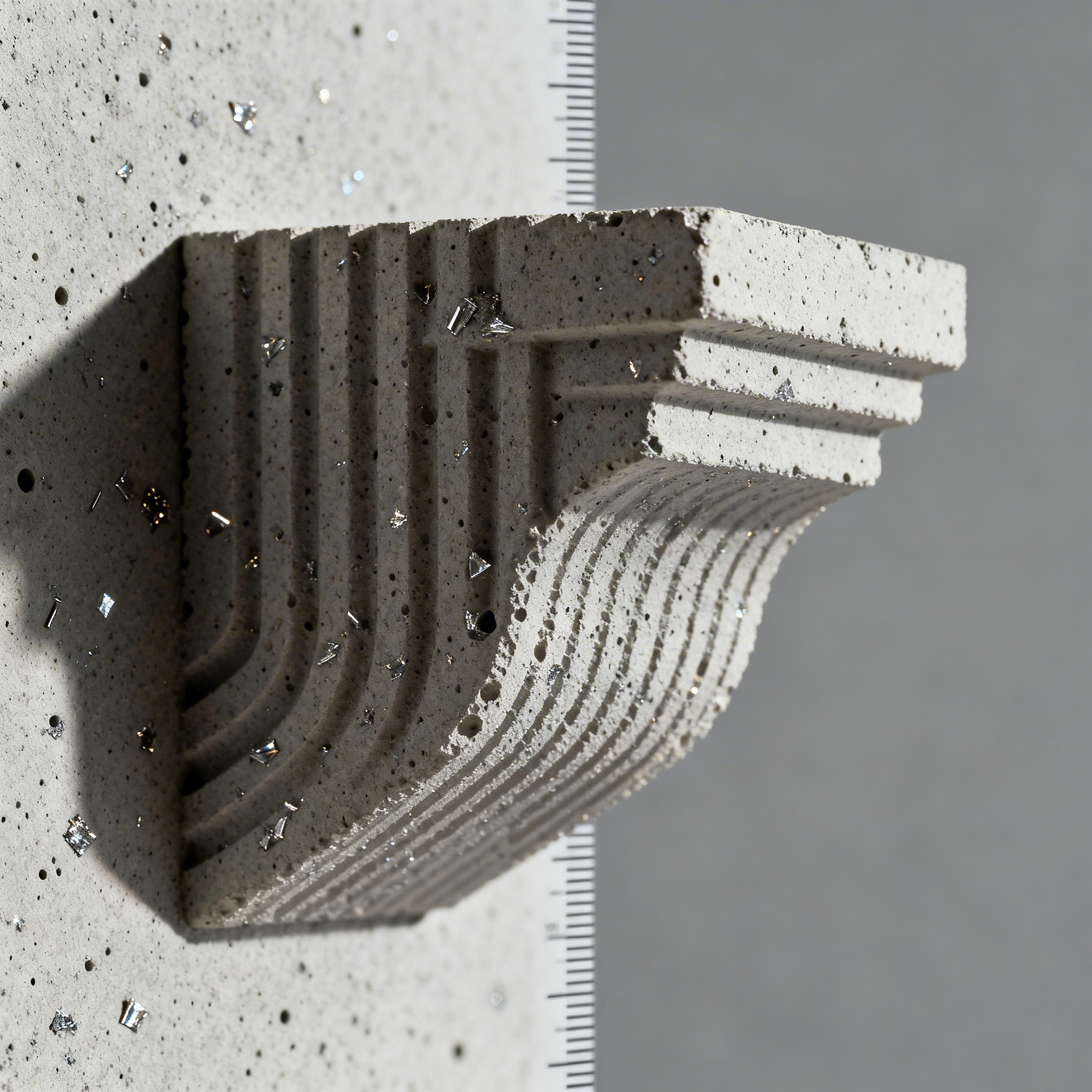
Building the future: how 3D printing works in architecture
3D printing is redefining the design and construction of architectural models and components, introducing precision, efficiency, and new formal possibilities. Direct production from CAD files allows for the creation of complex structures that would be impossible or uneconomical with traditional methods, reducing times, costs, and material waste.
3D printing workflow in architecture
The process starts from CAD design to the finishing of the component, ensuring precision and repeatability in the construction of models and structural parts.
The workflow is divided into three phases: CAD design, printing, and finishing. This clean and quiet process drastically reduces times compared to conventional techniques. Direct printing from digital files ensures fidelity to the original project and dimensional accuracy, allowing for the creation of large-scale models in a single piece.
Models can show very fine details while maintaining the necessary structural strength. The speed with which prototypes are created, modified, and reproduced represents a decisive advantage over traditional machining. Some complex geometries can be obtained exclusively through additive manufacturing, layer by layer, precisely due to their intricate conformation. Alternatively, it is possible to produce molds for casting the final models.
The technology allows for combining multiple elements into a single assembly, simplifying the construction of articulated models. Prefabricated components are generated with ease, while material waste is minimized thanks to the additive nature of the process.
Materials and technologies for models and components
The choice of materials and technologies, such as SLA and cement printing, determines the final quality and applicability in professional contexts.
For high-definition models, stereolithography (SLA) is among the most widespread technologies. Printers like the Formlabs Form 4 offer speed, accuracy, and reliability, with a range of materials that guarantees fine details and professional quality. For larger-scale projects, FFF systems like the Builder 1500 PRO allow working on build volumes up to 1100 × 500 × 820 mm with a resolution of 200 µm.
In actual construction, 3D concrete printing is emerging as a credible structural alternative. In Japan, the first two-story government-approved 3D-printed reinforced concrete house was completed, demonstrating that the technology can meet the country's rigorous seismic requirements. A team of four people operated the COBOD system in variable seasonal conditions (from temperatures below 10 °C to about 35 °C), printing from 0.5 m below ground level up to a total height of 7 m.
Shimizu Corporation has developed a spraying system that deposits special cement mixtures from a robotic nozzle, allowing the creation of curved shapes and reinforced components that are difficult or impossible to achieve with conventional extrusion. The system combines a seven-axis robotic arm with a two-axis gantry, operating in a volume of six meters deep, four wide, and three high.
Research on sustainable materials is opening new frontiers: at RWTH Aachen University, a DARPA-funded project is exploring the use of metal powder from steel scrap to produce facade brackets via powder bed laser fusion, while other groups are experimenting with printing using marine sediment.
Case studies: precision and waste reduction
Real-world projects demonstrate how 3D printing integration improves design efficiency and reduces waste.
The Skovsporet project in Denmark, Europe's largest 3D-printed residential complex, has completed the cement shells: the last one was built in just five days. Final completion is expected for the summer of 2026, demonstrating that the technology is mature for large-scale residential applications.
Make Architects used 3D printing to produce 850 buildings of a contextual model at a 1:1000 scale of London's eastern area, demonstrating how the technology allows managing complex visualizations with precision and repeatability impossible with traditional methods.
The AddMamBa project at RWTH Aachen University is developing 3D-printed facade brackets using recycled steel. Life cycle analysis indicates a global warming potential of 23.8-33.5 kg of CO₂ equivalent per kilogram of component, with a downward trend thanks to the increase in renewable sources. The system is designed to be circular, allowing for disassembly and reuse of parts. In experimental tests, approximately 60% of usable metal powder was recovered from processed steel scrap.
Printerior's Circdal project aims to create a sustainable architectural ecosystem based on 3D printing, adopting a circular design approach that overcomes the linear model of traditional construction. The goal is to design reusable, modular, recyclable components optimized to reduce waste, including parametric facades, customized construction modules, printed urban furniture, and optimized lightweight structures.
Conclusion
3D printing is now a mature tool for architecture, capable of combining technological innovation and sustainability. From the digital workflow that ensures precision and repeatability, to advanced technologies like SLA and concrete printing that enable the creation of both detailed models and structural components, up to real-world projects demonstrating concrete reductions in time and waste, additive technology is transforming the construction sector.
The integration of sustainable and recycled materials, combined with the adoption of circular economy approaches, positions 3D printing as a credible response to the environmental challenges of the building sector, responsible for over a third of global CO₂ emissions related to energy.
Explore how to integrate this technology into your projects to improve precision, timelines, and environmental impact. Current solutions allow for the transition from rapid prototyping to the production of certified structural components, opening up new formal and functional possibilities for the architecture of the future.
article written with the help of artificial intelligence systems
Q&A
- What are the three main phases of the 3D printing workflow in architecture?
- The workflow consists of: 1) CAD design, 2) the actual printing, 3) finishing of the component. This process ensures dimensional precision, repeatability, and reduced times compared to traditional techniques.
- What is the difference between the use of stereolithography (SLA) and concrete printing in architecture?
- SLA is used for high-definition models with very fine details thanks to professional resins. Concrete printing, on the other hand, is used for real structural components: in Japan, a two-story house compliant with seismic standards was built, demonstrating the structural validity of the technology.
- How does 3D printing contribute to the reduction of material waste on construction sites?
- Being an additive process, it deposits material only where needed, reducing scraps to a minimum. Furthermore, it allows for combining multiple elements into a single piece, decreasing leftovers and simplifying site logistics.
- What is the objective of the Circdal project and how does it fit into the circular economy?
- Circdal aims to create a sustainable architectural ecosystem based on 3D-printed components that are modular, reusable, and recyclable. It overcomes the linear model of traditional construction by designing parametric facades and lightweight structures optimized for reuse.
- What does the Danish case of Skovsporet demonstrate in terms of residential scalability of 3D printing?
- Skovsporet, Europe's largest 3D-printed residential complex, completed a concrete shell in just five days and will be finished in 2026. It demonstrates that the technology is mature for large-scale residential applications with very short construction times.


