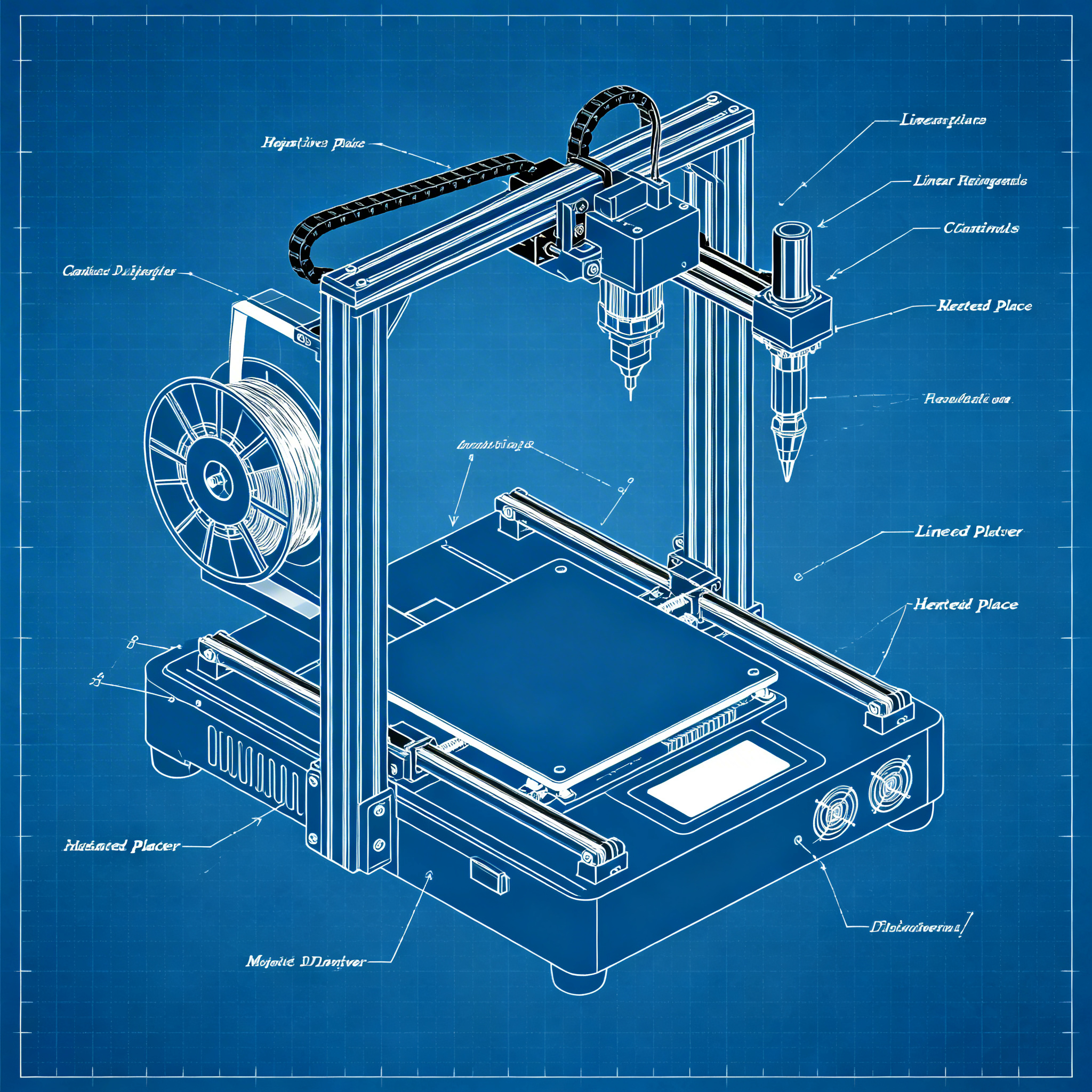
Affordable 3D printers in 2026: which models will really deliver?
In the 2025-2026 market for home 3D printers, a wave of new launches has occurred, but not all represent true technological innovations. Behind aggressive marketing campaigns and eye-catching designs, many models are limited to incremental improvements or aesthetic restyling, while only a few introduce hardware progress or new material capabilities. Distinguishing substantial innovation from commercial hype requires rigorous technical analysis, focused on actual speed, practical modularity, and the versatility of supported materials.
New arrivals 2025: hype vs real innovation
Among the 2025 launches, only some models introduced real hardware changes; many others were limited to software or aesthetic improvements lacking technical substance.
Bambu Lab's H2 series dominated the landscape with a systemic approach rather than a single revolutionary product. The real distinguishing element was not speed – already present in the H2S and P1S – but the introduction of genuine modularity with the H2D. This printer switches from 3D modeling to laser engraving or vinyl cutting in a few seconds, transforming into a home fabrication hub. Software integration allows for fluid workflows: you can print a template and immediately engrave a serial number.
The H2C model, presented at Formnext, brings multicolor printing to a new level with six hotends and 24 filaments, allowing complex prints for less than €2,250. However, it should be remembered that Bambu Lab did not invent modularity: companies like Snapmaker have offered 3-in-1 machines for years. The difference lies in software integration and ease of use, not in the concept.
Prusa responded to Chinese competition by strengthening the Core One ecosystem. Launched in 2024, the machine received significant upgrades in 2025, including the Core One L version with nearly doubled volume (300 × 300 × 330 mm). The INDX update, unveiled at Formnext, introduces an architecture that supports up to eight spools with rapid tool change, concretely improving material versatility.
Speed and precision: who really wins?
Technical benchmarks reveal that declared speeds often do not correspond to real-world performance under standard operating conditions, with significant compromises on geometric quality.
The 2025-2026 FDM printers boast impressive speeds on paper. Formbot's Troodon 2.0 claims up to 500 mm/s, while Bambu Lab models promise similar performance. However, such maximum values are rarely sustainable in real-world prints without sacrificing geometric detail. The Troodon 2.0's extrusion temperature can reach 500 °C, theoretically allowing the use of technical polymers, but the actual speed depends on the material and the complexity of the part.
The Zortrax M300 Plus, at 3 990 $, includes a fast mode that promises to triple production, but there is a lack of independent data confirming dimensional accuracy at those speeds. The generous touchscreen and surveillance camera are usability improvements, not fundamental performance enhancements.
Modularity and customization: real flexibility or just marketing?
Promises of easy upgrades and interchangeable components often clash with proprietary ecosystems and expansion costs that negate the initial advantage.
Modularity has become an overused term. The Bambu Lab ecosystem offers real interchangeability between toolheads, lasers, and vinyl cutters, but it remains a closed system. Upgrades are simple, but they lock you into original components at a premium price.
Prusa's INDX system for the Core One is more open and accepts eight different spools; however, the real utility of such capacity depends on the user: for those printing monochromatic prototypes, it is just additional complexity and cost.
The Troodon 2.0, starting from 1 049 $, includes a filament runout sensor, air filtration, and a flexible PEI bed: features that are now standard, not premium. True modularity means being able to upgrade significant hardware over time, not just interchangeable accessories.
Supported materials: beyond PLA
Entry-level models struggle to support technical polymers reliably, limiting real versatility despite manufacturer claims.
Material support is where marketing promises meet reality. The Zortrax M300 Plus declares compatibility with PLA, PETG, ASA, and ESD compounds, but printing technical materials requires a heated chamber, environmental control, and fine calibration.
The Troodon 2.0, closed and with an extruder up to 500 °C, has the specifications for PEEK or loaded nylon, but lacks data on chamber temperature and thermal stability in prolonged prints. The generic “wide variety of materials” does not replace independent tests.
Many budget models remain optimized for PLA and PETG: beyond 260 °C and chambers at 60 °C, different hardware is required. The Elegoo Centauri Carbon, a low-cost alternative, likely shares these limitations, even though full details are not yet public.
Hidden costs and functional compromises
The purchase price is only the beginning: proprietary consumables, necessary upgrades, and operational limitations turn the initial investment into recurring expenses.
The total cost of ownership emerges after purchase. Closed ecosystems like the Bambu Lab one impose original consumables at a higher price. The H2C with 24 filaments requires specific spools and complex management, increasing costs beyond the base €2,250.
“Affordable” printers often omit essential functions: cold chamber, base plate, extruder limited to 260 °C, absence of advanced sensors. The Troodon 2.0 at €1,049 includes many standards, but the 39 L volume implies high consumption and long heating times.
Hidden costs include maintenance: nozzles that wear out with abrasive compounds, belts to replace, frequent calibrations. The promise of “plug-and-play” rarely materializes without time investment in setup and troubleshooting.
Conclusion
Choosing an affordable 3D printer in 2026 requires critical analysis beyond marketing specifications. Declared speeds, promised modularity, and material compatibility must be verified with independent tests. The low price can hide operational limitations, expensive ecosystems, and frequent upgrades. Models that offer value combine solid hardware, open or semi-open ecosystems, verified material support, and transparent operating costs. Bambu Lab and Prusa represent different but valid approaches: the former on integration and speed, the latter on openness and reliability. Economic alternatives like Formbot or Elegoo can serve those who accept investing time in setup and maintenance, but rarely offer the promised “turnkey” experience.
Consult our detailed data sheets to navigate among the models that really count in 2026.
article written with the help of artificial intelligence systems
Q&A
- What is the main hardware innovation introduced by Bambu Lab with the H2 series of 2025?
- The real novelty is not speed, already present in previous models, but the functional modularity of the H2D which, in a few seconds, switches from 3D printing to laser engraving or vinyl cutting, becoming a home fabrication hub with integrated software workflow.
- Why are the speeds declared by FDM printers for 2025-2026 not always reliable?
- Maximum values (up to 500 mm/s) are reached only under optimal conditions: in practice, to maintain geometric quality, the effective speed must be reduced and also depends on the material and the complexity of the printed part.
- What distinguishes the Prusa Core One INDX ecosystem from the closed one of Bambu Lab?
- The INDX system supports up to eight different spools with rapid tool change and a more open architecture, while Bambu Lab offers real interchangeability but bound to original premium components, making the Prusa ecosystem more flexible for those who need multiple materials.
- What hardware requirements are often missing from “accessible” printers to support technical polymers beyond PLA and PETG?
- A heated chamber (≥60 °C), an extruder exceeding 260 °C, environmental control and fine calibration are needed; many economical models have only a cold chamber and a limited extruder, making the printing of PEEK, loaded nylon or ASA unreliable without costly upgrades.
- What are the main hidden costs after the purchase of a low-cost 3D printer?
- In addition to the base price, proprietary consumables (specific Bambu spools, abrasive nozzles), maintenance (belts, calibrations), necessary upgrades (heated chamber, PEI bed) and setup times are added, turning the initial investment into non-negligible recurring expenses.