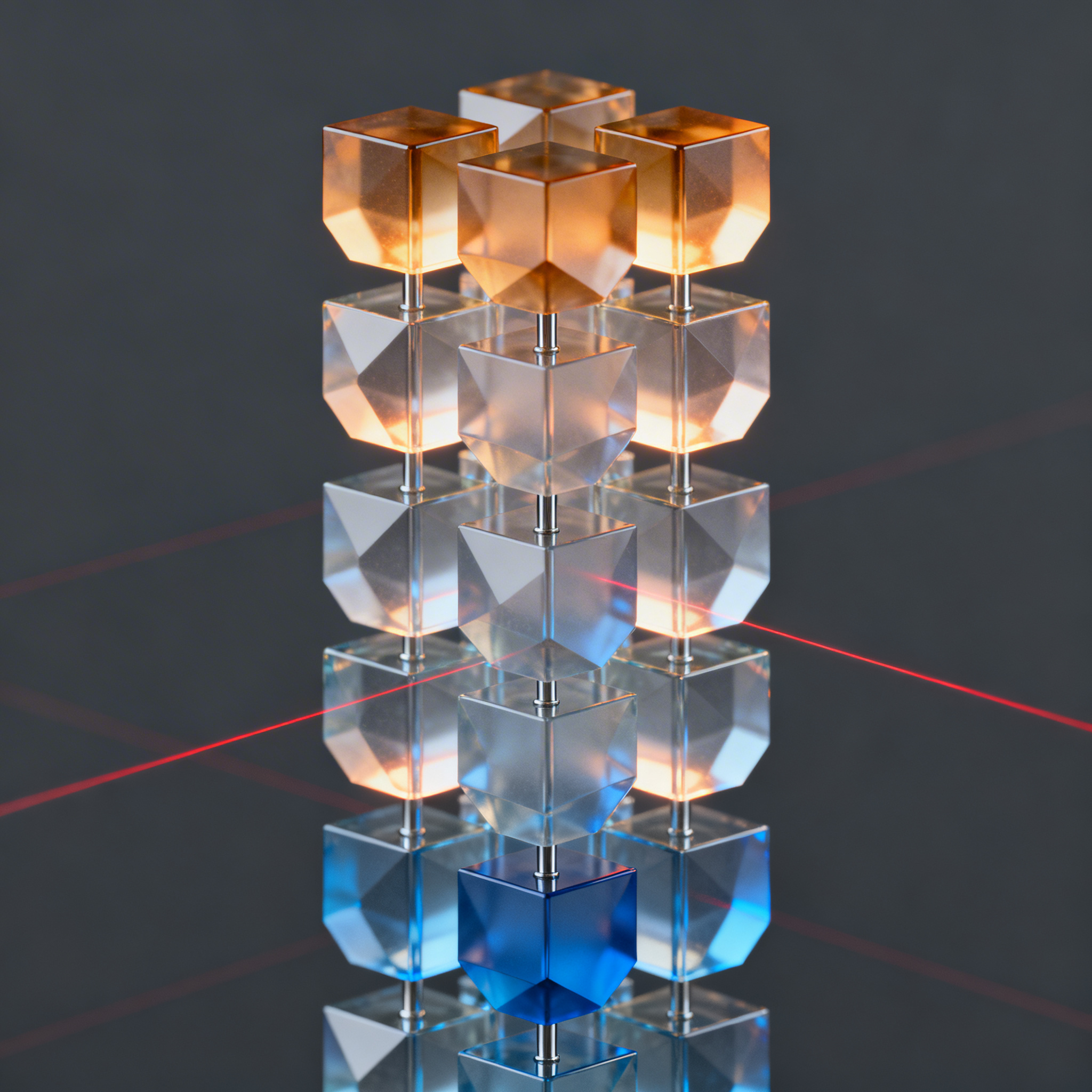
Smart Thermal Management in 3D Printing: How Heat Control Improves Reliability and Productivity
Keeping heat under control during 3D printing is not just a matter of precision: it can reduce scrap, processing times, and even hidden production costs.
What problem does it solve
Overheating during 3D printing causes structural defects such as porosity and residual stresses, compromising component quality and reliability.
In metal additive manufacturing, especially with layer-by-layer techniques such as laser powder bed fusion (PBF-LB), heat accumulated from previous layers represents a critical challenge. When building tall structures or using short pause times between layers, the temperature can rise above a critical threshold, triggering a phenomenon called “keyhole porosity” – internal defects that compromise the structural integrity of the part.
The problem is particularly evident in the upper sections of the build, where heat has no way to dissipate effectively. This thermal accumulation can lead to failed production runs, costly scrap, and components that do not pass quality controls, especially in critical sectors such as aerospace and medical, where reliability is non-negotiable.
The idea in 60 seconds
Intelligent systems monitor and regulate heat in real time, using adaptive pauses and temperature control to prevent defects during part construction.
Emerging solutions combine two complementary approaches. The first uses heat dissipation techniques during the process: variable pauses between layers that progressively increase with part height, temperature control of the inert gas flowing into the print chamber, and targeted jets of cold gas onto the build surface. These methods keep the temperature below the critical threshold (Tth) – the point beyond which deterministic defects form.
The second approach integrates thermal sensors that continuously measure temperature at different points of the component during the build. A control system analyzes this data, reconstructs the “thermal history” of the part, and adjusts in real time the energy supplied by the laser or electronic devices. In practice, the system learns how the part is behaving thermally and adapts the printing parameters on the fly to maintain optimal conditions layer after layer.
The key is that these techniques do not require speculative technologies: they rely on sensors, actuators, and physical models already available, integrated intelligently.
What really changes (tangible improvements)
Advanced thermal management reduces defects by up to 47%, improves surface quality, and increases process repeatability, with direct effects on costs and productivity.
The numbers speak for themselves. By implementing adaptive pauses that gradually increase with part height, instead of constant pauses, it is possible to reduce total printing time by up to 47% while maintaining the same quality in terms of defect formation risk. This is not a theoretical improvement: it comes from comprehensive physical models that consider melting, vaporization, and melt pool dynamics.
Continuous thermal monitoring brings complementary benefits. By precisely controlling the thermal history of the component, residual stresses are reduced – those internal forces that can cause deformation or cracks during cooling or subsequent machining. The result is a more repeatable and predictable process: each part comes out with more uniform characteristics, reducing the variability that is the enemy of industrial production.
Surface quality improves because overheated zones that generate irregularities are avoided. For sectors such as medical, where prostheses and implants must have precise surfaces, or aerospace, where any defect can be critical, these improvements translate directly into less rework, fewer rejects, and greater confidence in additive technology.
From an economic standpoint, the impact is twofold: less machine time (up to nearly halving it in certain scenarios) means greater production throughput, while defect reduction cuts the hidden costs of scrap and more intensive quality inspections.
Esempio in azienda / sul mercato
In aerospace, the use of controlled pauses has made it possible to significantly reduce scrap during the production of mission-critical components.
Let us consider a department that produces aeronautical components with complex geometries and stringent structural integrity requirements. Before the implementation of adaptive pauses, tall parts regularly showed porosity defects in the upper sections, requiring rework or causing costly scrap.
By introducing a variable pause system guided by predictive models – short pauses in the lower layers that progressively increase toward the top – the team was able to keep the temperature always below the critical threshold. The result: components that pass non-destructive testing on the first attempt, with a drastic reduction in scrap.
In parallel, a system with integrated thermal sensors is used in the production of customized medical prostheses. During printing, the system continuously monitors the temperature at key points of the component and automatically adjusts the laser energy to compensate for localized heat accumulation. This ensures that every prosthesis, even with a unique geometry, has uniform and predictable mechanical properties – essential when the part will end up implanted in a patient.
These are not laboratory experiments: they are concrete applications that demonstrate how intelligent thermal control is already transforming additive manufacturing from a promising technology into a reliable industrial process.
Trade-offs and limitations
Each solution requires models specific to the material/machine and can increase initial costs; moreover, sensor calibration in extreme environments remains a technical challenge.
Advanced thermal management is not a “plug and play” solution. Every combination of material (titanium, aluminum, stainless steel), machine (laser power, scan speed, inert gas system), and part geometry requires specifically calibrated predictive models. Developing these models takes time, expertise, and often preliminary testing campaigns.
Initial costs can be significant. Integrating reliable thermal sensors, real-time control systems, and analysis software represents an investment that not all companies can undertake immediately. For small batches or prototypes, the return on investment may not justify the added complexity.
Sensor calibration in high-temperature environments – with metal powder, intense laser light, and extreme thermal gradients – remains a non-trivial technical challenge. Sensors must be robust, accurate, and not interfere with the printing process. Moreover, the emissivity of materials (their ability to emit thermal radiation) varies with temperature and surface conditions, complicating accurate measurements.
There is also the risk of overengineering the process. Adding excessively long pauses or overly conservative controls can improve quality but cancel out productivity gains. Finding the right balance requires experience and iterations.
Finally, integration with legacy systems – existing machines not designed for advanced thermal controls – can be complex and require significant hardware modifications.
Reality check: what is needed to reach production
Industrial adoption requires reliable predictive models, robust sensors, and integration with existing systems, factors that require targeted investments but are already achievable.
Industrial-scale adoption requires three fundamental pillars. First: validated predictive models. It is not enough to know that adaptive pauses work in theory; databases of parameters tested for the most common material-machine combinations are needed, possibly shared among companies or provided by machine manufacturers. Some research centers are already working on open-source libraries of thermal models, but coverage is still limited.
Second: reliable sensors and hardware. Thermal sensors must operate stably for thousands of hours in hostile environments, with minimal maintenance. Control systems must integrate natively with AM machines, without requiring invasive modifications. Some manufacturers are already offering machines with integrated thermal monitoring, but standardization is still far off.
Third: skills and training. Operators must understand how to interpret thermal data, when to intervene manually, and how to optimize parameters for new geometries. This requires targeted training programs and a cultural shift: from a “set and forget” mindset to that of continuous process control.
From a timing perspective, the simplest techniques – such as model-driven adaptive pauses – are already implementable today with minimal software modifications. Real-time thermal monitoring requires greater investments but is realistic over a 2-5 year horizon for medium-to-large companies producing significant volumes.
The most likely path is incremental: start with optimized pauses on critical geometries, then add sensors on key machines, and finally extend advanced thermal control to the entire production fleet as costs decrease and experience grows.
Conclusion
Intelligent thermal management represents a crucial step toward more stable and industrializable additive processes.
Heat control in 3D printing is no longer a technical laboratory detail: it has become a concrete competitive factor. Companies that can produce complex components with minimal defects, reduced times, and repeatable quality have a tangible advantage in sectors where reliability is critical.
The technologies described – adaptive pauses, inert gas control, continuous thermal monitoring – are not futuristic. They are available, tested, and in a phase of growing adoption. Of course, they require investments and expertise, but the measurable benefits in terms of productivity, quality, and scrap reduction justify the effort for those producing significant volumes.
Companies that invest now in advanced thermal management solutions will have a tangible competitive advantage over the next 2-5 years. Those who wait risk finding themselves chasing competitors that already produce additive components with series-production reliability, while others still struggle with variability and scrap.
The message is clear: intelligent thermal management is not the future of industrial 3D printing. It is the present for those who want to compete seriously.
article written with the help of artificial intelligence systems
Q&A
What is the main defect caused by overheating in metal 3D printing?
Overheating generates “keyhole porosity”, i.e. internal pores that form when the temperature exceeds a critical threshold and compromise the structural integrity of the part.
How does the intelligent thermal management system described in the article work?
It combines adaptive pauses between layers, jets of cold gas and thermal sensors that measure temperature in real time; an algorithm reconstructs the “thermal history” and adjusts the laser energy layer by layer.
What concrete improvements does the advanced thermal control provide?
It reduces defects by up to 47 %, halves print time in some cases, lowers residual stresses, improves surface quality and increases process repeatability.
Why has the aerospace sector benefited from adaptive pauses?
Tall, complex components showed porosity in the upper zones; by introducing pauses that increase with height, non-destructive testing was passed on the first attempt, almost eliminating scrap.
What are the main obstacles to the industrial adoption of these techniques?
Specific predictive models are needed for every material-machine combination, robust sensors for extreme environments, high initial investments and often hardware modifications on legacy machines.