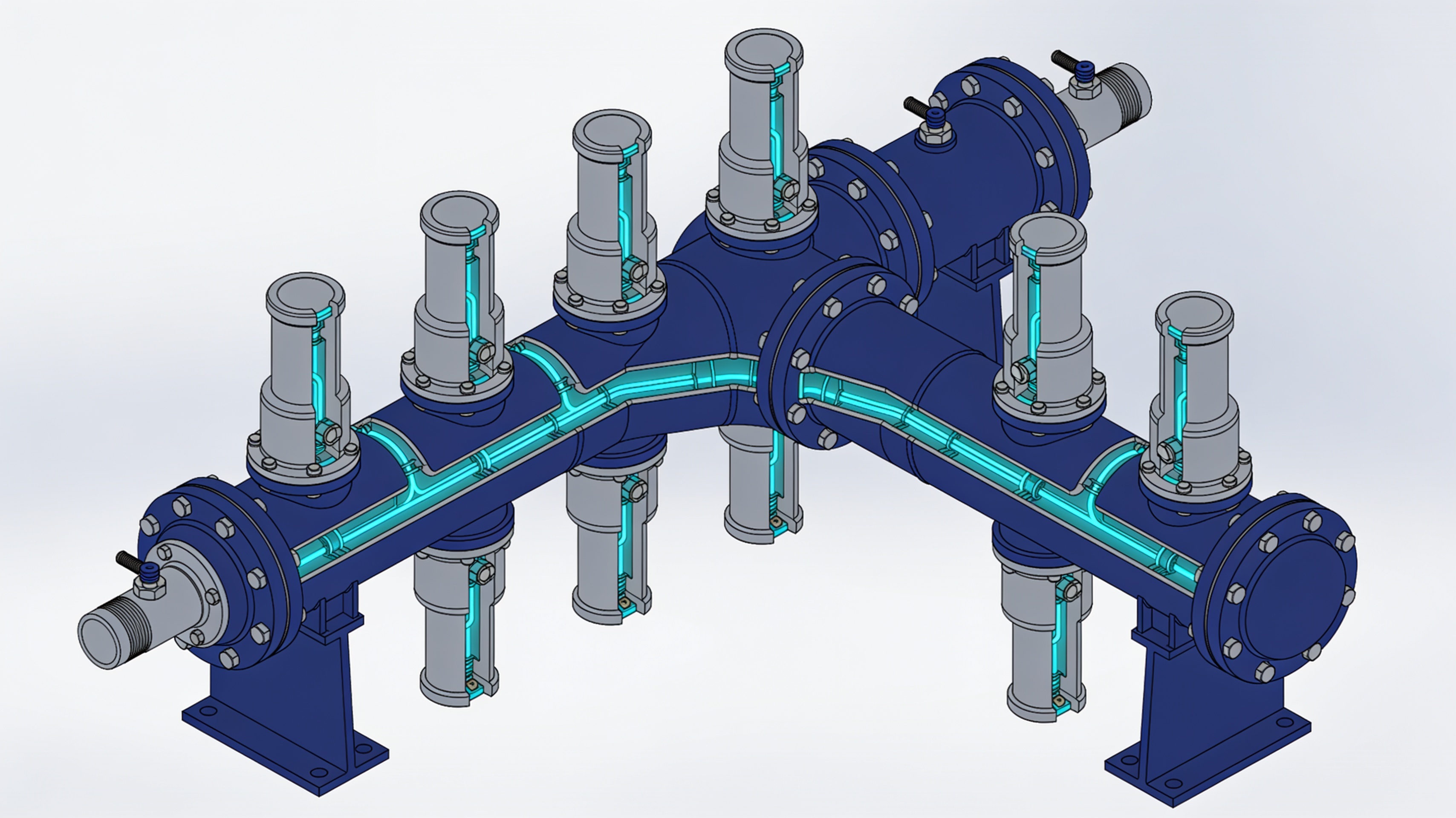
IMI and TotalEnergies qualify LPBF components for valves in sour gas service
IMI and TotalEnergies EP Denmark have completed the qualification of internal components for anti-surge valves produced via laser powder bed fusion. Seven valves equipped with nickel-based alloy assemblies have been approved for installation in facilities handling hydrogen sulfide.
The announcement of 26 October 2026 marks the transition from technology demonstration to operational use. This is not preliminary research, but components qualified for industrial operation.
From 3D printing to the plant: the qualitative leap
The difference between demonstrating that an alloy can be printed and authorizing its use in an operating plant is substantial. IMI and TotalEnergies have completed this journey.
The collaboration has produced concrete results. TotalEnergies has approved the installation of seven valves equipped with LPBF components in nickel-based alloy.
Anti-surge valves are critical devices in compressor control systems. They intervene to prevent unstable operating conditions and must ensure dimensional reliability and durability of internal passages.
- Seven valves with LPBF components qualified for sour gas service
- Partial pressure of H2S up to 3.3 kPa in the operating environment
- Compliance with DNV-ST-B203 requirements, AMC 3 level
- Specific heat treatment and dedicated test program
The sour-gas environment and its critical issues
Plants handling fluids containing hydrogen sulfide require particular attention to corrosion resistance and component integrity.
The partial pressure of H2S reached 3.3 kPa in the reported case. The presence of hydrogen sulfide, combined with temperature, fluid chemistry, and mechanical stresses, can increase the risks of corrosion and embrittlement.
The original problem involved leaks through anti-surge valves. The solution required components with controlled surface behavior and specific resistance to the operating environment.
Beyond geometry: metallurgy and qualification
LPBF production enables complex geometries, but shape alone is not enough to qualify the manufactured part. The properties of the printed alloy do not necessarily match those of the same forged material.
Laser powder bed fusion makes it possible to build fluid passages and internal geometries that are difficult to obtain with conventional technologies. However, scan parameters, volumetric defects, texture, and growth orientation influence the results.
IMI has developed a specific heat treatment for printed components. The qualification program included dedicated mechanical and corrosion tests.
The details of the metallurgical recipe and the test conditions were not fully disclosed in the press release. The intellectual property of the process remains proprietary.
The qualification path according to DNV
The company declares compliance with the requirements of DNV-ST-B203, AMC 3 level. It is not a generic certification, but a structured demonstration process for a specific application.
Qualification requires documentation of the production process, control of variables, and demonstration of performance in the target environment. The AMC 3 level represents an advanced degree of maturity of the additive process.
The collaboration between IMI and TotalEnergies followed a validation process covering the entire chain: from the selection of printing parameters to in-service behavior.
Industrial prospects
The result opens prospects for retrofitting existing plants and redesigning critical subassemblies.
Approval for installation in operating plants represents a significant precedent for additive manufacturing in harsh environments. The possibility of replacing or redesigning existing components with LPBF solutions could extend to other oil & gas applications.
The qualification of components for sour gas service demonstrates that metal 3D printing can meet the requirements of demanding industrial environments, provided that appropriate metallurgy and controls are developed.
article written with the help of artificial intelligence systems
Q&A
Which components were qualified by IMI and TotalEnergies?
Seven anti-surge valves equipped with internal components in nickel-based alloy produced via laser powder bed fusion (LPBF). The approval covers installation in facilities processing hydrogen sulfide.
What is the partial pressure of H2S in the operating environment?
In the reported case, the partial pressure of H2S reached 3.3 kPa. The presence of hydrogen sulfide, combined with temperature, fluid chemistry and mechanical stresses, can increase the risks of corrosion and embrittlement.
To which qualification standard do the LPBF components conform?
The components comply with the requirements of DNV-ST-B203, AMC 3 level. The qualification included a specific heat treatment and a dedicated testing program.
Why are anti-surge valves considered critical components?
Anti-surge valves intervene in compressor control systems to prevent unstable operating conditions. They must ensure dimensional reliability and durability of internal passages.
What was the original problem that motivated the qualification?
The problem concerned leaks through the anti-surge valves. The solution required components with controlled surface behavior and specific resistance to the operating environment containing H2S.