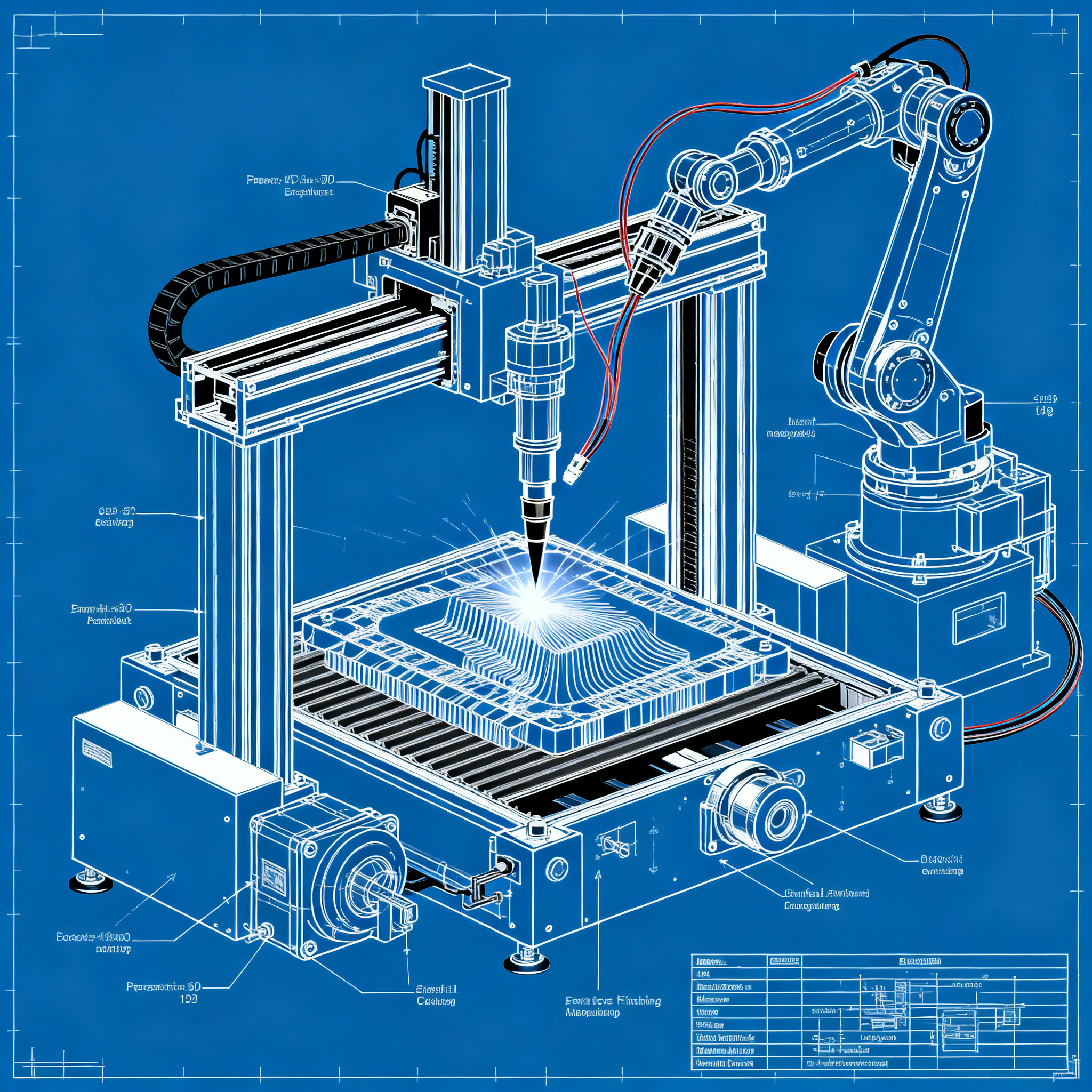
Implementing WAAM in Civil Engineering: A Real Case of Industrial Integration
A collaborative project between NAICO Malaysia and WAAM3D demonstrates how to concretely introduce metal 3D printing in the civil engineering sector, offering a practical roadmap for the industrial adoption of Wire Arc Additive Manufacturing technology.
The integration of Wire Arc Additive Manufacturing (WAAM) in civil engineering is no longer just theory: real-world cases demonstrate that this technology can be successfully implemented in existing production processes, opening new possibilities for the fabrication of large-scale metal components. The key to success lies in a systemic approach that covers the entire process chain, from planning to final finishing.
Case Study: NAICO Malaysia and WAAM3D
A concrete example of WAAM integration in an industrial context demonstrates the practical applicability of the technology in the civil engineering and large structures sector.
The National Aerospace Industry Corporation Malaysia (NAICO Malaysia) and the British company WAAM3D formalized a strategic collaboration during the Singapore Airshow 2026, signing a Memorandum of Understanding to develop skills and industrial capabilities related to WAAM. The initiative is part of the MyAERO Centre framework, a national center of excellence focused on ecosystem development, technological research, and talent training.
The project involves the implementation of an associated laboratory with UiTM/SMRI for technical demonstration and know-how transfer, following the roadmap of the Malaysian Aerospace Industry Blueprint 2030. This initiative aims to strengthen capabilities along the entire lifecycle of engineering systems, focusing on advanced manufacturing and specialized skills.
The MiniWAAM Platform: Design for Industry
MiniWAAM represents a scalable solution designed for direct integration into existing production workflows, overcoming the limitations of simple rapid prototyping.
The core of the project revolves around the WAAM3D MiniWAAM platform, specifically designed to make WAAM adoption accessible in research, development, and production contexts, while maintaining a rigorous industrial setting. Unlike solutions oriented exclusively to prototyping, MiniWAAM integrates functionalities designed for integration into the production flow, with a focus on productivity and process management.
WAAM uses a welding system (typically MIG/GMAW or variants) that melts a metal wire and deposits it layer by layer. This configuration is particularly interesting for medium to large-sized metal parts, offering high deposition rates and more predictable material costs compared to metal powder-based technologies.
Complete Process Chain for WAAM Success
Effective adoption of WAAM requires a systemic approach that covers every phase, from engineering to final component finishing, ensuring quality and industrial performance.
Operational implementation of WAAM requires a complete chain that includes several critical phases. The deposition strategy involves accurate planning of welding paths, optimized to minimize distortions and ensure uniform mechanical properties. Parameter control is fundamental to manage variables such as current, travel speed, and interpass temperature.
Continuous process monitoring allows for the detection of anomalies in real time and intervention before they compromise component quality. Finally, the finishing phase is often necessary in WAAM to achieve the dimensional tolerances and surface roughness required by functional components, integrating conventional CNC machining to bring the near-net-shape part to final specifications.
Specific Benefits in the Civil Engineering Context
In the civil engineering sector, WAAM stands out for its ability to produce large metal structures with operational efficiency and controlled costs.
WAAM offers significant advantages for civil engineering and large structures. High deposition rates allow for the construction of massive components in times significantly shorter than traditional casting, with some cases documenting delivery time reductions of up to 80%. The technology allows working on alloys of industrial interest, including aluminum, titanium, and nickel-based alloys, maintaining competitive material costs thanks to the use of standard metal wire.
The possibility of producing custom components without the need for dedicated molds eliminates bottlenecks related to tooling and reduces dependence on foundries concentrated in few countries. For complex or low-volume components, this flexibility makes small batches or critical spare parts sustainable, particularly relevant for infrastructure and industrial plants.
Conclusion
The practical case of the NAICO Malaysia-WAAM3D collaboration demonstrates that WAAM can be successfully integrated into civil engineering industrial processes, opening new production opportunities for large metal components. The systemic approach, which covers the entire chain from design to finishing, represents the key to transforming technological potential into concrete industrial results.
Explore how your company can benefit from a customized roadmap for WAAM integration into your production processes, evaluating specific applications for structural components and infrastructure.
article written with the help of artificial intelligence systems
Q&A
- What is the main objective of the collaboration project between NAICO Malaysia and WAAM3D?
- The main objective is to concretely implement WAAM metal 3D printing technology in the civil engineering sector. The project aims to develop skills and industrial capabilities related to WAAM, integrating it into existing production processes.
- What does the MiniWAAM platform represent and what is its main advantage?
- MiniWAAM is a scalable solution designed for direct integration into existing production workflows. Unlike simple prototyping, it is designed for industrial production, with a focus on productivity and process management.
- What are the main phases of the WAAM process chain described in the article?
- The main phases include welding path planning, parameter control such as current and speed, continuous process monitoring, and mechanical finishing to achieve required tolerances.
- What specific advantages does WAAM offer in the civil engineering sector?
- WAAM enables the rapid production of large metal structures, with lead times reduced by up to 80%. It uses common industrial alloys at contained costs and allows for the creation of custom components without dedicated molds.
- How does the associated laboratory with UiTM/SMRI contribute to the project?
- The laboratory serves for technical demonstration and know-how transfer regarding WAAM. It is an integral part of the MyAERO Centre and supports training and technological development according to the Malaysian Aerospace Industry Blueprint 2030.