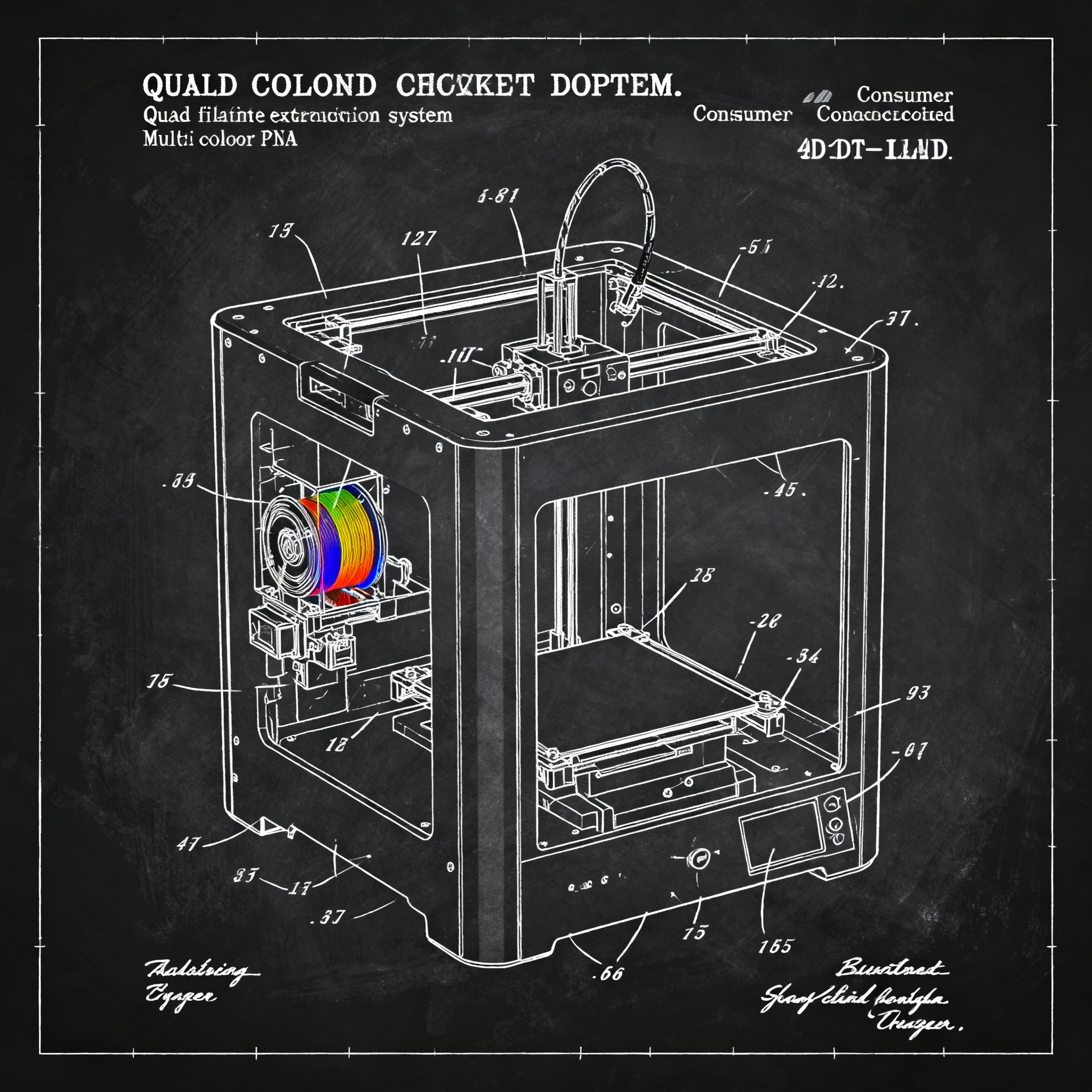
Why are emojis invading 3D printers?
3D printers are leaving the laboratory aesthetic to embrace lifestyle design. The latest move comes from ELEGOO, which has launched a special edition of the Centauri Carbon 2 Combo in collaboration with emoji®, the brand behind the iconic yellow faces.
From technical tool to design object
The partnership between ELEGOO and emoji® marks an aesthetic and communicative shift for 3D printers, transforming them from technical machines into desirable products.
For years, desktop 3D printers have followed a functional design: black, gray, sometimes orange. Boxes designed for makers and hobbyists. The new ELEGOO × emoji® Centauri Carbon 2 Combo breaks this pattern with a silver and white design, customized interface, themed startup animations, and official emoji 3D models ready to print.
The price is competitive: $489 in the United States. Distribution covers global markets such as Canada, Europe, Australia, Japan, and the United Kingdom.
- Silver and white design with emoji branding
- Custom user interface and animations
- Official emoji 3D models included
- CANVAS system for four-color printing
- PLA filaments with RFID emoji Brand Edition available
The charm of tech lifestyle
The lifestyle approach redefines the target audience for 3D printers, expanding it beyond traditional makers towards general consumers.
Marco Hüsges, CEO of emoji, stated that the partnership brings “digital expression into the physical world in a fun and creative way.” 3D printing is evolving beyond traditional maker spaces to become part of everyday lifestyle technology.
The market no longer seeks only speed and technical specifications. Many users want products that seem accessible, fun, and personal. Branding becomes relevant. No one needs an emoji-themed printer, but many might want one.
What's behind the emoji® edition
Exclusive designs, pre-set models, and eye-catching packaging transform the user experience into a desirable product, lowering the psychological barrier to entry.
The printer does not print emojis better than a standard machine. Branding does not improve quality, speed, or precision. However, it offers identity. It transforms a technical device into something people can connect with emotionally.
The choice of emoji is not random. Emojis are simple, colorful forms that are recognizable without explanation. They work well as physical objects because they are already a universal visual language. 3D printing allows digital icons to be transformed into keychains, decorations, and custom gadgets.
Four-color printing makes collaboration with emojis sensible, based on simple shapes and immediate colors. Users can create decorative objects without having to manually paint every chromatic detail.
A trend that goes beyond 3D printing
The convergence between technology and pop iconography is a widespread phenomenon in many consumer sectors, from consoles to electronic products.
People buy limited-edition sneakers for a logo. They buy themed consoles because they love a character. They customize phones and laptops to show their interests. The LEGO × Star Wars collaboration, announced in 1999 and lasting 25 years, demonstrates how an agreement between a producer and intellectual property can generate new markets.
Desktop 3D printing has been cautious so far on this ground. When manufacturers start experimenting with licensing and well-known brands, it means they believe in the expanding market. They are looking for people who may have never considered purchasing a 3D printer.
| Sector | Branding example | Strategy |
|---|---|---|
| Gaming | Franchise-themed console | Limited editions |
| Audio | Branded headphones | Lifestyle collaborations |
| Toys | LEGO × Famous IPs sets | Long-term partnerships |
| 3D Printing | ELEGOO × emoji® | First consumer test |
The risk exists: too much aesthetics and too little substance. 3D printer users evaluate real performance, reliability, and support. A themed printer must work well before being a collectible item. ELEGOO wisely chose to apply the collaboration to a platform already designed for the multicolor consumer market.
Conclusion
The integration of emojis into 3D printers is not just an aesthetic choice. It is a commercial strategy to redefine the market in an increasingly competitive sector. When many printers offer automatic calibration, enclosure, and multicolor printing, design and positioning become differentiating factors.
The first emoji printer might seem like a novelty. But it represents a possible direction: machines that are more recognizable, less intimidating, and closer to consumer language. It could pave the way for editions linked to franchises like Star Wars, Marvel, Pokémon, or Minecraft.
Follow the developments of this new frontier in tech design: it could influence your next purchase.
article written with the help of artificial intelligence systems
Q&A
What makes the ELEGOO × emoji® Centauri Carbon 2 Combo edition special compared to traditional 3D printers?
It is a collaboration that transforms the printer from a technical object into a lifestyle product, with a silver and white design, customized interface, themed animations, and official emoji 3D models ready to print. It therefore breaks away from the typical functional aesthetic scheme of desktop printers, which were usually black, gray, or orange.
What are the main features of the special Centauri Carbon 2 Combo edition?
In addition to the silver and white design with emoji branding, it includes a customized user interface and boot-up animations, official emoji 3D models, the CANVAS system for four-color printing, and emoji Brand Edition RFID PLA filaments. The price is $489 in the United States, with global distribution in markets such as Canada, Europe, Australia, Japan, and the United Kingdom.
Why is the collaboration with emoji® particularly well-suited to 3D printing?
Emojis are simple, colorful, and universally recognizable shapes that lend themselves perfectly to becoming physical objects such as keychains and customized gadgets. Furthermore, the four-color CANVAS system allows their colors to be reproduced instantly without having to manually paint every detail.
How does this partnership represent a strategic shift for the 3D printer market?
It marks the transition from an audience of makers and hobbyists to general consumers, using branding to make the product more accessible, fun, and desirable. It is a differentiation strategy in a competitive market where automatic calibration, enclosure, and multi-color printing are now standard.
What risks does the lifestyle approach entail for 3D printers and how has ELEGOO addressed them?
The main risk is that aesthetics may hide shortcomings in performance, reliability, and support, elements that users still evaluate. ELEGOO has mitigated this risk by applying the collaboration to an already established consumer platform designed for multi-color printing.
What future prospects could this collaboration open up in the 3D printing sector?
If the edition is successful, it could pave the way for collaborations with franchises such as Star Wars, Marvel, Pokémon, or Minecraft, making printers more recognizable and less intimidating. This would confirm 3D printing as part of everyday lifestyle technology and not just as a tool for specialists.