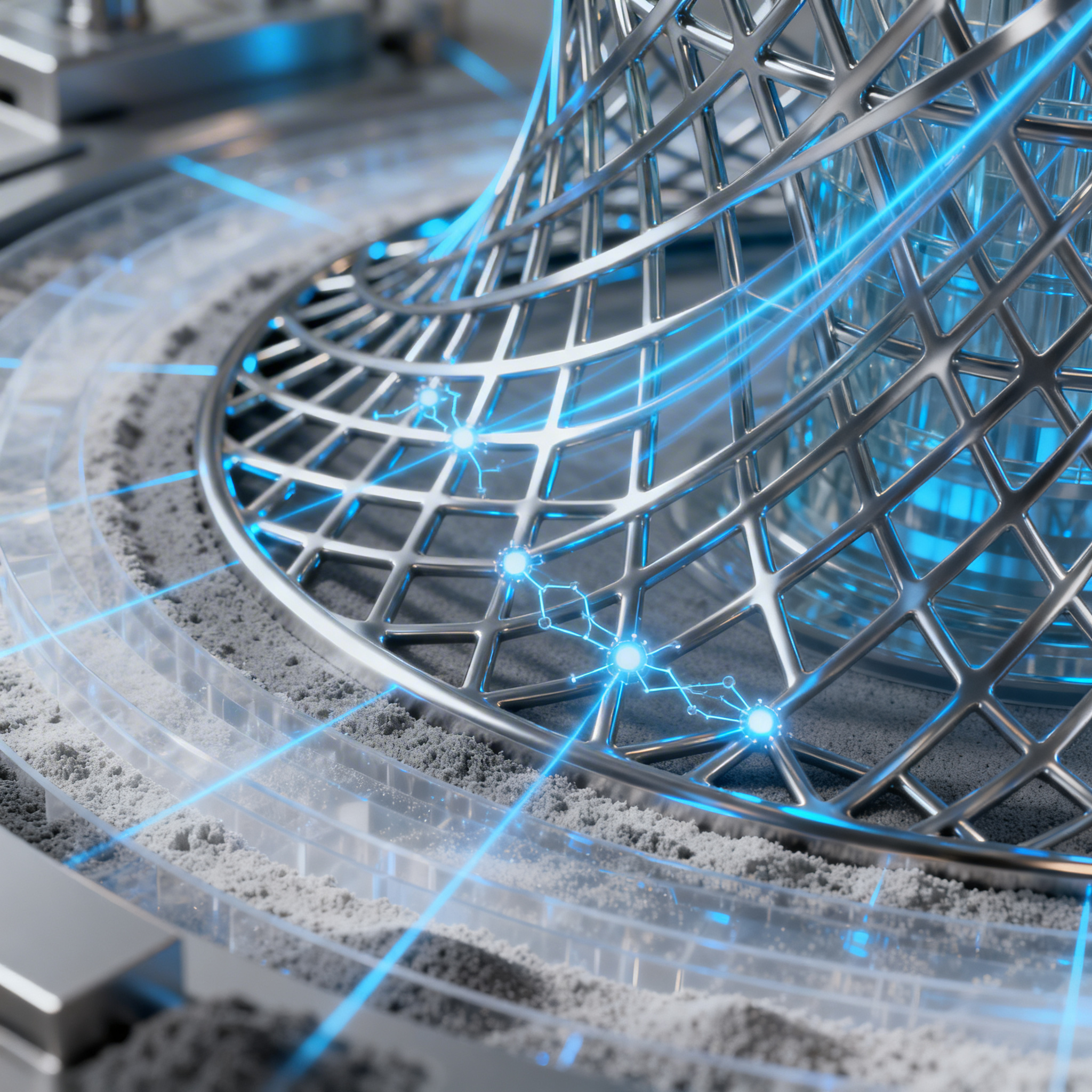
How AI is revolutionizing metal 3D printing for industrial production
Artificial intelligence is redefining the boundaries of metal 3D printing, bringing productivity and process control to unprecedented industrial levels. The integration of AI systems into LPBF (Laser Powder Bed Fusion) platforms represents the technological leap the sector has been waiting for to transform a prototyping technology into a reliable and scalable productive solution.
Precision Additive recently launched a new high-speed LPBF platform with AI-based control, positioning itself among the fastest machines in the metal additive manufacturing landscape. The announcement marks a turning point in a sector where the main challenge is no longer just the quality of components, but above all productivity and the ability to scale towards true serial industrial production.
The evolution of process monitoring thanks to AI
Artificial intelligence enables advanced monitoring of critical parameters during printing, improving the quality and consistency of the final product through real-time analysis of thousands of process variables.
In LPBF printing, component quality depends on complex parameters: melt pool stability, thermal distribution in the layer, metal powder management, scanning speed, and multi-laser synchronization. AI analyzes large amounts of data in real time, intervening to keep the process constant and reduce the risk of defects.
This approach represents a decisive step towards certifiable and repeatable production on a large scale. Machine learning systems recognize anomalous patterns during fusion and predict defects before the part is completed, transforming the 3D printer into an intelligent platform capable of adapting the process instantly.
The new machines monitor parameters that until recently required costly post-production inspections. Intervention during the process eliminates waste and drastically reduces scrap costs, addressing historical problems such as variations between different builds, internal defects not visible externally, and certification difficulties for critical sectors such as aerospace and medical.
From prototypes to serial production: the quality leap
With the help of AI, metal 3D printing becomes a reliable technology for serial production, reducing waste and increasing efficiency through intelligent automation and predictive control.
For mass production, the following are needed: increased productivity through high-power multi-laser architectures, repeatable and certifiable quality control, reduction of cost per part, integration of post-processing, and a stable, qualified supply chain. AI is becoming the enabling factor for every aspect.
New generations of LPBF systems adopt optimized scanning strategies, powder management automation, reduction of post-processing, and integrated digital workflows. In this context, speed is not just a technical advantage, but a necessary condition for adoption on an industrial scale. Precision Additive targets the segment of metal machines with the highest productivity, with the goal of lowering the cost per part and increasing competitiveness compared to fusion and CNC machining.
The approach based on artificial intelligence reduces defects and improves repeatability, key elements for the mass production of mission-critical components destined for high-responsibility sectors: rocket combustion chambers, injectors and propulsion systems, aerospace tanks and structures, complex energy components, and industrial parts subject to high stress.
Case study: Precision Additive and the new industrial standard
The Precision Additive platform demonstrates how the integration of AI can redefine the scalability and reliability of metal additive production, establishing new benchmarks for the entire sector.
The launch of the new machine highlights a broader trend: metal 3D printing is entering an industrial phase where productivity, automation, and digital control are absolute priorities. The goal is to build true additive lines capable of producing critical components for aerospace, automotive, energy, defense, and heavy industry.
These applications require complex geometries, systematic reliability, and sustainable costs. Additive manufacturing is becoming a pillar of the digital factory, capable of supporting critical industrial applications and scalable production on a large scale. The integration between multi-laser systems, large print volumes, automation, and quality control brings additive manufacturing closer to a stable production model.
The partnership between realities like AMCM and EOS, with the introduction of advanced systems like the AMCM M 8K, confirms that the industry is investing massively in platforms that combine large format, high power, and intelligent control. These systems produce critical components on a large scale, reduce the need for assembly, and open up unprecedented scenarios for strategic sectors.
Conclusion
Artificial intelligence is no longer an option, but a necessity to bring metal 3D printing to the next level of automation and industrial quality, definitively transforming the production paradigm.
The leap from prototyping to serial industrial production, which for years was the main obstacle of metal additive manufacturing, is becoming reality thanks to AI. The ability to monitor, predict, and optimize the critical parameters of the process in real time represents the key to unlocking the full productive potential of this technology.
Discover how leading companies are integrating AI into their production processes and what concrete benefits they are gaining in terms of cost reduction, quality improvement, and production time acceleration.
article written with the help of artificial intelligence systems
Q&A
- How does artificial intelligence improve quality control in metal 3D printing LPBF?
- AI analyzes thousands of parameters (melt pool, temperature, powder, scan speed) in real-time and intervenes instantly to keep the process constant, predicting and correcting defects before the part is completed, eliminating costly post-production inspections.
- What are the fundamental requirements to move from prototyping to mass production with metal 3D printing?
- Required are: high-power multi-laser architectures to increase productivity, repeatable and certifiable quality control, cost reduction per part, post-processing automation, and a qualified supply chain; AI enables all these aspects.
- Why is print speed considered a necessary condition for the industrial adoption of metal additive manufacturing?
- Speed lowers the cost per part, making the technology competitive compared to casting and CNC machining; only this way can metal 3D printing become economically sustainable for serial production in high-responsibility sectors like aerospace and medical.
- What does the Precision Additive case demonstrate in the landscape of metal 3D printing?
- Precision Additive launched a high-speed LPBF platform with AI control, setting new standards of productivity and reliability; the case shows that the industry is investing in large-format, multi-laser machines and intelligent control to produce critical components on a large scale.
- In which industrial sectors is AI making the serial production of metal 3D printed components more appealing?
- Aerospace (combustion chambers, tanks), energy (complex components), automotive, defense and heavy industry: all require complex geometries, systematic reliability and contained costs, requirements now satisfiable thanks to AI which reduces defects and improves repeatability.