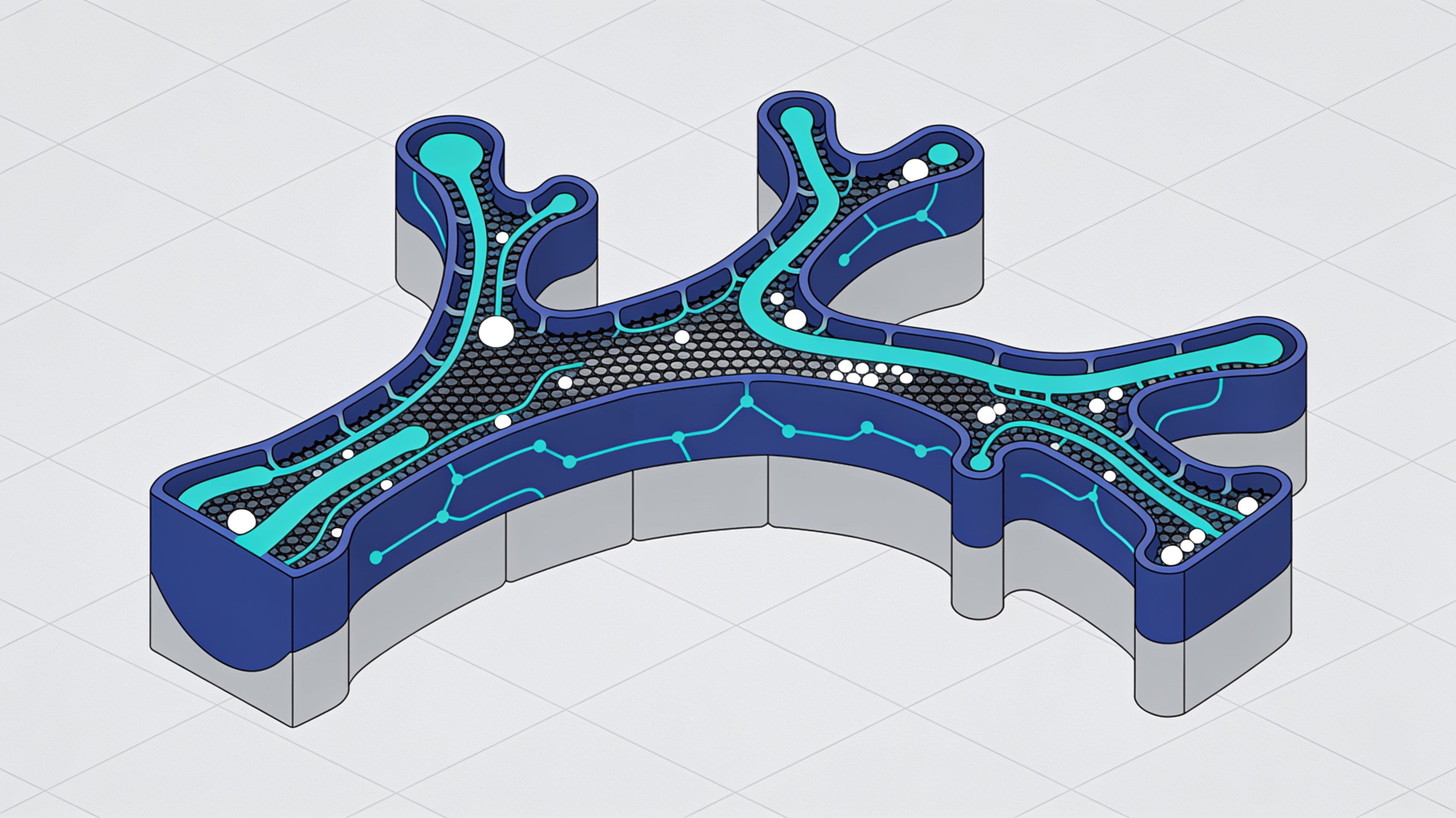
3D-printed coral-inspired scaffold reprograms immune cells to regenerate bone
Chinese researchers have developed a 3D-printed biomimetic scaffold that not only provides a structure for bone growth, but also actively intervenes in the immune environment of the injured area. The device, inspired by the porous structure of corals, combines multi-walled carbon nanotubes (MWCNT) with nano-hydroxyapatite (nHA) to treat steroid-induced osteonecrosis of the femoral head.
The study was conducted by the Army Medical University and Sichuan University. The results were published on June 30, 2026 in the journal Bone Research.
- 3D-printed biomimetic scaffold that mimics the structure of corals
- Combines carbon nanotubes and nano-hydroxyapatite for bone regeneration
- Reprograms immune cells in the injured area
- Intended for the treatment of glucocorticoid-induced osteonecrosis
The problem of steroid-induced osteonecrosis
Prolonged use of glucocorticoids can compromise bone vascularization and alter the behavior of immune cells, hindering natural regeneration processes.
Steroid-induced osteonecrosis of the femoral head (SONFH) represents a serious complication for patients undergoing corticosteroid therapy. The femoral head requires a continuous supply of blood, oxygen, and nutrients to maintain its structure.
When vascularization is compromised, osteocytes can undergo necrosis. The bone structure progressively weakens.
According to the data cited in the study, glucocorticoid-induced osteonecrosis affects between 9% and 40% of patients on corticosteroid therapy. The risk increases with prolonged exposures or high dosages.
An innovative biomimetic approach
The scaffold design is inspired by the hierarchical and porous structure of corals, combining materials that mimic the mineral composition of natural bone.
The research team developed a scaffold that replicates the complex geometry of corals. This design choice is not random: the interconnected porosity promotes cell growth and vascularization.
Nano-hydroxyapatite shows strong similarities with the mineral component of human bone. Multi-walled carbon nanotubes add mechanical and conductive properties.
Nano-hydroxyapatite (nHA) is a biocompatible material whose chemical composition resembles that of the mineral phase of natural bone, favoring integration with host tissue.
Beyond the structure: immunomodulation
The truly innovative element of the scaffold is not only to provide structural support, but to actively intervene in the local immune environment to promote regeneration.
Glucocorticoids not only damage bone directly. They modify the cellular environment in the bone marrow and interfere with natural repair processes.
The scaffold developed by Chinese researchers addresses this second critical aspect. The device is designed to reprogram the immune cells present in the injured area.
This approach represents a paradigm shift compared to traditional scaffolds. It is no longer just about filling a bone defect, but about creating the optimal biological conditions for regeneration.
The research team
The project is the result of collaboration between two important Chinese academic institutions, with a multidisciplinary team of ten researchers.
The authors of the study include Yue Luo, Qianhao Li, Changjun Chen, Xin Zhao, Zhouyuan Yang, Donghai Li, Ke Jiang, Yan Xiong, Meng Tian, and Pengde Kang. The work was conducted at the Army Medical University, also known as the Third Military Medical University, and Sichuan University.
The publication in Bone Research, which took place on June 30, 2026, confirms the scientific relevance of the research. The journal specializes in studies on bone tissue and its pathologies.
Future perspectives
This technology could open new avenues in the treatment of bone pathologies associated with prolonged pharmacological therapies.
The combined approach of structural support and immunomodulation could be applied to other conditions. Many bone pathologies have inflammatory or immune components that hinder healing.
3D printing allows the scaffold geometry to be customized based on the patient's anatomy. This production flexibility represents a significant advantage over standardized solutions.
Clinical success will depend on the results of subsequent trials. The transition from basic research to clinical application requires further validation of long-term safety and efficacy.
article written with the help of artificial intelligence systems
Q&A
What is the main purpose of the 3D-printed scaffold described in the article?
The scaffold aims to provide a structure for bone growth and actively intervene in the immune environment of the injured area. It is specifically designed to treat steroid-induced osteonecrosis of the femoral head.
Which natural structure inspired the design of this medical device?
The device is inspired by the porous and hierarchical structure of corals. This complex geometry promotes cell growth and vascularization in damaged bone tissue.
What materials compose the biomimetic scaffold developed by Chinese researchers?
The scaffold combines multi-walled carbon nanotubes (MWCNT) with nano-hydroxyapatite (nHA). These materials mimic the mineral composition of bone and add mechanical and conductive properties.
Who conducted the study and where were the results published?
The research was conducted by Army Medical University and Sichuan University. The results were published in the journal Bone Research on June 30, 2026.
What percentage of patients on corticosteroid therapy are at risk of developing osteonecrosis?
According to the study, glucocorticoid-induced osteonecrosis affects between 9% and 40% of patients undergoing this therapy. The risk increases significantly with high dosages or prolonged exposure.