How the Soft Optical SOLen Sensor Works in Medical Applications
The SOLen soft optical sensor uses light to measure deformations with greater precision and stability compared to traditional sensors, offering decisive advantages for advanced medical devices.
The medical sector requires increasingly accurate, reliable, and biocompatible detection systems. The SOLen soft optical sensor represents a significant innovation in this field, overcoming the limitations of traditional resistive or capacitive sensors through an approach based on light modulation. This technology finds application in biomechanical monitoring devices, smart orthoses, and human-machine interfaces for rehabilitation, where precision and longevity are fundamental requirements.
Operating Principle of the SOLen Sensor
The operation is based on the modulation of light within a deformable waveguide, allowing precise and stable measurements over time.
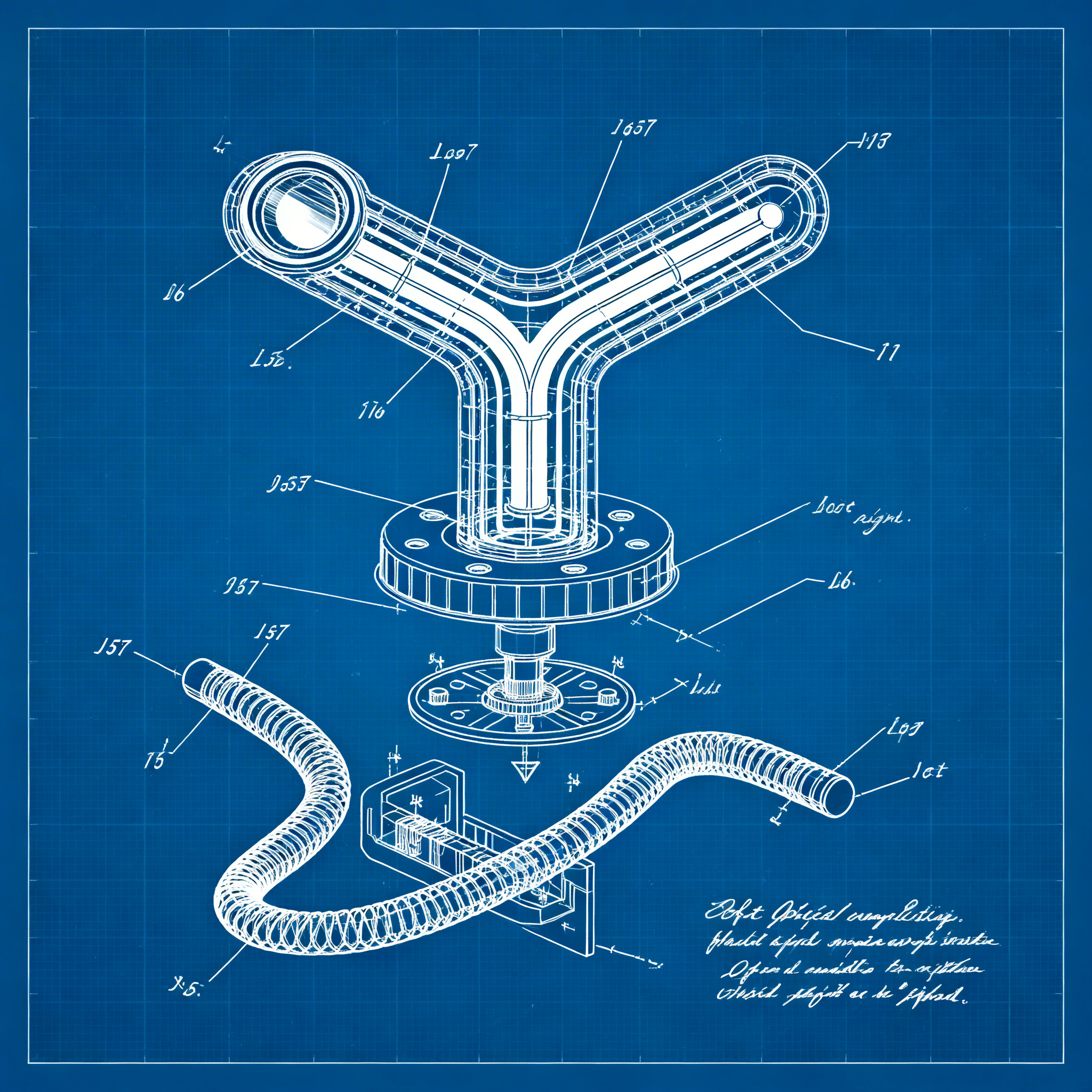
SOLen uses a 3D-printed Y-shaped structure that functions as an integrated optical waveguide. When the sensor is not deformed, light is distributed evenly between the two arms of the Y. During bending or rotation, a lens integrated into the structure focuses the light beam toward one of the two arms, modifying the distribution of light intensity in a predictable and reproducible manner.
This architecture produces a clear “switching” of the light distribution between the two branches beyond a certain deformation threshold. The system maintains good signal stability over time through repeated cycles of bending and rotation, an essential feature for medical applications requiring continuous and reliable monitoring.
Differential Configuration of Photoreceptors
The use of two photoreceptors allows for differential reading, which improves sensitivity and reduces environmental noise.
The heart of SOLen's detection system consists of two photoreceptors positioned at the ends of the arms of the Y-shaped structure. In undeformed conditions, the signals from the two photoreceptors are approximately equal. When the sensor is bent in one direction, the focus shifts toward one arm, increasing the signal in that channel and decreasing it in the other; for the opposite deformation, the behavior is reversed.
This differential configuration produces a robust signal, little sensitive to global variations in light intensity that could derive from source fluctuations or environmental conditions. The system is suitable for both quasi-analog measurements, via calibration, and threshold functions to detect discrete movement events, offering application versatility in diverse medical contexts.
Materials and Flexible Architecture
The soft material structure and the 3D-printed waveguide make the sensor adaptable to curved surfaces and complex movements.
The realization of SOLen exploits DLP (Digital Light Processing) printing, an additive technology that allows the creation of not only flexible structures but also the integration of functional optical elements directly into the sensor body. This approach overcomes the traditional logic of assembling rigid components on soft substrates, allowing for an holistic design of the entire sensor system.
The combination of the Y-structure and integrated lens is achieved in a single fabrication process, ensuring geometric accuracy and repeatability. This architecture allows the sensor to adapt to curved anatomical surfaces and follow complex joint movements, fundamental requirements for medical wearable devices and biomechanical monitoring systems.
Technical Advantages in Medical Contexts
Precision, absence of electromagnetic interference, and mechanical longevity make it ideal for advanced medical devices.
Compared to soft resistive or capacitive sensors, SOLen's optical approach significantly reduces problems related to electrical hysteresis, electromagnetic interference, and fatigue of flexible conductive tracks. The measurement channel is based on light alone up to the point of conversion into an electrical signal, minimizing sources of error and degradation.
This feature is particularly relevant in clinical environments, where diagnostic equipment such as MRI and other electromedical devices generate intense electromagnetic fields. The optical nature of the sensor makes it immune to these interferences, guaranteeing reliable measurements even in complex operating conditions. Furthermore, the absence of flexible electrical components subject to cyclic breakage increases the operational lifespan of the device.
Specific Applications in the Healthcare Environment
It is employed in biomechanical monitoring devices, smart orthoses, and human-machine interfaces for rehabilitation.
SOLen fits into the emerging landscape of sensors for soft robotics applied to the medical sector. Among future applications, soft grippers emerge that perceive force and position via internal optical paths, transparent wearable devices for measuring movement and pressure, and structures where beams and joints serve simultaneously as structural elements and sensors.
In the rehabilitation context, the sensor can be integrated into active orthoses that monitor joint angle and applied force in real-time, providing feedback to the patient or therapist. For biomechanical monitoring, SOLen enables the detection of complex movement patterns with programmable light paths within the same printed structure, opening possibilities for advanced and personalized diagnostic systems.
Conclusion
SOLen represents a key innovation for medical applications that require high precision and reliability in strain detection.
The SOLen soft optical sensor technology demonstrates how 3D printing can not only create flexible structures but also integrate advanced sensory functionality directly into the component's geometry. The differential approach based on optical waveguides offers substantial advantages over traditional electrical technologies, particularly relevant in medical contexts where precision, biocompatibility, and resistance to interference are indispensable requirements.
Explore how to integrate SOLen into your medical projects to improve the accuracy and durability of sensing systems, leveraging the advantages of soft optical technology printed in 3D.
article written with the help of artificial intelligence systems
Q&A
- What is the operating principle of the SOLen soft optical sensor?
- The SOLen sensor works by modulating light inside a deformable waveguide. It uses a Y-structure printed in 3D with an integrated lens that, when the sensor is deformed, focuses the light beam predictably onto one of the two arms, modifying the light intensity distribution.
- What advantages does SOLen offer compared to traditional sensors in medical devices?
- SOLen offers greater precision, stability over time, and absence of electromagnetic interference. Unlike resistive or capacitive sensors, it avoids problems such as electrical hysteresis and fatigue of conductive materials, resulting in being more reliable in complex clinical environments.
- How does the differential configuration of photoreceptors contribute to signal quality?
- Differential configuration with two photoreceptors improves sensitivity and reduces ambient noise. When the sensor deforms, the signal increases in one channel and decreases in the other, producing a robust output that is less susceptible to external variations.
- In what medical applications is the SOLen sensor used?
- SOLen is used in biomechanical monitoring devices, smart orthoses, and human-machine interfaces for rehabilitation. It can also be integrated into soft grippers and transparent wearable devices for motion and pressure measurements.
- What materials and production techniques are used to make SOLen?
- The sensor is fabricated using DLP (Digital Light Processing) printing, which allows the creation of flexible structures and the integration of optical elements directly into the sensor body. This approach enables holistic design and greater adaptability to curved surfaces.