3D Scanning: How the technology that transforms reality into digital works
3D scanning is not just a better way to photograph an object: it is the first step to bring it into the digital world and physically regenerate it. This technology allows capturing complex geometries, precise measurements, and surface details from real objects, transforming them into editable and 3D printable digital models, without original technical drawings.
Fundamentals of 3D scanning: definition and scope of application
3D scanning transforms physical objects into three-dimensional digital models through the capture of geometric data, opening operational possibilities ranging from documentation to industrial production.
3D scanners capture physical objects and convert them into digital models that can be viewed and modified in CAD software before being sent to the 3D printer. Unlike photos and videos, which only document the visual appearance, 3D scanning makes the object measurable and manipulable: it is possible to rotate it, zoom in, section it, and compare it with other samples, approaching the real physical experience.
The operational advantage is immediate: precise measurements, complex geometries, and detailed textures are obtained without laborious manual operations. Once the digital model is acquired, it is possible to duplicate, modify, or improve the object through 3D printing with minimal effort: measure once, print infinite times, maintaining dimensions and details impossible to recreate manually.
In the industrial field, 3D scanning allows creating duplicates of damaged components without manual measurements, designing perfect adaptations for irregular surfaces, reproducing rare or unique parts with precise dimensions, iterating physical prototypes for digital modifications before printing, resizing objects while maintaining proportions, and creating permanent digital archives of physical components.
Detection technologies: laser, structured light, and photogrammetry
The three main 3D scanning technologies – laser, structured light, and photogrammetry – each offer specific advantages in terms of acquisition mechanisms, achievable precision, and optimal usage contexts.
3D models derive from different technological families, whose choice depends on the object's size, the required level of detail, materials, and acquisition times. The main technologies project light patterns onto surfaces and measure their distortions.
Structured light technology structured light uses projectors that emit patterns through infrared VCSEL (Vertical-Cavity Surface-Emitting Laser) systems. The scanner calculates depth by analyzing the deformation of patterns when they hit surfaces at different distances. Advanced systems employ three projectors and two stereo cameras, capturing up to 980,000 points per second with steps of 0.1 mm.
I laser systems offer high precision, ideal for industrial applications where dimensional accuracy is critical. Infrared VCSEL technology solves problems caused by dark or reflective surfaces: light is absorbed by dark materials rather than reflecting back to the sensors, while shiny surfaces generate unpredictable reflections. Infrared wavelengths maintain accuracy on shiny metals or dark plastics.
Photogrammetry photogrammetry adopts a different approach, reconstructing three-dimensional geometry by processing multiple photographic images via software algorithms. It is also accessible via smartphones, making 3D scanning available without dedicated hardware.
Workflow: from physical object to ready-to-use 3D model
The scanning process follows a structured workflow that takes raw data capture to 3D model reconstruction, up to optimization for integration with CAD software and preparation for 3D printing.
The foundation of every 3D scan is the point cloud (point cloud), consisting of thousands of coordinates in three-dimensional space. Each point represents a specific location on the surface; modern scanners capture over one million points per second. The distance between points determines the resolution.
Modern systems use guided software with real-time visual feedback: the display turns red if the scanner is too close, blue if too far, and green when the distance is optimal. This assisted approach drastically reduces the learning curve, allowing results in minutes.
Photogrammetry working distance significantly influences quality. Scanners typically operate between 160 mm and 1,400 mm from surfaces; the optimal distance is approximately 400 mm, which allows capturing a field of view of 434 mm × 379 mm in a single pass.
Raw point clouds require processing before becoming printable models. The software merges passes into coherent meshes, creates watertight surfaces, and removes artifacts via automated algorithms. Cleaning and hole-filling functions are integrated: a click on “Clean Mesh” simultaneously applies various tools.
I alignment modes (feature, hybrid, texture, marker globali) si adattano a tipi di oggetto e ambienti diversi. Al termine è possibile esportare in formato OBJ, STL, PLY, P3 o 3MF, mantenendo le informazioni cromatiche catturate dalla telecamera RGB integrata.
Precisione vs velocità: trade-off tecnologici e scelta degli strumenti
La scelta dello strumento richiede di bilanciare accuratezza geometrica e tempi di acquisizione, considerando illuminazione ambientale, tipologia di superficie e requisiti del processo produttivo finale.
Non ogni scanner si adatta a ogni progetto. La selezione dipende dall’area di scansione, dal dettaglio necessario e dalla compatibilità con la stampante 3D. Scanner progettati per la risoluzione e il volume della stampante offrono precisioni fino a 50 µm e risoluzioni mesh di 0,25 mm.
L’illuminazione ambientale influenza la qualità nonostante la resilienza della tecnologia a infrarossi. All’aperto la scansione è affidabile, ma la luce solare diretta può sopraffare i sensori; negli interni con luce controllata i risultati sono più consistenti, soprattutto per oggetti piccoli.
I sistemi a doppia tecnologia combinano VCSEL per lungo raggio e MEMS per dettagli ravvicinati. Unità standalone con 32 GB di RAM e 512 GB di storage eliminano il computer collegato; il wireless consente trasferimenti cloud o proiezione su display secondari. La modalità HD cattura dettagli a 15 fps, quella rapida gestisce oggetti grandi a 20 fps.
La scansione di soggetti umani richiede accorgimenti specifici, ad esempio per i capelli: modalità dedicate aumentano la cattura in queste aree difficili. L’assenza di proiettore a luce visibile mantiene comfort durante scansioni a corpo intero, evitando affaticamento oculare.
Casi industriali: riproduzione di componenti senza disegno originale
Il reverse engineering tramite scanner 3D consente la riproduzione accurata di componenti per manutenzione e produzione additiva, con impatti misurabili su tempi di risposta, sicurezza operativa e continuità produttiva.
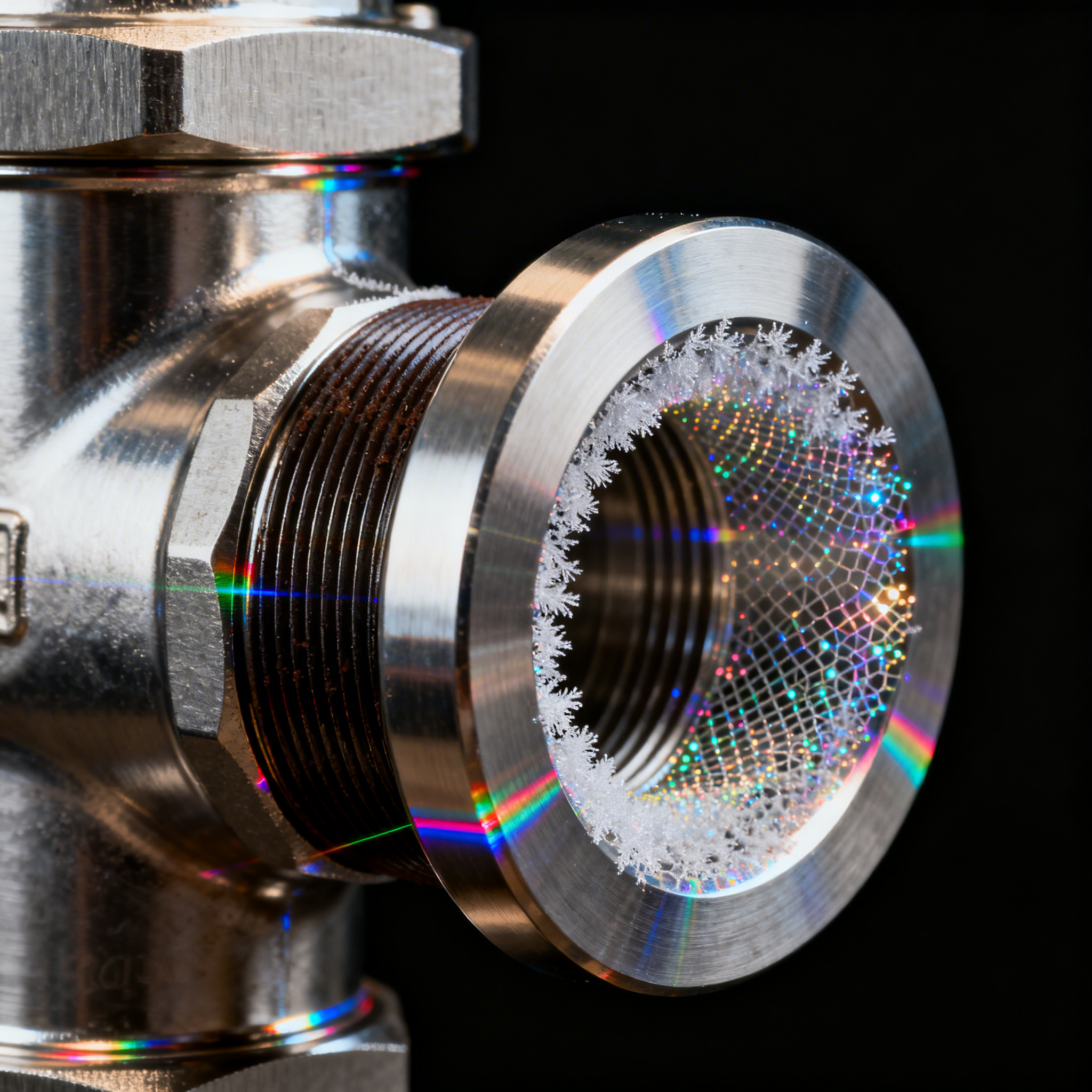
In oil or gas refineries, a leak, a damaged pipe, or a faulty valve can cause massive shutdowns. The rule is simple: intervene quickly, repair correctly, avoid stopping. Historically, repairs were based on manual measurements, approximate diagrams, and strong field experience. This approach works as long as geometries do not become too complex, access is limited, or the fluid prevents reliable measurements. The result: rework, delays, and increased risk of production stoppage.
Digitization via 3D scanning is up to 18 times faster than traditional methods. Wireless portable scanners with AI assistance are designed for field use: c
article written with the help of artificial intelligence systems
Q&A
- How does 3D scanning overcome the limits of traditional photo and video documentation?
- Unlike photos and videos, which reproduce only the visual appearance, 3D scanning generates a measurable and manipulable model: it can be rotated, enlarged, sectioned, and compared with other samples, approaching the experience of the real object without original technical drawings.
- What are the three main 3D acquisition technologies and what advantage does each offer?
- The three technologies are laser, structured light, and photogrammetry. Laser guarantees the highest dimensional precision for industrial applications; structured light (infrared VCSEL) overcomes problems with dark or reflective surfaces; photogrammetry is accessible even from smartphones without dedicated hardware.
- How is the raw point cloud transformed into a printable 3D model?
- The software combines the various passes into a coherent mesh, creates watertight surfaces, removes artifacts, and automatically fills holes with integrated algorithms. At the end, OBJ, STL, PLY, P3, or 3MF files are exported while maintaining RGB color information.
- Why is the working distance during scanning critical for the quality of the result?
- Scanners typically operate between 160 mm and 1,400 mm; the optimal distance is approximately 400 mm, which balances resolution and field of view (434 × 379 mm). Too close and you lose depth of field, too far and the point cloud density decreases.
- In which industrial situations is 3D scanning up to 18 times faster than traditional methods?
- In the oil and gas sectors, when damaged pipes or valves must be reproduced without original drawings: wireless digitization in the field avoids manual measurements in hazardous areas, reduces rework, and shortens production downtime times.