
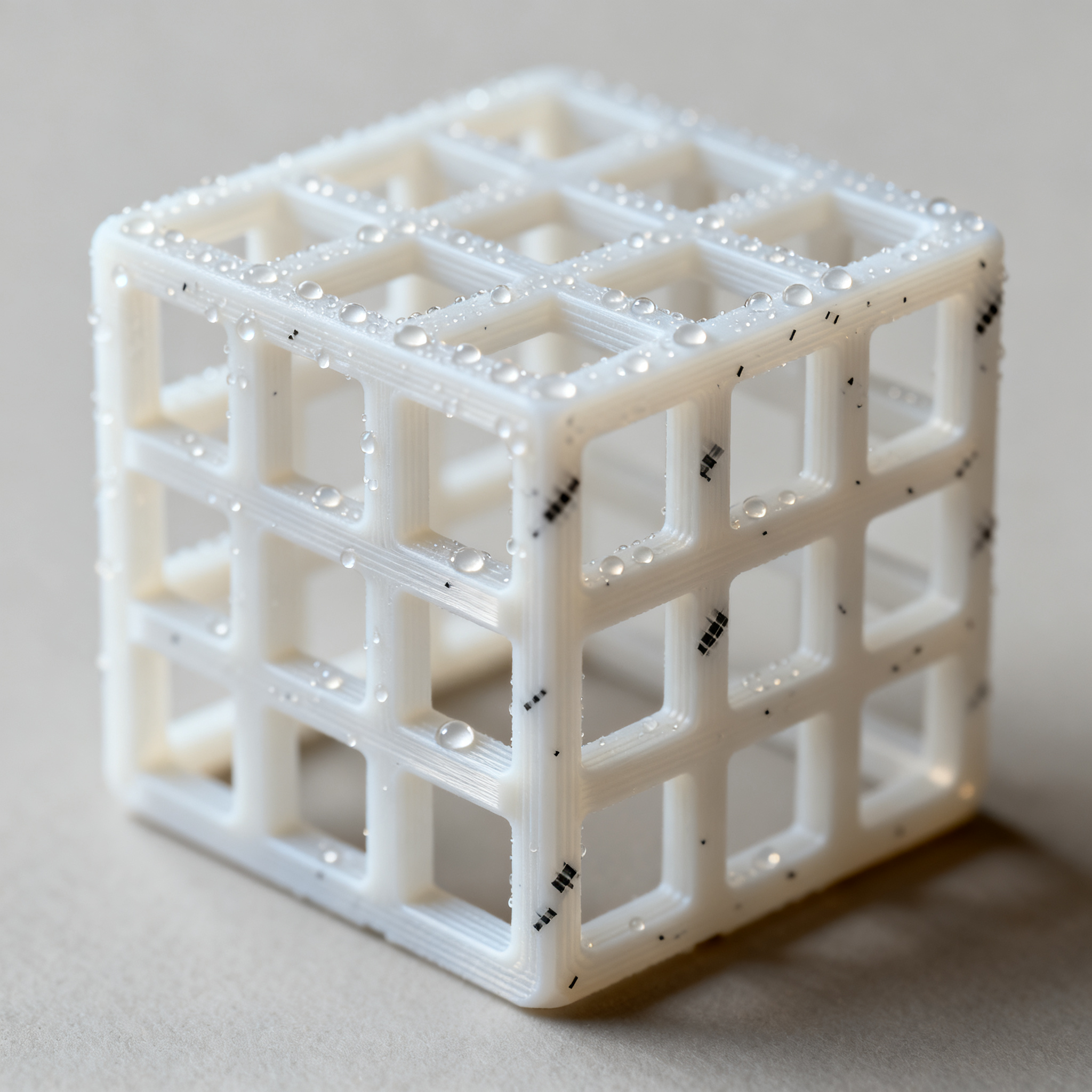
Optimization of accessories and post-processing techniques in 3D printing
Introduction to essential accessories for 3D printing
Post-processing is crucial for transforming 3D printed components into functional and aesthetically finished parts. Specialized accessories significantly improve surface quality and mechanical properties, making 3D printing suitable for professional production contexts.
Automated washing stations, such as the Formlabs Form Wash, are essential for cleaning components printed with SLA technology. The system automates cleaning with isopropyl alcohol (IPA), tripropylene glycol monomethyl ether (TPM) or water: capacity of 8.6 liters, cycles of approximately 15 minutes with fresh IPA and the possibility of processing approximately 70 prints before replacing the solvent, ensuring efficiency and repeatability.
For larger volumes, the Form Wash L offers 37.9 liters of capacity and accepts components up to 33.5 × 20 × 30 cm. Both systems eliminate manual cleaning, reduce exposure to chemicals and ensure consistent results.
Post-processing technologies: smoothing and surface finishes
Chemical vapor smoothing produces finishes comparable to injection molding. AMT PostPro systems use controlled vapors to smooth and seal the surface of thermoplastics, eliminating layer lines.
The SF100 model features a chamber of 400 × 600 × 400 mm and is compatible with SLS, MJF, CFR, FFF/FDM, FGF, HSE and HSS. It supports PA6, PA11, PA12, ABS, PC, PP, TPU, TPE, SBC, PEBA and composites with glass, carbon or mineral fillers.
For small-sized laboratories, the PostPro SFX is the first benchtop system for chemical vapor smoothing: 11.5 liter chamber, capacity to smooth complex geometries and internal cavities without degrading mechanical properties.
Chemical and thermal treatments for improving mechanical properties
LED post-polymerization optimizes the properties of photopolymer resins. The Formlabs Form Cure employs 13 high-intensity multidirectional LEDs and thermal control up to 80 °C, accommodating parts up to 14.5 × 14.5 × 17.5 cm.
The Form Cure L, for industrial applications, handles components 32 cm high (external dimensions 69 × 54 × 44.5 cm) and ensures uniform polymerization, essential for achieving required mechanical specifications.
Controlled thermal treatments increase strength, hardness, and dimensional stability. Some functional resines require post-polymerization; others benefit from it in demanding applications.
Advanced accessories for support removal and cleaning
Automated depowdering and blasting systems are essential for powder-based technologies. The AMT PostPro DP Max combines depowdering and blasting in a single unit, with a capacity of 30 kg and three guns to maximize productivity.
Supports various media: glass beads, polybeads, corundum, ceramics, walnut shells, plastics, stainless steel and micro steel, adapting to materials and required finishes.
The Formlabs Fuse Sift recovers unsintered powder from Fuse series SLS printers, compatible with Nylon 12, Nylon 12 GF, Nylon 11 and Nylon 11 CF, reducing waste and costs.
The Ultimaker PVA Removal Station automatically dissolves soluble PVA supports from complex FFF prints without damaging the part.
Innovative solutions for coloring and coating
Coloration and coating customize the appearance and add functionality. Surface preparation—sanding or chemical treatments—is a prerequisite for professional coatings.
Specific treatments can make components airtight or waterproof, expanding their applications. Vapor chemical smoothing creates a sealed surface that naturally improves fluid resistance.
Primers and coatings formulated for thermoplastics ensure optimal adhesion and durability; the choice must consider the base material, usage conditions, and aesthetic requirements.
Case studies: practical implementation of accessories and post-processing
Aerospace: The combination of 3D printing and AMT PostPro post-processing optimized tooling, providing smooth and precise surfaces on complex geometries while maintaining critical tolerances.
Medical prosthetics: Vapor chemical smoothing increased the comfort, safety, and durability of the devices; uniform surfaces eliminate irritation points and facilitate cleaning.
Motorsport (Formula Student): Markforged 3D printing with AMT smoothing optimized engine components: lower roughness, better aerodynamics, less friction.
Railway: 3D printing in silicone with dedicated post-processing solved the shortage of spare parts, keeping fleets operational. Rapid production and adequate finishes demonstrated the strategic value of the integration between 3D printing and post-processing.
Future perspectives and recommendations for workflow optimization
The evolution of post-processing transforms additive manufacturing from a prototyping tool to a production solution. Automation reduces cycle times and ensures repeatability, prerequisites for industrial adoption.
The integration of validated solutions into sales channels—such as the Stratasys-PostProcess Technologies program—simplifies the purchase of complete workflows, reducing logistical complexity and ensuring certified compatibility.
To optimize the flow, organizations must consider the entire process already in the design phase, selecting complementary printing and post-processing technologies. Digital libraries of validated parameters accelerate industrialization and guarantee consistent results.
Investing in professional accessories is strategic to express the full potential of additive manufacturing, obtaining components with quality comparable to traditional processes, while maintaining the customization and flexibility typical of 3D printing.
article written with the help of artificial intelligence systems
Q&A
- What is the main role of specialized accessories in the post-processing of 3D printing?
- They significantly improve the surface quality and mechanical properties of printed components, making 3D printing suitable for professional production contexts and transforming raw parts into functional and aesthetically finished pieces.
- How does the Formlabs Form Wash washing station work and what are its advantages?
- Automate the cleaning of SLA parts with IPA, TPM or water: it has a capacity of 8.6 liters, cycles of 15 minutes and can process approximately 70 prints before replacing the solvent. It eliminates manual cleaning, reduces chemical exposure and guarantees consistent results.
- What distinguishes the AMT PostPro SF100 system from other chemical vapor smoothing systems?
- It is compatible with many technologies (SLS, MJF, FFF/FDM, etc.) and numerous materials (PA6, PA11, ABS, PC, TPU, composites). Its 400 × 600 × 400 mm chamber produces smooth finishes similar to injection molding, erasing layer lines.
- Why is LED post-curing fundamental for photopolymer resins?
- It optimizes mechanical properties, resistance and dimensional stability. Some resins require it mandatorily; others benefit from it in demanding applications. Systems like Form Cure guarantee uniform polymerization with thermal control up to 80 °C.
- How does the AMT PostPro DP Max support production with powder-based technologies?
- It combines depowdering and sandblasting in a single 30 kg unit with three guns, supporting different media (glass beads, corundum, steel). It maximizes productivity, adapting to required materials and finishes and guaranteeing efficient removal of unsintered powder.
- What benefits has chemical vapor smoothing brought to the aerospace and medical prosthetics sectors?
- In the aerospace sector, it has provided smooth and precise surfaces while maintaining critical tolerances on complex geometries. In the prosthetics field, it has increased comfort and safety, eliminating irritation points and facilitating cleaning thanks to uniform surfaces.


