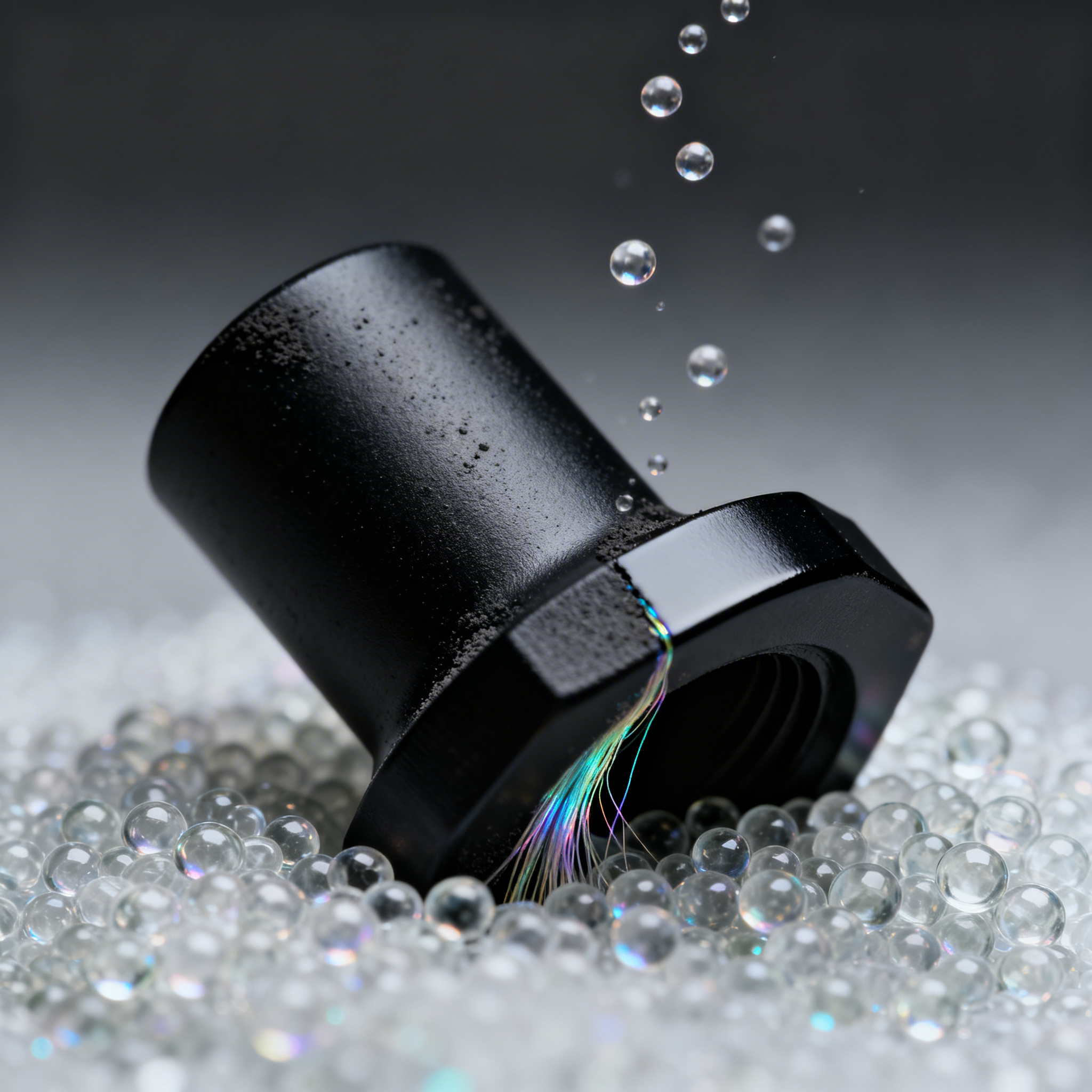
Optimizing post-processing for industrial production: an operational guide to scalable technologies
The transition from prototyping to manufacturing requires strategic post-processing choices that affect component quality and process efficiency. Up to 60% of the cost of a printed part can come from post-processing operations, making automation and scalability of these phases decisive for industrial competitiveness.
Overview of post-processing technologies for advanced materials
A mapping of the main post-processing solutions dedicated to advanced polymers and composites used in the industrial sector, with a focus on technologies that preserve the mechanical properties of materials.
Post-processing technologies for advanced materials are divided into two main families: chemical vapor smoothing and depowdering/shot blasting. Vapor smoothing is particularly effective for technical polymers and composites. Systems like AMT PostPro SF100 and SF50 are compatible with PA6, PA11, PA12, polycarbonate, TPU, TPE and materials loaded with glass, carbon or mineral fibers.
The technology goes beyond aesthetic improvement: it seals the surface making components impermeable to air and water, with a dimensional variation of less than 0.4% and an increase in elongation at break without loss of tensile strength. Compatibility with SLS, MJF, FFF/FDM and CFR guarantees application versatility.
For powder-based materials, automated depowdering systems use compressed air and abrasive media (glass beads, ceramics, polymers) to remove residue without damaging fine details. They are material and print platform agnostic and operate on all powder-based technologies.
Automation in post-processing: selection criteria and integration
Operational guidelines for evaluating and integrating automated systems such as AMT PostPro and Formlabs Fuse Blast into existing production processes, with particular attention to reducing bottlenecks.
The integration of automated solutions requires an evaluation that goes beyond technical specifications. The first criterion is throughput: systems like AMT PostPro DP Max, with a load capacity of up to 30 kg and three blasting guns, are designed for high volumes, while Formlabs Fuse Blast targets medium production with cycles under 10 minutes for cleaning SLS parts.
Programmability is a distinctive element: HMI touchscreen interfaces allow for saving optimized “recipes” for specific material-geometry combinations, ensuring repeatability between batches. This standardization is fundamental in the transition from manual to automated production, reducing variability between operators.
Operational safety should not be underestimated: automation reduces exposure to chemicals and solvents, which is relevant in resin removal operations where automated systems can cut waste by up to 75% compared to manual processes. The validation of unified workflows, as demonstrated by the partnership between Stratasys and PostProcess Technologies, allows for purchasing printers and post-processing systems through a single channel, reducing deployment times and integration risks.
Material-method compatibility: performance optimization
Technical analysis of interactions between material types and finishing methods, with a focus on throughput and durability of final components.
Compatibility between material and post-processing method determines final quality and process efficiency. For advanced thermoplastic polymers, vapor smoothing offers specific benefits: beyond aesthetic improvement, surface sealing facilitates subsequent cleaning, dyeing, and coating, expanding application possibilities.
Composite materials loaded with glass, carbon, or mineral fibers require attention: vapor smoothing preserves fiber integrity while improving the finish, a difficult balance with traditional mechanical methods. The compatibility of AMT PostPro systems with these materials makes them suitable for aerospace and automotive applications where mechanical properties are non-negotiable.
For SLS and MJF, the depowdering-blasting-smoothing sequence is optimal: after powder removal and blasting, parts can undergo vapor smoothing to obtain a finish comparable to injection molding. However, such a multi-step sequence requires accurate batch planning to prevent post-processing from becoming the bottleneck.
Operational scalability: from the production cell to the line
How to design scalable post-processing paths, maintaining high quality and repeatability in complex production environments with increasing volumes.
Scalability in post-processing requires a systemic approach that considers the entire production workflow. A single build may contain parts requiring differentiated paths: some need only depowdering, others require blasting, smoothing, and heat treatments. This divergence creates scheduling complexity that traditional software struggles to manage.
Batch-aware planning is critical: operations like curing, depowdering, and chemical treatments are governed by parameters such as surface area, volume, material compatibility, and cycle time. Without intelligent batch management, inefficiencies in equipment usage and unpredictable completion times are generated.
System modularity is fundamental for growth: the AMT PostPro range offers scalable solutions from desktop (SFX with 11.5-liter chamber) to industrial systems (SF100 with 96-liter chamber), allowing the investment to be scaled based on current and future volumes. This modular scalability allows starting with contained investments and growing progressively.
Continuous monitoring and Statistical Process Control (SPC) become essential when increasing volumes: tracking key parameters, lot acceptance values, and compliance rates allows identifying drifts before they impact quality. The goal is to move from a posteriori control to in-process control, anticipating problems rather than detecting them on the finished component.
Conclusion
Choosing the right post-processing can make the difference between a functional component and a market-ready product. Automation is not just a matter of speed but of repeatability, safety, and the ability to scale without amplifying variability. Integrating validated systems reduces implementation risk and accelerates time-to-market.
Evaluate each technology based on its real impact on the production chain, not just on final aesthetics. Consider material compatibility, throughput, programmability, and the ability to integrate with existing systems. Automated post-processing represents the missing link to transform additive manufacturing from a prototyping tool into an industrial production solution.
article written with the help of artificial intelligence systems
Q&A
- How much can post-processing impact the total cost of a part printed in an industrial setting?
- Up to 60% of the part's cost can derive solely from post-processing operations. This impact makes automation and scalability of these phases decisive for the economic competitiveness of the production process.
- What are the two main families of post-processing technologies for advanced materials cited in the article?
- Technologies are divided into chemical vapor smoothing and depowdering/shot blasting. The former seals the surface, improving impermeability and finish, while the latter removes powder residues without damaging details.
- Why is programmability considered a distinctive element in automated post-processing systems?
- HMI interfaces allow saving optimized ‘recipes’ for specific material-geometry combinations, ensuring repeatability between batches and reducing variability caused by the operator. This standardization is fundamental in the transition from manual to automated production.
- How can post-processing be prevented from becoming a bottleneck in SLS or MJF production?
- An optimal depowdering-blasting-smoothing sequence is adopted, and batches are planned accurately considering surface, volume, material compatibility, and cycle time. Intelligent batch management avoids unpredictable completion times and underutilization of equipment.
- What advantages does vapor smoothing offer on fiber-filled composite materials?
- The technology preserves the integrity of glass, carbon, or mineral fibers, improving surface finish without loss of tensile strength. This balance is difficult to achieve with traditional mechanical methods and makes the components suitable for aerospace and automotive applications.
- What is meant by modular scalability in post-processing and what is the benefit for the company?
- The AMT PostPro range goes from desktop systems (11.5 liters) to industrial solutions (96 liters), allowing the investment to be scaled based on current and future volumes. The company can start with contained capital and expand capacity progressively, reducing financial risk.