
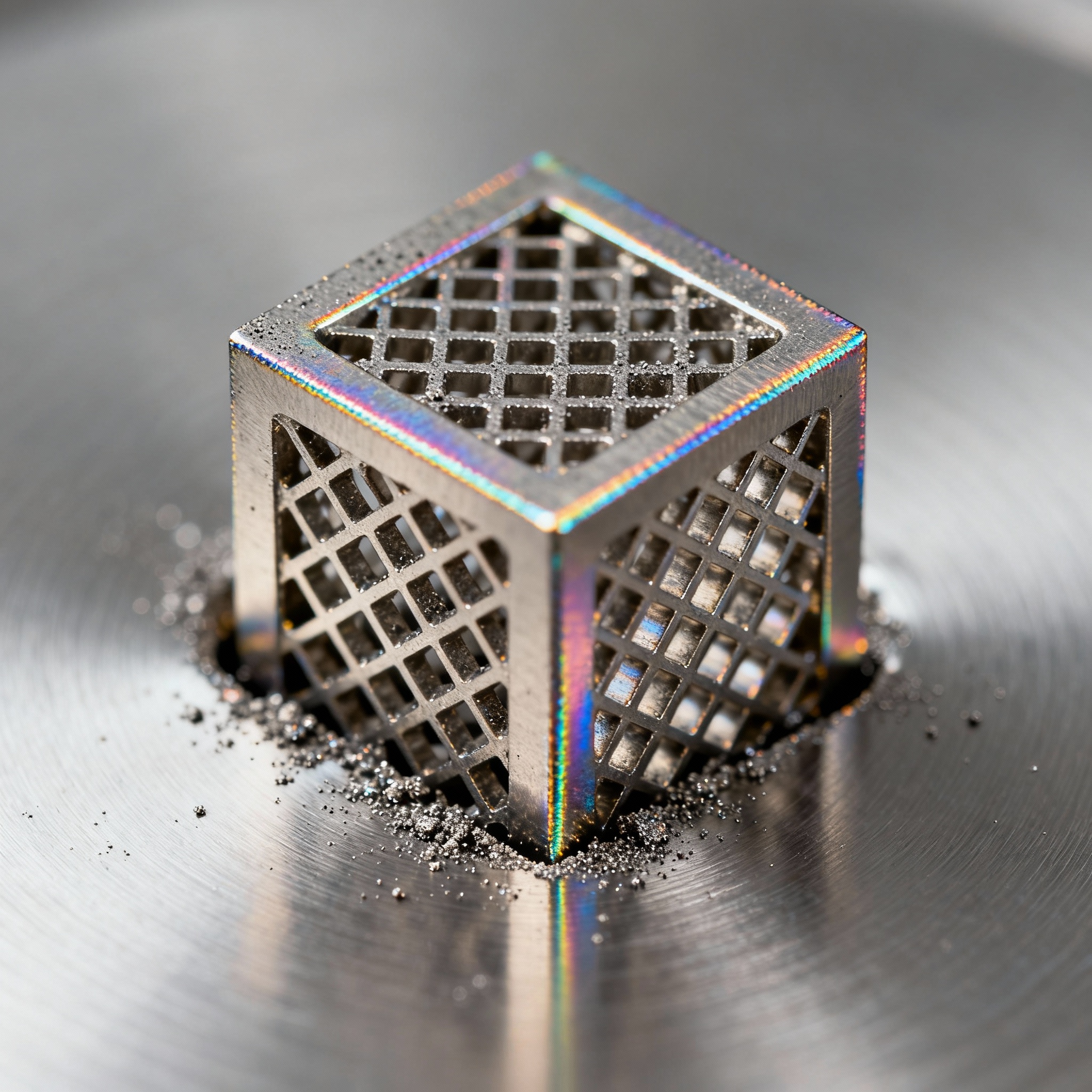
New advances in metal 3D printing: market expanding towards 2026
The metal 3D printing sector is experiencing a phase of strong expansion: in the third quarter of 2025, sales of metal additive manufacturing platforms grew by 251% year-over-year, driving a 51% overall increase in the global 3D printing hardware market. Demand is being driven by the aerospace and defense sectors, along with the Chinese market, which is playing an increasingly prominent role in advanced manufacturing.
Emerging technologies
Technological innovation is redefining the boundaries of metal additive production. MetalPrinting, a Korean company, has launched Gauss MT90, a compact system based on metal paste extrusion (PME). The solution eliminates risks associated with fine powders, explosions, and high-temperature processes; the Quick Start mode automatically configures parameters, allowing printing to start in minutes. The machine processes stainless steel SUS 316L, copper, titanium, and aluminum with a precision dispensing algorithm, consuming less energy than high-power laser systems and producing high-precision components such as heat sinks and electronic parts.
In parallel, researchers from Xiamen University and the University of California, Berkeley, have developed a support-free 3D printing technique for thermoset materials: combining Direct Ink Writing with instantaneous laser polymerization, it enables “mid-air” printing, accelerates the process and eliminates post-processing, programming mechanical and electrical properties for soft sensors, stretchable components, and magnetic robots.
Market expansion and new applications
The industrial segment of systems over 100,000 $ recorded a +31% increase in units shipped; China leads with +221%, driven by ZRapid Tech and BLT. Chinese suppliers of metal Powder Bed Fusion systems recorded +351% year-over-year, destined mostly for the local aerospace and private space market.
Western customers in the aerospace and defense sectors have recovered to a lesser extent: EOS closed the quarter with revenues +201%, Nikon SLM Solutions strengthened its leadership in large-format metal systems thanks to the NXG platform.
According to the AM Investment Forum 2025, three areas show significant growth:
- Thermal systems for data centers, where 3D-printed heat exchangers offer design flexibility and superior performance;
- Satellites, particularly small LEO platforms, with reductions in weight, costs, and assembly complexity;
- Semiconductor production equipment, which benefits from complex internal geometries made possible by 3D printing.
Innovative materials and process optimization
Metal FFF (fused filament fabrication) is emerging as a more accessible method. The three-stage process—bound metal powder printing (“green part”), debinding (“brown part”), and sintering—transforms the part into solid metal. Advantages: simple material change, minimal DPI for printing, washing, and sintering. Applications range from 17-4 PH steel prototypes for aerospace and defense to H13 and copper tools for manufacturing, up to robotic components and automotive parts.
Smart design maximizes results: identify critical dimensions, increase bed adhesion, reduce supports, and plan batch processing. For washing, increase surface area and hollow out large volumes to shorten times; for sintering, balance features and round off edges to reduce stress concentrations.
Future prospects and impact on manufacturing
The market is moving from experimentation to mass production: compound annual growth rates above 20% will raise the value from the current $40 billion to $170-250 billion by the mid-2030s. Adoption is tangible: STEM programs train students already expert in additive workflows, while the US armed forces spread 3D printing to every department, creating professionals who will transfer skills to the civilian sector.
Maturity in defense and aerospace demonstrates that metal additive production has surpassed the prototyping phase. With the National Defense Authorization Act recognizing it as critical infrastructure, the sector enters a new era of security standards, traceability, certification, and scalability: metal 3D printing is now a strategic technology for the future of global manufacturing.
article written with the help of artificial intelligence systems
Q&A
- What is the metal 3D printing technology presented by MetalPrinting and what advantages does it offer?
- MetalPrinting launched Gauss MT90, a compact system based on metal paste extrusion (PME). It eliminates the risks of fine dust and explosions, consumes less energy than laser systems, and allows printing to start in a few minutes thanks to the Quick Start mode.
- Which sectors are seeing the highest growth in metal 3D printing in 2025?
- The aerospace and defense sectors, along with the Chinese market, are driving demand. In China, suppliers of metallic Powder Bed Fusion systems recorded an annual growth of +351%, destined mainly for the local private aerospace and space market.
- What are the three new application areas highlighted by the AM Investment Forum 2025?
- Thermal systems for data centers, small satellites in LEO orbit, and semiconductor manufacturing equipment. In these fields, 3D printing offers design flexibility, weight and cost reduction, and complex internal geometries.
- How does the metal FFF process work and what materials does it allow to use?
- Metal FFF involves three phases: metal powder bound printing, debinding, and sintering. It allows working with 17-4 PH steel, H13, copper, and other materials, facilitating material changes and reducing printing costs.
- What are the projections for the value of the global metal 3D printing market by 2035?
- The market will grow with compound rates above 20% annually, passing from the current 40 billion dollars to 170-250 billion by the mid-2030s, thanks to the shift from experimentation to mass production.


