
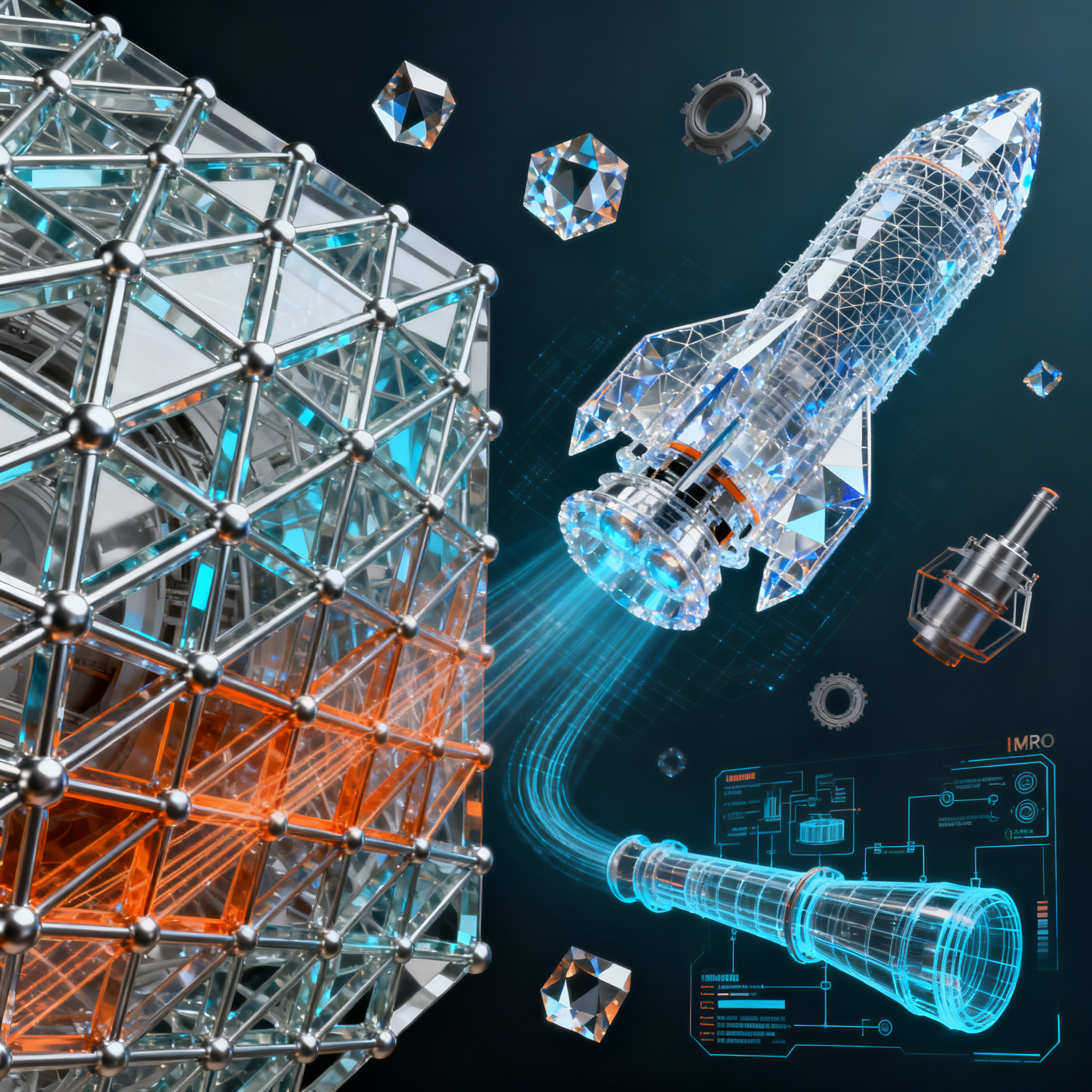
New industrial automation technologies presented at TechManufacturing 2026
The leading additive manufacturing and industrial automation fairs of 2026 outline a mature technological landscape, characterized by concrete solutions and established applications. Formnext 2026 (17-20 November, Frankfurt), TCT Asia 2026 (17-19 March, Shanghai) and AMUG 2026 (15-19 March, Reno, Nevada) are crucial events for assessing the evolution of advanced production.
The sector has overcome the initial enthusiasm phase and focuses on measurable parameters: process stability, repeatability, economic efficiency and real applications. Formnext 2025 recorded 38,282 visitors, a record that confirms the industry's interest, now oriented towards precise demands for reliability and demonstrable value.
Innovations in collaborative robotics
Large-format additive manufacturing (LFAM) is among the most significant developments. At Formnext 2025, pieces of several meters attracted attention: numerous companies exhibited polymer structures so large they could host meetings. The metal sector is also increasing its relevance.
Applications range from aerospace – high-performance structural components and parts for propulsors – to industrial production of precision tools and molds. BLT, Farsoon Technologies, HBD, Eplus 3D and others will present solutions for aerospace, automotive, medical and manufacturing. The technology has also proven effective in the nautical sector: an electric catamaran was printed in six days with glass-fiber reinforced polypropylene.
IoT solutions for predictive maintenance
Digital platforms for maintenance, repair, and overhaul (MRO) management are becoming a key element. Pelagus 3D assists large industrial clients in the digitalization, evaluation, qualification and production of MRO components, acting as a reliable intermediary between OEMs, end-users and production services.
These solutions transform old CAD files into new printed geometries, ensuring the correct functioning of parts through rigorous verification processes. The integration of advanced software, digital workflows, simulation tools and intelligent systems – from design to finished part – characterizes the evolution towards complete digitalization.
Materialise, Siemens and other suppliers propose end-to-end software systems that cover the entire production cycle; artificial intelligence tools like Accenture's Engineering Orchestrator offer natural language interfaces to access information from the entire digital ecosystem.
Developments in artificial intelligence applied to production
Artificial intelligence progresses in step with additive manufacturing. The injector head of the methane/liquid oxygen rocket engine LEAP 71 was entirely designed by Noyron, LEAP 71's Large Computational Engineering Model, and printed on a Nikon SLM Solutions NXG 600 E.
Hardware innovation continues: the EOS M4 Onyx, successor to the M400-4, promises greater productivity, reliability and economic efficiency. The news focuses on high value-added applications, optimized by complete workflows.
Adoption is growing in sectors where performance and reliability are critical: in aerospace, engine parts and drone components are produced; in healthcare, dental devices, orthoses and prostheses are made; defense is a rapidly expanding market, with requests for drones, silencers and field-ready spare parts, confirming interest in specialized materials and robust processes.
Future prospects of Industry 4.0
On the eve of the 2026 events, additive manufacturing is at a turning point. The enthusiasm of previous years has not vanished, but has transformed into pragmatic objectives: productivity, repeatability, economic efficiency and adherence to end-use applications.
Technological depth, cross-sector insights and real-world use cases make Formnext, TCT Asia and AMUG the ideal platforms to understand the direction of the industry. Companies can already book stands with early bird rates until March.
The sector has overcome the phase of expansion at any cost and focuses on areas where additive manufacturing offers a clear economic return. Industry 4.0 continues to arouse strong interest, accompanied however by precise expectations of reliability, consistency and demonstrable value, marking the entry into the phase of full industrial maturity.
article written with the help of artificial intelligence systems
Q&A
- What are the three main fairs cited for 2026 in the additive manufacturing and industrial automation sector?
- The three main fairs are Formnext 2026 (17-20 November, Frankfurt), TCT Asia 2026 (17-19 March, Shanghai) and AMUG 2026 (15-19 March, Reno, Nevada). These appointments are crucial for evaluating the evolution of advanced manufacturing.
- What distinguishes the current phase of additive manufacturing compared to previous years?
- The sector has overcome the initial enthusiasm phase and focuses on measurable parameters: process stability, repeatability, economic efficiency and real applications. The goal is to obtain a clear economic return.
- What role does Pelagus 3D play in industrial maintenance management?
- Pelagus 3D assists large customers in the digitalization and production of MRO components, acting as an intermediary between OEMs, end users and production services. It transforms old CAD files into new printed and verified geometries.
- In which sectors is the use of additive manufacturing spreading most according to the article?
- Additive manufacturing is growing in the aerospace sector (engine parts, drones), healthcare (dental devices, orthoses, prostheses), defense (drones, silencers, spare parts) and nautical, where an electric catamaran was printed in six days.
- What is the hardware innovation presented by EOS and what objective does it aim for?
- EOS will present the M4 Onyx, successor to the M400-4, which promises greater productivity, reliability and economic efficiency. The goal is to optimize high value-added applications with complete workflows.


