
Multi-Color and Multi-Material 3D Printing: A Quiet Revolution in Contemporary Manufacturing
The Technological Evolution Redefining the Productive Paradigm
In the rapidly evolving landscape of additive manufacturing, multi-material printing is not merely an incremental advancement, but a paradigm shift in the very concept of the production process. What just a few years ago was considered a niche practice, reserved for specialized laboratories, is becoming an accessible tool for engineers, designers, and manufacturers aiming for more functional components and a reduced number of work steps.
Today, the technology finds support on consolidated platforms – FDM, SLA, material jetting, and more recent techniques – becoming pervasive in diversified sectors. Combining heterogeneous materials in a single build session reduces dependence on post-process assembly and opens up prospects for deeply integrated designs.
An emblematic example comes from teams at Xiamen University and the University of California, Berkeley, who have developed a method to produce thermoset components without support structures, combining Direct Ink Writing and laser polymerization.
New Hardware Frontiers: When Innovation Becomes Accessible
The rise of multi-material printing is measured in the proliferation of dedicated hardware platforms. On the desktop front, Bambu Lab's recent H2C allows the simultaneous printing of up to seven materials with minimal purge waste.
Prusa, a historic protagonist of the sector, launched the INDX, an eight-material multi-tool system designed as an upgrade for the CORE One, promising zero purge and reduced tool change times. Anycubic anticipated the Kobra X, aiming to make the single-nozzle multi-color experience more reliable and efficient.
Particular is the Prusa-Bondtech collaboration, which, with the INDX, introduces a tool change based on a single coordinated “Smart Head” active with passive heads.
Functional integration: materials dialogue within a single architecture
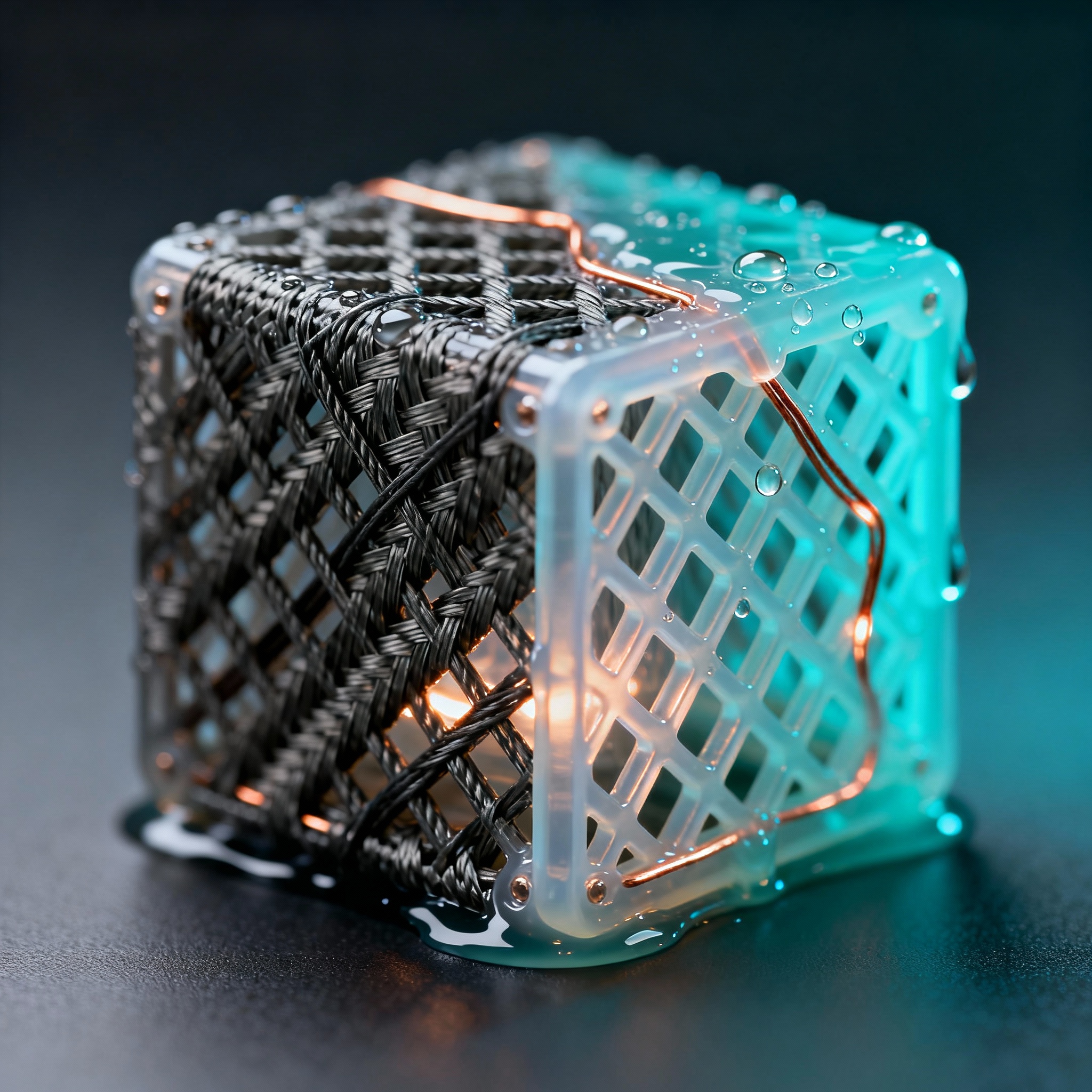
The revolutionary advantage of multimaterial 3D printing is the ability to combine distinct properties into a single component, eliminating secondary assembly. Designers and engineers can place rigid, flexible, transparent, conductive, or heat-resistant materials exactly where needed, resulting in more functional and efficient parts.
A component can thus integrate rigid structural zones, flexible hinges, transparent windows, conductive pathways, and heat-resistant areas in a single print.
The steerable laser developed by researchers solidifies the ink upon exit, eliminating supports and enabling printing “in mid-air.” Mechanical and electrical properties can also be dynamically modulated, making each region more or less rigid or conductive as needed.
Industrial adoption: from theory to productive practice
Industrial systems are proceeding at equivalent rates. OMNI3D and Rapid Fusion offer large-format multimaterial extrusion for high-volume production. Stratasys has supported multimaterial flows via material jetting for years, while Aerosint (now in Schaeffler) has demonstrated the feasibility of multi-metal laser fusion and binder jetting with selective powder deposition.
Different sectors – footwear, robotics, medical devices, consumer goods – benefit from heterogeneous monolithic components, previously impracticable. Footwearology, for example, produces shoes with variable stiffness and cushioning in specific zones.
Technical obstacles and strategies for overcoming them
Despite high precision, resin printing imposes long post-processing times: manual support removal, washing, and additional polymerization. Some manufacturers are reducing these steps, but the practice is not yet standardized and offers ample room for improvement.
Advances in print heads, dynamic mixing chambers, and automatic tool changers have increased precision and reliability, reducing misalignments and cross-contamination.
Market dynamics and economic transformation
Multimaterial printing reduces assembly by consolidating multiple functions into a single part. With single materials, products must be subdivided into components that require additional processing, handling, and fastening, increasing labor and production costs.
Printing rigid, flexible, and specialized regions in a single session eliminates screws, adhesives, and manual operations, driving down unit costs. Companies obtain structural, flexible, electronic, and aesthetically pleasing components in a single piece, reducing development time and costs.
Expert visions and future trajectories
Beyond functional benefits, multimaterial 3D printing enhances visual appeal and tactile quality, making prototypes more realistic. Multiple colors, differentiated textures, and varied finishes can be achieved in a single build, avoiding secondary painting or coating.
In the medical field, multicolor, multilayer anatomical models are more comprehensive and educationally effective. Researchers have demonstrated functional soft sensors, stretchable electronics, and magnetic robots.
Lead co-author Dezhi Wu summarizes: «We now aim to build a robust 3D printing platform for soft and multifunctional devices. We will expand the range of inks and investigate optimal parameters for flexible electronics, organic chips, and more.».
Toward a new manufacturing paradigm
These converging developments transform multimaterial capability from a specialty to mainstream functionality. The versatility makes the technology valuable not only for prototyping, but for large-scale production across diversified sectors.
Integrating aesthetics and function directly into printing streamlines the supply chain and reduces risks associated with manual material handling. Converging innovations ultimately make it possible to produce complex multimaterial designs with previously unattainable quality and efficiency.
article written with the help of artificial intelligence systems
Q&A
- How does multi-material 3D printing change the traditional production process?
- It eliminates post-print assembly by concentrating rigid, flexible, conductive, or transparent materials into a single session. This reduces working steps, screws, and adhesives, lowering production times and costs.
- What is the hardware innovation introduced by Prusa with the INDX system?
- INDX is a multi-head upgrade for CORE One that handles up to eight materials with zero purge. It uses an active "Smart Head" coordinated with passive heads, reducing tool change times.
- Come hanno eliminato i supporti i ricercatori di Xiamen e Berkeley?
- By combining Direct Ink Writing with instantaneous laser polymerization, it solidifies the ink upon exit, printing "in the air" without support structures and reducing post-processing.
- What advantages does multi-material printing offer in the footwear sector?
- Footwearology produces monolithic shoes with variable stiffness and cushioning in specific areas, achieved in a single print without subsequent assembly or adhesives.
- What obstacles remain for multi-color resin printing?
- It still requires extensive post-processing: manual support removal, washing, and additional polymerization. Manufacturers are working to standardize and shorten these steps.


