
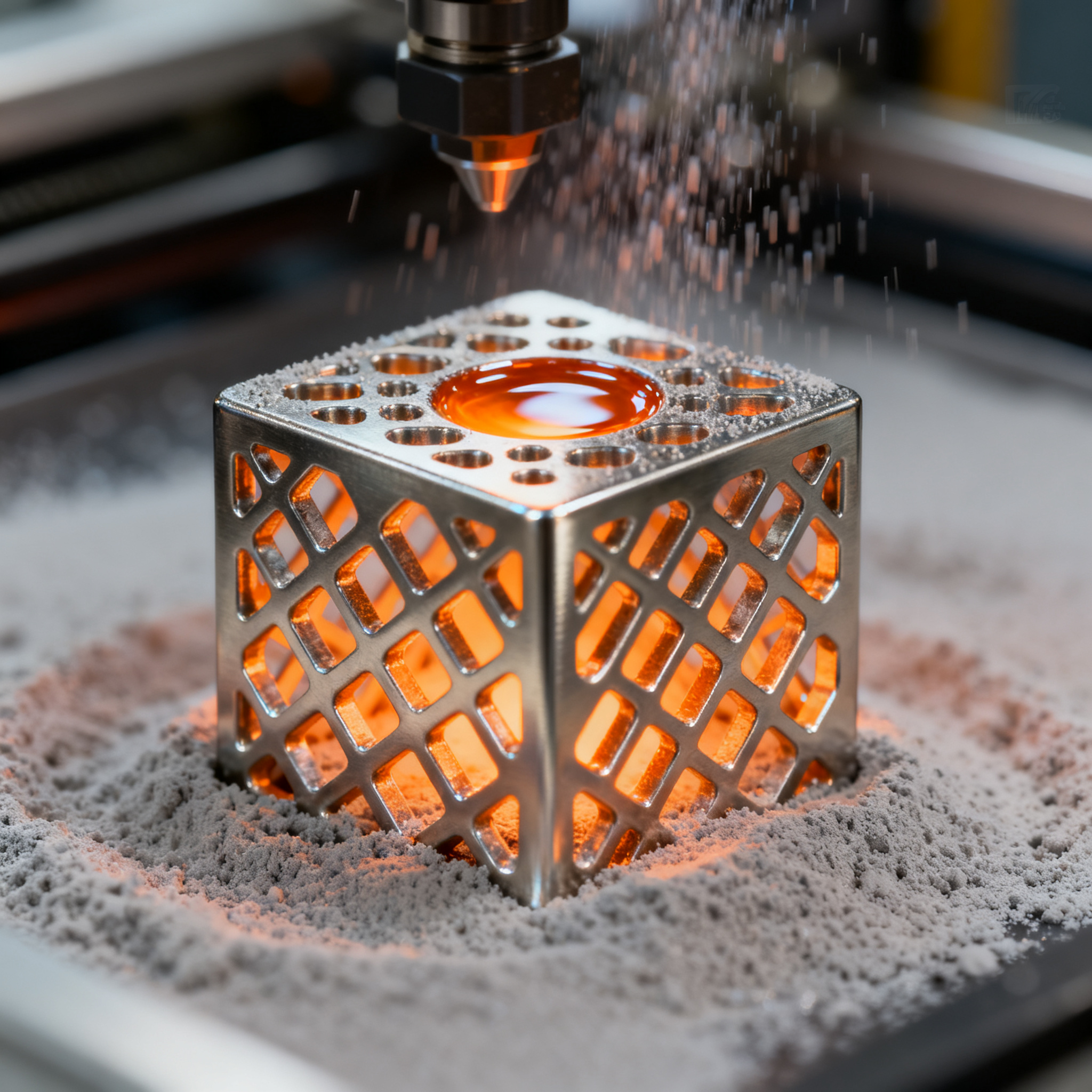
The Expansion of 3D Printing in Industrial Applications: Technologies, Materials, and Advanced Use Cases
Introduction to Industrial 3D Printing Technologies
Industrial 3D printing is experiencing a phase of unprecedented expansion: estimates indicate annual growth rates exceeding 20% and predict that the market will rise from the current $40 billion to $170-250 billion by the mid-2030s. This data reflects the definitive transition from experimentation to large-scale productive adoption.
Available technologies range from Selective Laser Sintering (SLS) for support-free nylon, to large-format Stereolithography (SLA), up to the production of continuous fiber components stronger than machined aluminum. In the automotive sector, 3D printers enable the in-house production of custom tools, functional prototypes, and Class A parts, eliminating outsourcing and drastically reducing delivery times.
Additive manufacturing allows for maintaining digital libraries of printable components on demand, shareable globally for distributed production, with obvious savings on warehouse costs and optimization of the entire production chain.
Innovative Materials for Industrial Additive Production
Material evolution is a critical factor for industrial expansion. Advanced composites allow for components with mechanical characteristics superior to aluminum and a finish suitable for end-use, without further processing.
In the aerospace sector, metal 3D printing has already produced rocket engines and critical components capable of withstanding extreme temperatures and high stresses. New Frontier Aerospace, POLARIS Spaceplanes, and Agnikul Cosmos have conducted operational tests on engines with 3D-printed parts, demonstrating full integration into flight programs.
Increasingly specialized materials are opening up new sectors: heat exchangers for data centers exploit geometries impossible with conventional methods; in the semiconductor industry, the technology guarantees the extreme precision required; for satellites, it reduces weight, costs, and assembly complexity.
Case Studies: Implementation of 3D Printing Solutions in Critical Sectors
Real-world adoption demonstrates the tangible value of technology. Labman Automation has reduced costs by 75% by implementing 3D printing in its processes. Volkswagen Autoeuropa produces tools and prototypes internally; Ford manufactures equipment, dies, and fixtures with reduced times.
The defense sector records the most marked growth. The US National Defense Authorization Act has formally recognized 3D printing as critical infrastructure, subjecting it to strict standards of security, traceability, certification, and scalability, and prohibiting the use of systems connected to unauthorized countries.
In manufacturing, Dixon Valve US has integrated 3D printing into robotic automation; other manufacturers recreate legacy spare parts that are no longer available, keeping lines otherwise destined for obsolescence alive.
Competitive Advantages and Time-to-Market Reduction
Internal integration allows moving from prototype to testing, modification, and reprinting in a single day, reducing time-to-market from weeks to hours and providing a measurable competitive advantage.
Custom tools, safety devices, and bespoke components cut unplanned downtime. Organizers, assembly tools, and transport systems are printed without occupying CNC machines.
A tool manufacturer saved £26,000 a year with a single printed component; in large-format SLA, setup reductions of up to $200,000 are recorded, with times dropping from months to days.
Consumer production is reality: dental aligners, frames, custom footwear, and jewelry are manufactured in millions of units using additive methods, generating repeatable revenues based on digital manufacturing.
Technical Challenges and Scalability Considerations
Scalability remains the main challenge: excellent for customization and small batches, the technology requires investment in infrastructure and rigorous qualification for high volumes.
Material management is critical: controlled storage conditions, optimized parameters, and specific post-processing procedures are necessary. Certification for critical applications requires extensive testing and comprehensive documentation, especially in aerospace and medical.
Integration into existing lines requires specialized skills in design for additive manufacturing (DfAM), digital workflow management, and advanced maintenance. STEM education is bridging the gap, training new engineers already familiar with additive workflows.
Regulations and Certifications for Industry 4.0
The regulatory framework is evolving rapidly. The recognition of additive manufacturing as critical infrastructure in defense has set security, traceability, and certification standards that influence design, validation, production, and maintenance in defense, aviation, naval, and land systems.
Complete traceability imposes digital management systems that document every phase, from printing parameters to post-process treatments. In aerospace, qualification requires repeated testing, compliance with international standards, and demonstration of long-term reliability.
At the end of 2024, the European Space Agency conducted the first 3D metal print in space, followed by tests on materials and processes in microgravity, opening new regulatory frontiers for extraterrestrial manufacturing.
Future Perspectives and Technology Roadmap
The future looks promising: the convergence of structural factors supports adoption. Expansion into high-growth sectors – data centers, satellites, semiconductors – indicates long-term confidence, not mere experimentation.
The growing presence of Asian manufacturers (Farsoon, E-Plus-3D, BLT) is redefining the electron beam melting (EBM) market, traditionally a Western domain, increasing competition and innovation.
The transfer of skills from former military personnel – already trained in the use of 3D printing for tools and spare parts in the field – to civilian roles is creating a practical workforce. The industry, having regained momentum after irregular years, is now discussing “how quickly” and “how far,” no longer “if.” Internal pilot programs become production; customers move from execution to escalation: additive manufacturing is an essential component of Industry 4.0.
article written with the help of artificial intelligence systems
Q&A
- What is the growth forecast for the global industrial 3D printing market by 2035?
- Analysts estimate that the value will rise from the current $40 billion to $170-250 billion by the mid-2030s, with annual growth rates exceeding 20%, marking the definitive transition from experimentation to large-scale production.
- What materials currently allow for the production of components more resistant than machined aluminum?
- Advanced continuous fiber composites and metal alloys printed in 3D offer mechanical characteristics superior to aluminum, resistance to extreme temperatures, and surface finish already suitable for end use without further processing.
- How did Labman Automation reduce costs by 75% with 3D printing?
- It integrated additive manufacturing directly into its production processes, replacing the outsourcing of tools and prototypes with internal production, eliminating waiting times and drastically reducing warehousing and transportation costs.
- Why does US defense consider 3D printing a critical infrastructure?
- The National Defense Authorization Act recognized the technology as essential for national security, imposing strict traceability standards, certification, and a ban on the use of systems connected to unauthorized countries, to guarantee reliability and strategic control.
- What is the main obstacle to mass production with 3D printing?
- Scalability: while excellent for customization and small batches, it requires heavy investments in infrastructure, rigorous qualification, controlled material management, and specialized training in design for additive manufacturing (DfAM).


