
Industrial Scale and Large-Scale 3D Printing: Technologies, Challenges, and Advanced Applications
Definition and context of the industrial-scale 3D printing industry
Industrial 3D printing has moved beyond the experimental phase and established itself in the global manufacturing landscape. While desktop printing converges on LCD technologies, industrial giants like 3D Systems are investing heavily in laser systems, reducing production times from months to a few days for large-sized components. The adoption of large-format stereolithography (SLA) in the tooling sector can cut costs by up to $200,000 per project.
The concept of “large-format” refers to machines with a build volume starting from 300 × 300 × 300 mm (approximately 27 liters), capable of producing functional components without segmentation. Current platforms range from multi-material systems to XXL machines dedicated to large-scale production, with increasing volumes, improved motion and calibration systems, heated chambers, and increasingly accessible tool changers.
Dominant technologies in large-format 3D printing
Large-format SLA is experiencing a new growth phase: 3D Systems is focusing on high-power lasers for large-scale tooling, reducing times from months to days. In the metal sector, 4,000 W quad-laser systems compete with industry leaders, while alternative solutions like the Gauss MT90 replace metal powders with proprietary “metal ink” cartridges starting at $150, making desktop metal printing compatible with office environments.
For FDM, the market offers solutions under $5,000 with significant build volumes: Elegoo's OrangeStorm Giga reaches 800 × 800 × 1,000 mm, positioning itself among the largest FDM desktop systems currently available.
Innovative materials for large-scale production
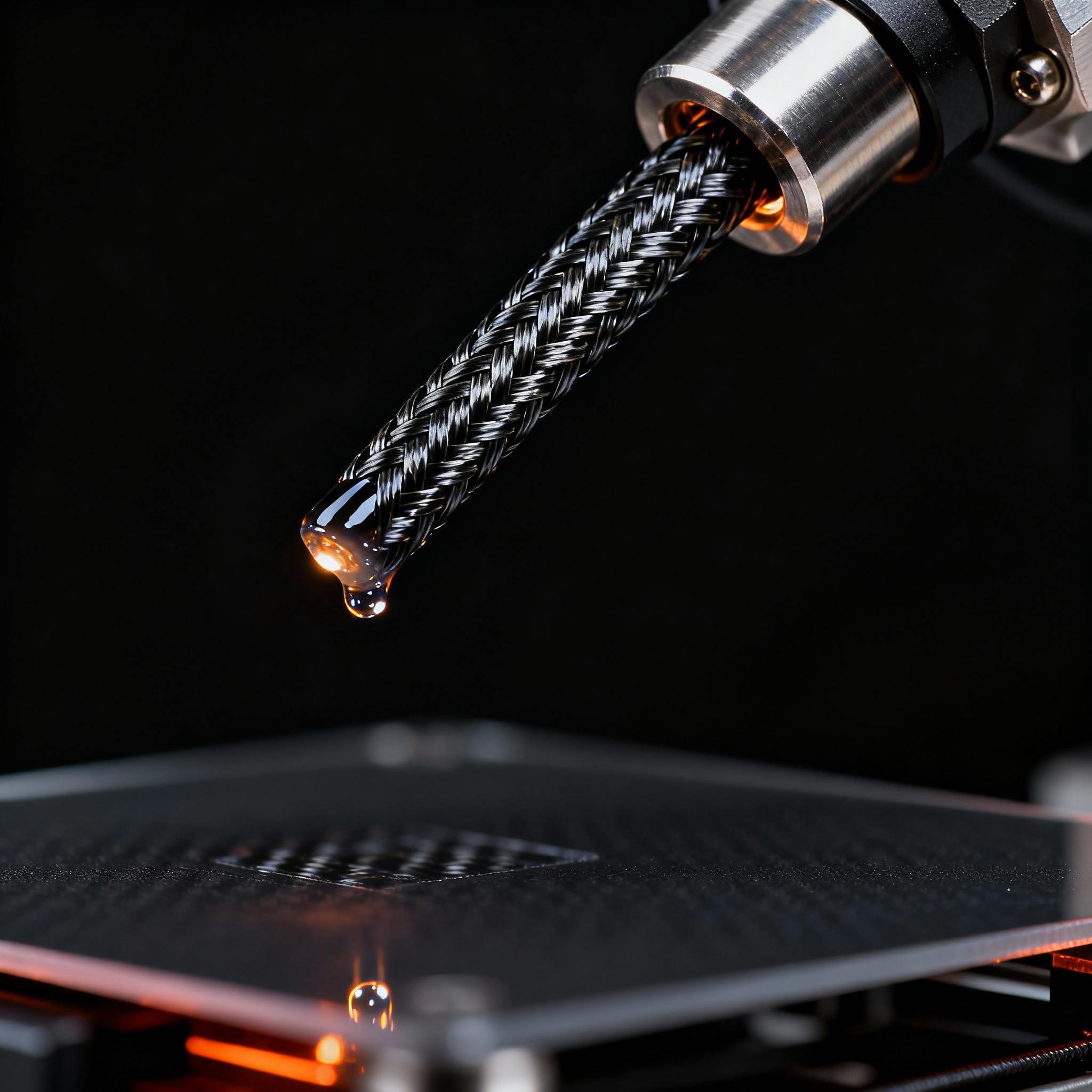
Material evolution is crucial for industrial expansion. Large-format FDM printers support PLA, PETG, ASA, ESD compounds, and carbon-fiber-reinforced filaments; some heads reach 500 °C, expanding the application spectrum. Prusa Research, in collaboration with startup Filament2, has developed a plug-and-play head for printing two-component silicones, exclusively compatible with its machines, opening new elastomeric frontiers.
In the construction sector, materials are evolving towards sustainable solutions: from carbon capture with evoZero to local soil mixtures, material science makes 3D construction economically and ecologically sustainable.
Technical challenges and solutions in additive process scale-up
Maintaining precision and quality at higher volumes requires automatic calibration systems like Anycubic's LeviQ 3.0 or the Zaxe Z3S Z-Tilt calibration. Thermal management is handled by independently controlled segmented beds (Prusa XL, 16 zones) and actively heated chambers (Bambu Lab H2C, 65 °C), which guarantee stability and reduce consumption.
Speed is increased through vibration compensation algorithms and intelligent flow control: the Kobra 3 Max reaches 600 mm/s, while the CoreXY architecture with Klipper firmware (Zaxe Z3S) further optimizes performance.
Sectors benefiting most from industrial scale 3D printing
Industrial tooling records savings up to $200,000 per project thanks to large-format SLA, with lead times reduced from months to days. Construction uses concrete and composites for geometries impossible with traditional methods, employing carbon-capturing materials or local resources.
Addman's acquisition of Forecast 3D expanded polymer production capacity in the United States, testifying to the growing demand for large-scale additive services. Aerospace and defense benefit from high-power multi-laser metal printers, which guarantee complex components with superior mechanical properties and reduced lead times.
Automation and integration with Industry 4.0
Modern systems incorporate HD cameras for remote control and artificial intelligence algorithms for filament monitoring (Bambu Lab H2C). Automatic tool changing (Prusa XL, five independent heads) and multi-color feeding systems (Creality CFS, four spools expandable to 16) enable multi-material production with minimal waste and manual intervention.
Filament run-out sensors, HEPA and active carbon filters, flexible plates with automatic detection, and modular architectures (Raise3D Pro3) make the production environment safer, more efficient, and easier to maintain, favoring integration into automated workflows.
Future perspectives and technology roadmap
The evolutionary path points to ever larger volumes, higher speeds, and an expanded range of materials. Hybridization with optional laser and cutting modules will extend applications, while sustainability will drive the development of carbon-capture materials and segmented heating systems for energy optimization.
Integration with Industry 4.0, through advanced connectivity, real-time analysis, and predictive maintenance, will transform 3D printing from a prototyping tool to a mainstream production process. The standardization of processes and materials, supported by sector regulations, will further consolidate adoption on a global scale.
article written with the help of artificial intelligence systems
Q&A
- What is the definition of “large-format” in the context of industrial 3D printing?
- A “large-format” printer is defined as one with a minimum build volume of 300 × 300 × 300 mm (approximately 27 liters), capable of producing functional components without having to segment them.
- How does large-format SLA reduce time and costs in the tooling sector?
- Thanks to high-power lasers, large-format SLA reduces production times from months to a few days and can save up to $200,000 per single project.
- What materials can be used in large-format FDM printers?
- They support PLA, PETG, ASA, ESD compounds, carbon-fiber reinforced filaments, and, with special heads, two-component silicones; some heads reach 500 °C.
- What technical solutions guarantee precision and quality in large-format printers?
- Automatic calibration systems (LeviQ 3.0, Z-Tilt), independently controlled segmented heated beds, and vibration compensation algorithms maintain stability and detail.
- In which sectors do you get the greatest benefits from industrial scale 3D printing?
- Industrial tooling, eco-material concrete construction, aerospace and defense, thanks to cost savings, complex geometries and high-performance components.
- How is industrial 3D printing integrated with Industry 4.0 principles?
- Through HD cameras, AI for filament monitoring, automatic tool changing, runout sensors, HEPA filters and modular architectures that enable automated production and predictive maintenance.


