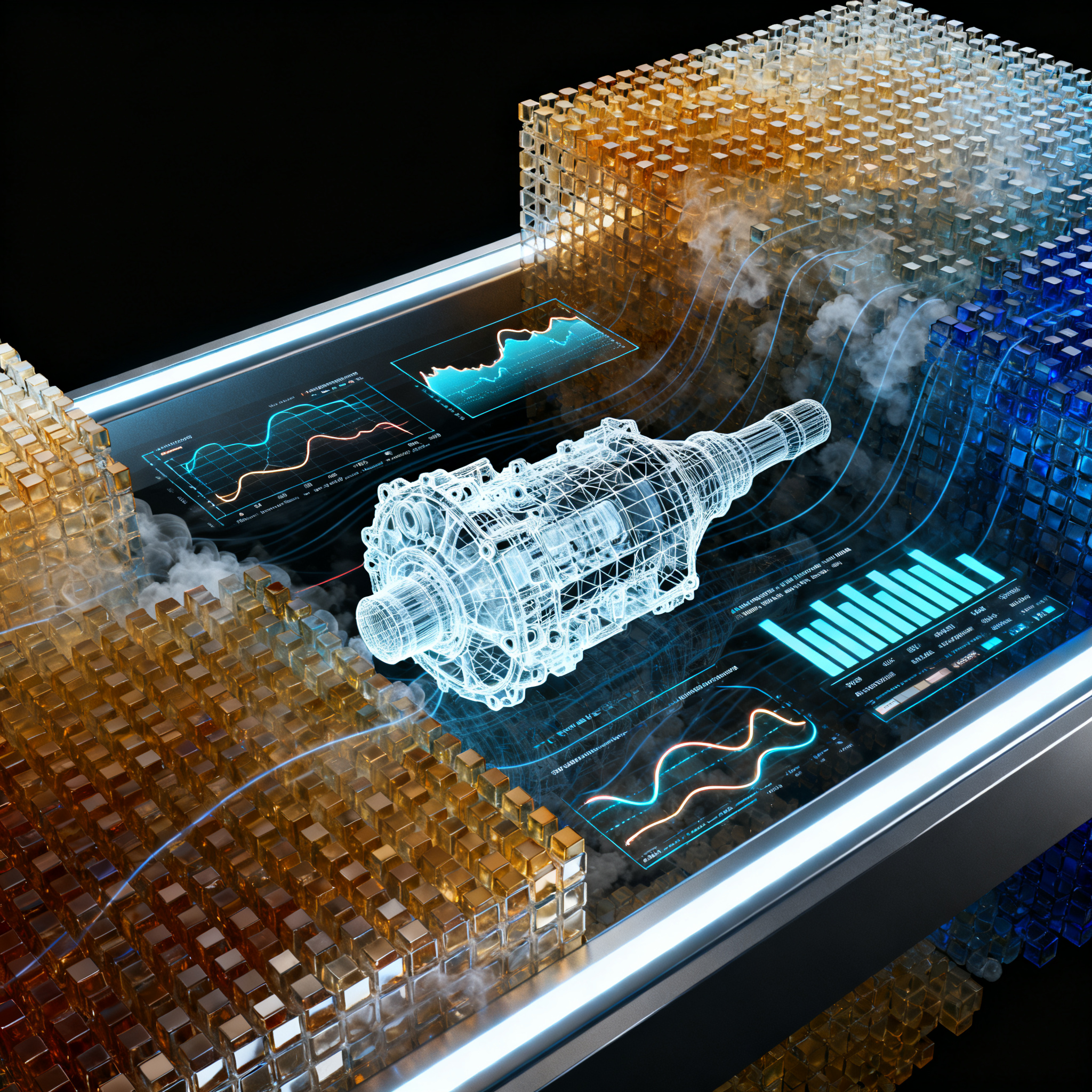
Industrial and Automotive Additive Manufacturing: Advanced Technologies for Industry 4.0
Additive manufacturing has reached a turning point in manufacturing. Hardware performance is advancing, material catalogs are expanding, and automation is redesigning post-processing workflows. However, many programs struggle to scale: the bottleneck is not the printer, but the software infrastructure used to design, manage, and iterate components. The transformation primarily affects heavy industry and automotive, where 3D printing integration requires advanced technologies and new paradigms for data management and quality certification.
3D Printing Technologies for Heavy Industrial Applications
Additive manufacturing remains an enabling technology for heavy industry, but it requires an evolution of the digital infrastructure. Traditional CAD and PDM systems, designed for subtractive manufacturing and sequential processes, do not easily represent the typical geometries of additive manufacturing: meshes, lattices, graded materials, and topologically optimized shapes.
New cloud-native CAD platforms offer hybrid modeling that combines analytical geometry, meshes, implicit and volumetric representations in a coherent environment, accelerating design iteration. Additive workflows are inherently multi-tool and multidisciplinary: they span design, simulation, job preparation, and post-processing. CAD/PDM platforms must therefore function as integration hubs, exposing robust APIs to keep external tools connected to the unique design data.
Furthermore, artificial intelligence provides physical insights and meshless simulations at an early stage, offering real-time feedback on printability, distortion, and structural behavior without turning engineers into simulation experts. The result is a more agile, adaptive, and responsive process, preparatory to lot-size-X production.
Innovative Materials in Metal Additive Manufacturing
The automotive industry is revolutionizing the use of advanced materials. Brose uses SLS for series components, Dorman employs 3D printing to keep pace with OEMs, and in motorsport, heat-resistant finished parts and spares are produced. AF Rayspeed Ltd manufactures custom Lambretta parts, demonstrating the versatility of new materials.
The range is expanding to include composites reinforced with continuous fibers, such as those from Markforged, which offer strengths comparable to metals at a fraction of the weight. Dunlop Systems saved thousands of euros by adopting printed carbon fiber, confirming the economic convenience for industrial applications.
Integration of 3D Printing in Automotive Manufacturing Processes
Integration accelerates: MacLean Additive and Fraunhofer ILT have created a 156 kg insert for a hybrid transmission housing for Toyota Europe, the largest near-full mold insert ever additively produced. The part replaced expensive and slow traditional machining, equaling costs and eliminating defects.
Volkswagen Autoeuropa prints custom tools and prototypes; additive ceramics provide injection molds ready in hours. Uddeholm's Corrax tool steel, now in powder form, resists corrosion better than maraging steel and allows molds with conformal cooling and porous ventilation.
Quality assurance and certifications for additive components
Quality and certification are critical nodes. Build parameters, material states, revisions, and certificates must remain linked to the project throughout its lifecycle. PDM cannot be added later: data management must be native, with version control, traceability, and secure collaboration from concept to production.
Validated simulations directly on CAD show stresses and deformations before printing, reducing defects; granular access controls allow distributed teams to collaborate without relying on files. AI-driven physics tools provide real-time feedback on printability, supporting the certification required by automotive and aerospace.
Case studies: real-world implementation in industrial and automotive sectors
Pankl Racing Systems and Labman Automation cut costs by 75%; the Cannon Air Force Base prints tools in the field. Shell produces offshore spare parts in days rather than months, reducing downtime, inventory, and supply chain dependencies. Siemens prints optimized turbine components in the digital twin; GE Aerospace does the same with fuel nozzles, linking each part to a digital record of performance and maintenance.
Future perspectives and challenges of additive manufacturing in heavy industry
The future will not depend on a single breakthrough, but on the combination of an open technology stack, industrial AI, robotics, and natively digital additive manufacturing, in a collaborative ecosystem. Co-Pilot and AI agents will orchestrate multi-step workflows, making lot-size-X as economical as mass production but as flexible as customization.
Initiatives like America Makes and Bavaria Makes accelerate qualification, supply chain resilience, and technology transfer. No organization can industrialize AM alone: materials, machines, software, automation, research, institutions, and end-users must collaborate. The convergence between digital design, additive manufacturing, and automation is transforming isolated pilot projects into scalable production and linear chains into adaptive manufacturing networks: the recipe for the new generation of manufacturing production.
article written with the help of artificial intelligence systems
Q&A
- Why do many additive production programs struggle to scale in the industry?
- The bottleneck is not the printer, but the software infrastructure: traditional CAD/PDM systems cannot handle additive geometries like meshes or graded materials, slowing down design, iteration, and certification.
- What advantages do new cloud-native CAD platforms offer for additive manufacturing?
- They combine analytical geometry, meshes, implicit, and volumetric representations in a single environment; they offer robust APIs to integrate simulation, job preparation, and post-processing; they provide real-time AI feedback on printability and distortion.
- How is the use of materials in the automotive sector changing thanks to 3D printing?
- We are moving from prototypes to series components: Brose uses SLS for series parts, Dorman follows the OEMs, Dunlop saves thousands of euros with printed carbon fiber; continuous fiber reinforced composites that are as light as metals are arriving.
- What did Toyota Europe achieve with the 156 kg additively manufactured insert?
- MacLean and Fraunhofer ILT replaced an expensive and slow traditional processing with a nearly full mold insert for die casting, equaling costs and eliminating defects.
- Why must data management be “native” and not added afterwards in AM processes?
- Build parameters, certificates, and revisions must remain linked to the project throughout its lifecycle; only a native PDM guarantees the traceability, version control, and secure collaboration necessary for automotive/aerospace certifications.
- What is the “recipe” for transforming additive manufacturing into scalable production?
- Convergence of open technology stack, industrial AI, robotics, and natively digital AM in a collaborative ecosystem involving materials, machines, software, automation, research, and end-users.