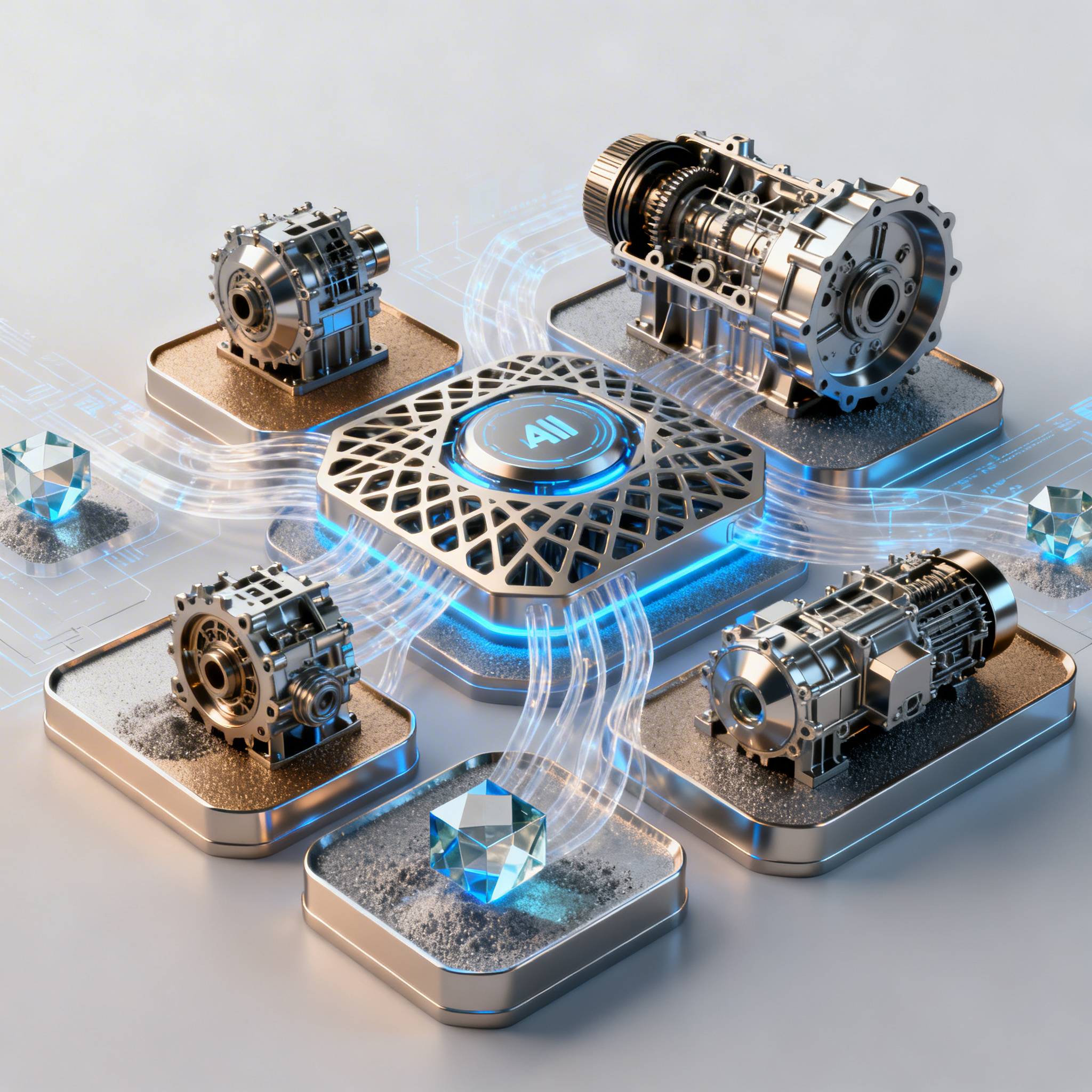
Implementing Mass Customization in the Industry: Strategies and Practical Cases
Mass customization is a concrete competitive lever for the industrial sector, provided it is implemented with a structured approach. Contrary to what one might think, the strategy is not limited to personalized consumer goods – shoes, glasses, and the like – but finds decisive applications in the production of industrial components, where each part can vary slightly without compromising production efficiency. The integration of advanced technologies such as additive production and artificial intelligence allows for managing the complexity of variants while maintaining scalability and cost-effectiveness.
Case studies: additive manufacturing on an industrial scale
Industrial 3D printing enables the production of customized components on a large scale, as demonstrated by concrete experiences in the automotive and advanced manufacturing sectors.
An emblematic example is the collaboration between MacLean Additive and Fraunhofer ILT for Toyota Europe. The two partners created a 156 kg mold insert destined for the production of hybrid transmission housings, potentially the largest near-net-shape insert for die casting ever produced additively. The component replaced a traditional process based on mechanical processing, welding, and drilling, characterized by long delivery times and unsatisfactory performance. The additive solution equaled the costs of the conventional method while eliminating its defects.
DI Labs and the controlled company Threedom constitute another significant case. Although Threedom deals with customized accessories for Jeep vehicles – a consumer market – the mass customization strategies developed in this context are successfully transferred to the industrial business of DI Labs, which is oriented towards higher volumes. The experience demonstrates how additive production can effectively serve diversified segments, not just the most vocal component of the market.
Artificial intelligence and variable design: managing complexity
Artificial intelligence supports the automatic configuration of CAD models, allowing for the management of product variants without overloading the production system.
The critical factor for successfully implementing mass customization is the adoption of parametric design strategies. Such techniques create CAD models that automatically adapt to variable specifications, drastically reducing the design load. Artificial intelligence intervenes in this phase by automating the configuration of variants and optimizing production parameters.
As observed by the Douglass brothers of DI Labs in the podcast Solutionology, volume is not a determining factor: what matters is the ability to manage variability efficiently. AI allows for the development of products that incorporate flexibility from the design phase, transforming customization from an exception to an operational standard.
Advanced software platforms are reducing quoting and pricing times for configurable products, eliminating the traditional bottleneck of the customization process. This aspect is crucial for making the production of even very small batches economically sustainable.
Technology transfer between consumer and industrial sectors
The principles of flexibility and customization can be transferred from retail to advanced industrial production, despite different operational contexts.
The evolution of additive manufacturing has made it possible to transfer skills between seemingly distant sectors. Lessons learned in the mass customization of consumer goods – sports devices, hearing aids, jewelry – prove valuable even for complex industrial applications.
Advances in 3D scanning, advanced materials, and printer capabilities make customized products accessible on a larger scale. Specialist materials – silicones, ceramics, biocompatible resines, metal pastes – constantly expand the application field of industrial mass customization.
Companies like Volkswagen Autoeuropa use 3D printing for custom tools and prototypes, demonstrating how technology can support both the direct production of final parts and the development of manufacturing support tools. The hybrid approach maximizes return on investment in additive technologies.
Conclusion
Mass customization in industry requires a structured approach that combines advanced technology, optimized processes, and systemic vision. It is not enough to buy a 3D printer: it is necessary to rethink the entire value chain, considering parametric design, intelligent automation, and production flexibility as integrated elements. The case studies presented demonstrate that the transformation is already underway and produces measurable results in terms of cost reduction, delivery times, and the ability to respond to specific market needs.
Start today to evaluate how to integrate modular and AI-driven solutions to bring your production to levels of customization never achieved before. Analyze processes that could benefit from controlled variability and identify technology partners capable of supporting you in the industrial transformation journey.
article written with the help of artificial intelligence systems
Q&A
- What is the main advantage of mass customization applied to industrial components?
- It allows for product variants to be obtained without compromising production efficiency, maintaining scalability and cost-effectiveness thanks to technologies such as additive production and artificial intelligence.
- What did the collaboration between MacLean Additive, Fraunhofer ILT and Toyota Europe achieve?
- A 156 kg mold insert, the largest almost solid part ever produced additively, which replaced mechanical processing, welding and drilling, reducing times and defects.
- How does artificial intelligence support mass customization?
- It automates the configuration of CAD models, manages product variants and optimizes production parameters, transforming customization into an operational standard.
- Why is parametric design considered a critical factor?
- It creates CAD models that automatically adapt to variable specifications, drastically reducing design workload and making variability management efficient.
- How does know-how transfer occur from the consumer sector to the industrial sector?
- The skills developed in the customization of consumer goods (e.g., Threedom Jeep accessories) are transferred to the industrial business of DI Labs, demonstrating the versatility of additive manufacturing.
- What is the indispensable condition for successfully implementing mass customization in a company?
- Rethink the entire value chain by integrating parametric design, intelligent automation, and production flexibility, not limiting oneself to the purchase of a 3D printer.