
Guida alle funzionalità delle stampanti 3D consumer: come scegliere il modello perfetto per regali tecnologici
Introduzione alle stampanti 3D consumer
Le stampanti 3D consumer sono oggi un’occasione eccellente per fare regali tecnologici di valore. Il mercato ha registrato un’evoluzione notevole: le macchine sono sempre più accessibili, semplici da usare e dotate di funzioni avanzate. Scegliere la stampante adatta richiede di conoscere le caratteristiche che più influiscono sull’esperienza d’uso, dalla velocità di stampa alla facilità di manutenzione, fino alla compatibilità con materiali diversi.
Funzionalità essenziali per l’uso domestico
La velocità di stampa è diventata un criterio decisivo: i modelli più recenti raggiungono fino a 800 mm/s, riducendo drasticamente i tempi di produzione. La modularità è altrettanto importante, perché consente di ampliare le capacità della macchina nel tempo. Sistemi come quelli di Bambu Lab permettono di passare dalla stampa 3D all’incisione laser o al taglio vinile sostituendo semplicemente la testina, trasformando la stampante in un vero e proprio hub di fabbricazione domestica.
Il volume di stampa varia sensibilmente: le entry-level offrono in genere 200 × 200 × 200 mm, mentre le versioni più avanzate arrivano a 300 × 300 × 330 mm o oltre. Per chi desidera oggetti multicolore esistono soluzioni fino a 36 colori o 12 materiali diversi in un’unica stampa, grazie a sistemi automatici di cambio ugello.
Tecnologie di stampa: FDM vs SLA
Le tecnologie principali per l’uso domestico sono FDM (Fused Deposition Modeling) e SLA (Stereolithography).
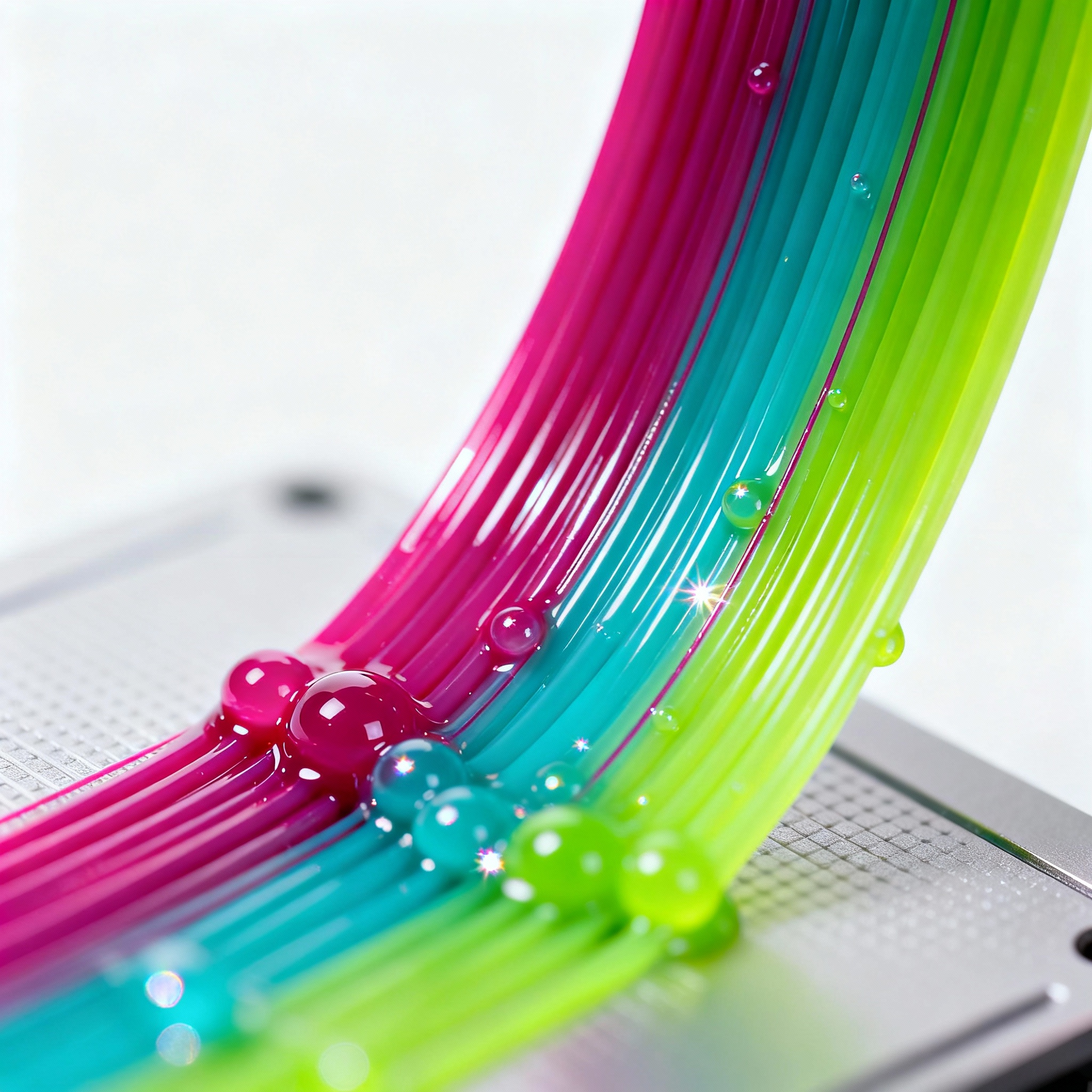
L’FDM, la più diffusa, estrude filamenti termoplastici strato per strato. Offre versatilità, costi contenuti e manutenzione semplice, ed è ideale per oggetti funzionali, decorazioni e prototipi.
L’SLA solidifica resine fotopolimeriche con luce UV, garantendo dettagli superiori e superfici lisce. Eccelle in miniature, gioielli e modelli ad alta precisione, ma richiede maggiore attenzione in post-produzione e nella gestione delle resine.
The choice depends on the use: practical objects and decorations require FDM; detailed miniatures and high-definition models benefit from SLA.
Compatible materials and safety
Consumer FDM printers support mainly PLA, which is biodegradable, easy to print, and safe for home use. Other common filaments are PETG (more resistant), TPU (flexible), and special materials with fluorescent quantum dots under UV light.
More advanced machines reach 350 °C on the hotend and 65 °C in the print chamber, allowing the use of high-temperature technical materials and reducing warping.
For safety, many models integrate microparticle filtration systems; in some cases, the filter is available as an upgrade.
Connectivity and user interface
Modern printers offer USB, Wi-Fi, and Ethernet. Wireless connectivity allows you to send files remotely and monitor status via dedicated apps; RGB LED bars indicate progress in real time.
The interface has become intuitive: touchscreens, integrated slicing software, and AI functions for automatic error detection simplify life even for beginners. Tools like CubeMe generate 3D models from a simple photo in a few seconds.
Maintenance and ease of use
Current consumer models require few interventions: periodic cleaning of the nozzle with cleaning filaments, automatic bed leveling, and occasional replacement of worn components.
Specific kits facilitate the operation: precision screwdrivers (e.g., iFixit Mako), digital calipers for accurate measurements, and knives for removing supports and brim. Complete online courses are available covering design, 3D modeling, slicing, post-production, and model photography.
Budget and value
The market covers every price range:
- Entry-level: 250-400 €, basic functionality for beginners.
- Mid-range: 800-1,500 €, greater speed, volume, and automatic material change.
- Premium: up to 2,250 €, multi-material systems up to 24 filaments and total modularity.
For metal printing, LPBF solutions start from 39,000 €, more accessible than in the past.
Also evaluate operating costs (filaments, energy, maintenance) and future upgrade possibilities.
Recommended models by experience
Beginners: Creality SPARKX i7, with AI for error detection, 4-color support, 50% waste reduction, volume 260 × 260 × 255 mm.
Intermediate: Bambu Lab H2 series. H2D prints and laser engraves; H2C handles 6 hotends for complex multicolor prints.
Experts: Prusa CORE One, upgradable with INDX system for up to 8 filaments; the Prusa ecosystem allows for upgrading previous models.
Limited budget: Elegoo Centauri Carbon, solid performance at an affordable price.
Conclusion
Choosing the perfect consumer 3D printer as a gift means balancing functionality, ease of use, and budget. For beginners, it's advisable to prioritize intuitive interfaces and automatic error detection; for experts, modular and expandable systems.
Home 3D printing is mature, accessible, and rewarding at every level. With over 1,100,000 free models online, the only limit is imagination.
article written with the help of artificial intelligence systems
Q&A
- What is the main difference between FDM and SLA technology for home use?
- FDM extrudes plastic filaments layer by layer: it is economical, versatile, and suitable for functional objects. SLA solidifies resins with UV light, offering fine details and smooth surfaces, ideal for miniatures and jewelry, but requires more care in post-production.
- What is the typical print volume of an entry-level consumer 3D printer?
- Entry-level models generally offer a volume of about 200 × 200 × 200 mm, sufficient for medium-sized objects like action figures, keychains, or hobby components.
- What materials can I safely use at home with a consumer FDM printer?
- PLA is the safest: biodegradable, free of toxic odors, and easy to print. You can also use PETG for mechanical strength and TPU for flexible parts, always with adequate ventilation.
- What do the modular systems mentioned in the article refer to?
- They are printers like those from Bambu Lab that change function by replacing the toolhead: they switch from 3D printing to laser engraving or vinyl cutting, turning the machine into a small multifunctional home lab.
- How much does a consumer 3D printer suitable for an absolute beginner cost?
- In 2024, reliable entry-level models can be found between €250 and €400, with Wi-Fi connectivity, AI error detection, and basic multicolor support.
- What maintenance interventions does a modern consumer 3D printer require?
- Essentially just cleaning the nozzle with specific wires, automatic bed leveling, and occasionally replacing worn-out rollers or nozzles: everything takes a few minutes and inexpensive tools.


