New propulsion technologies for military drones: innovations changing the face of defense
Introduction to new propulsion solutions
Additive manufacturing is radically transforming the defense sector, particularly the production of critical components for drones and military systems. Metal 3D printing technologies allow for the creation of lighter and more efficient parts, significantly reducing operational weight and improving overall performance.
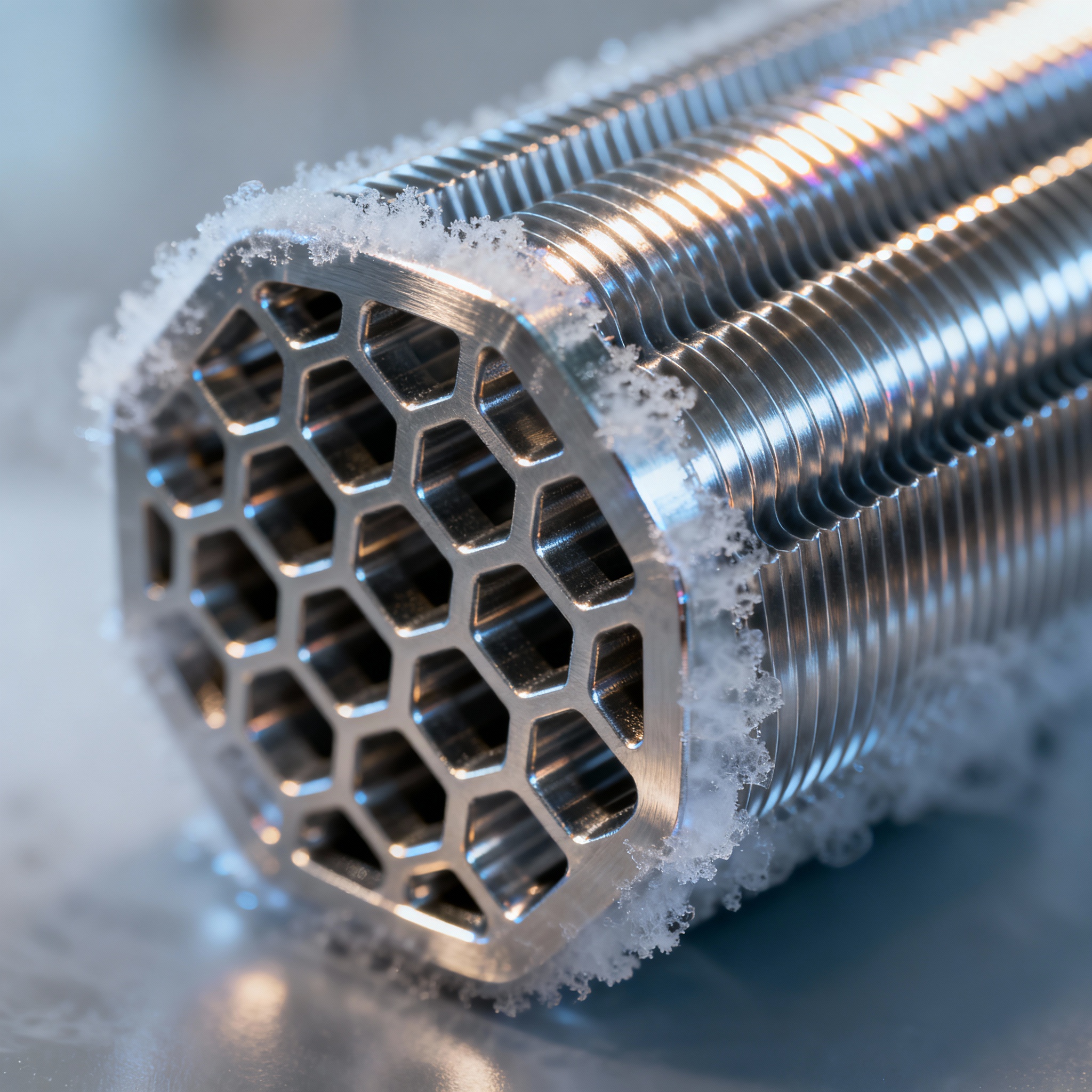
According to Dan Woodford, CEO of Conflux Technology, metal additive manufacturing is not limited to replacing existing components but allows for a complete rethinking of their functionality. In the case of heat exchangers, for example, AM technology enables highly efficient, lightweight, and conformal structures capable of following the natural curves of a fuselage or engine manifold, using space more intelligently and improving thermal performance.
Growing confidence in metal additive manufacturing stems from the accumulation of real-world data and extensive testing conducted in recent years. This knowledge has allowed manufacturers to better understand the behavior of additive parts, shifting from extremely cautious approaches to increasing confidence in the use of additive manufacturing in the aerospace sector. The design freedom offered allows for combining multiple parts into a single component, simultaneously reducing weight: both advantages are invaluable in aerospace engineering, where every gram saved translates into greater efficiency and lower operating costs.
Operational applications in defense contexts
The defense sector recorded the most significant growth in the adoption of additive manufacturing in 2025, driven by the current geopolitical climate. Ongoing conflicts and rising international tensions have led many countries to strengthen their military capabilities. In this context, additive manufacturing has emerged as a strategic tool, with a considerable increase in the acquisition of industrial 3D printers by government agencies, particularly in the United States.
A concrete example is FieldFab, a system developed by Craitor and designed to withstand extreme temperatures, altitude, operational movements, rain, or condensation. Last October, U.S. troops demonstrated the maturity level of additive manufacturing by successfully printing drone parts inside a UH-60 Black Hawk helicopter in flight. During tactical maneuvers, the printer continued to produce functional components despite turbulence, thermal variations, and constant vibrations.
FieldFab is certified for operation in extreme environments, meets MIL-STD-810H requirements, and reliably prints between -40 °F and 120 °F, in any humidity condition. The system is highly automated and reduces operator training from several days to about fifteen minutes. FieldFab produces functional parts for a wide range of mission-critical applications: vehicle and transportation systems, communication infrastructure, medical equipment, robotics, and power generation and distribution.
At the AIAA SciTech Forum 2026, companies like Fathom demonstrated that the transition to dedicated aerospace and defense operations is a reality. Fathom converted a facility in Wisconsin into a specialized center, complete with ITAR registration, AS9100 certification, and growing presence in metal additive manufacturing. The company uses metal 3D printing combined with in-house CNC finishing to produce components for satellites, high-altitude aircraft, UAVs, and other aerospace systems.
Technical challenges and future opportunities
Before flight deployment, additive components must undergo a rigorous certification process. To demonstrate the safety of a part, engineers define the “allowables,” statistical limits that describe the material's behavior. Traditionally, this has required the production and testing of thousands of samples over years, often at costs in the millions.
For metal additive parts, the process is even more complex: every machine and every set of parameters can generate different properties, and a single component can comprise thick sections and thin walls. Demonstrating the reliability of such geometries requires new testing methods and a deeper statistical understanding.
Fortunately, inspection technology is advancing. Engineers can now use CT scanning and advanced techniques to examine the inside of printed parts. The collaboration between Conflux and the Australian Synchrotron provides access to world-class beamline facilities, enabling microscopic analysis of metal heat exchangers. These investigations provide detailed material and structural data, essential for developing reliable statistical allowables and accelerating the certification of additive components for critical aerospace and defense applications.
Roboze recently opened its U.S. headquarters for aerospace and defense in El Segundo, California, near industry leaders like Lockheed Martin, Northrop Grumman, SpaceX, and Anduril Industries. According to Alessio Lorusso, CEO and founder of Roboze, «advanced additive manufacturing is today a key factor of industrial sovereignty, enabling the local production of strategic components, reducing external dependencies, and ensuring reliability, speed, and technological control.».
Prospects for the future of air defense
Additive manufacturing is proving to be much more than an experimental technology in the defense sector. With the approval of the National Defense Authorization Act in the United States, it has been formally recognized as critical infrastructure within the Department of Defense, subject to clear standards for security, traceability, certification, and scalability.
Collaboration between large manufacturers, technology specialists, research institutes, and governments is proving essential to advance the technology. Once a process or part is demonstrated, knowledge can be shared across the industry, accelerating adoption.
The potential rewards are extraordinary: thanks to the design freedom of additive manufacturing, it is possible to create parts up to 40 percent smaller and lighter, while maintaining or even improving performance. This represents a significant competitive advantage for air defense systems, where efficiency, autonomy, and operational capabilities are critical factors for mission success.
article written with the help of artificial intelligence systems
Q&A
- How does metal additive manufacturing improve the performance of heat exchangers for military drones?
- It enables the creation of lightweight, conformal structures that follow the curves of the fuselage or engine, optimizing space usage and increasing thermal efficiency. Additionally, it reduces weight and consolidates multiple parts into a single component.
- What distinguishes Craitor's FieldFab system from other 3D printing systems used in the military field?
- It is designed to operate in extreme environments (-40 °F to 120 °F), certified MIL-STD-810H, prints in flight on helicopters despite vibrations and turbulence, and requires only 15 minutes of training for the operator.
- Why is the definition of “allowables” particularly complex for metal additive components?
- Every machine and parameter set can produce different properties; furthermore, the same part can have variable thicknesses, requiring specific tests for each geometry and robust statistics to demonstrate its reliability.
- What advantages does additive manufacturing offer in terms of industrial sovereignty and military logistics?
- It enables local production of strategic parts, reduces external dependencies, shortens supply times, and ensures greater technological control—key factors in geopolitical tension scenarios.
- How much can the weight and volume of components be reduced thanks to the design freedom of additive manufacturing?
- Up to 40% less than traditional versions, while maintaining or improving performance; this translates into greater autonomy and efficiency for air defense systems.