Self-Produced Design for Micro-Enterprises: An Operational Playbook from Prototype to Sale
Self-produced design is not just about making objects: it is about building a system that connects production, branding, and sales in a coherent and scalable way. For micro-enterprises that want to transform an idea into a sustainable business, a methodical approach is needed that integrates operational workflows, the choice of the right tools, and market positioning strategies. This operational playbook shows how to move from prototype to sale, with a focus on process, accessible tools, and concrete cases of integration between production and commercialization.
Define the Product Model and Unique Value
Establishing a clear design identity and a distinctive advantage is the first step in building a coherent and scalable offering.
Before investing in equipment or materials, it is necessary to define what problem the product solves and why someone should choose it. In the case of heyo.makers, the brand founded by designer Jennifer Ang in Singapore, the intuition arose from observing a widespread habit: clicking a pen to manage anxiety and concentration. Instead of merely replicating existing objects, Ang designed modular, customizable fidget clickers inspired by local culture, transforming a daily gesture into an identity accessory. The unique value lies in the combination of functionality (modulatable tactile and acoustic feedback), aesthetics (designs inspired by kueh, dim sum, emojis), and customization, elements that make the product closer to a lifestyle accessory than a simple anti-stress tool.
Operational Workflow: From Concept to Delivery
A well-defined process reduces waste, increases quality, and allows for scaling without losing control.
The scalability of a self-produced design micro-enterprise depends not only on hardware, but on a coherent workflow that connects design, quoting, and production. The ideal flow starts from the request or idea, passes through guided product configuration, arrives at the parametric 3D model and production specifications, reducing manual steps between design, quoting, and realization. According to some research, customized CAD extensions that automate the generation of variants and consistency checks can significantly reduce project lead times, with a direct impact on the speed of response to the customer. For a micro-enterprise, this means fewer errors, less time lost in rework, and greater capacity to handle multiple orders without losing quality.
Choice of Materials and Production Technologies
The choice of materials and tools directly influences the repeatability of the product and the efficiency of the production cycle.
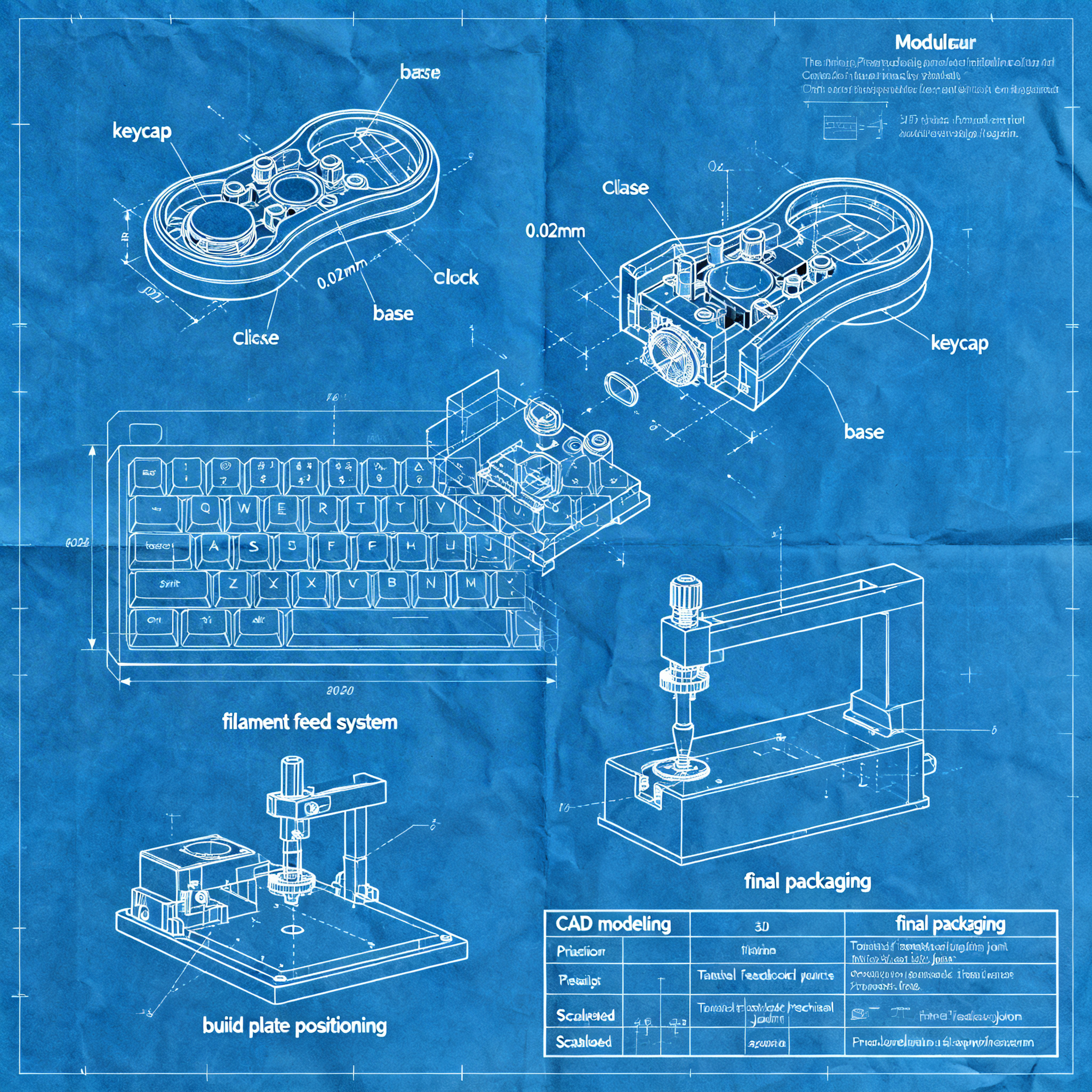
To ensure quality and repeatability on a small scale, accessible yet reliable hardware is needed. Jennifer Ang uses advanced consumer-grade desktop 3D printers, managed directly from home, to produce the components of her fidget clickers. The choice of desktop printers allows for keeping initial costs low and having direct control over calibration and printing parameters. In the case of clickers, tolerance is critical: a deviation of just 0.02 mm can compromise the fit between the keycap and the base, making the click imprecise. This level of precision requires attention to printing parameters, machine calibration, and part finishing, but it is achievable with consumer tools if used methodically.
Rapid Prototyping and Iterative Validation
Building rapid prototypes and testing them with real users accelerates feedback and improves time-to-market.
Desktop 3D printing allows for rapid iteration: designing a variant, printing it, testing it, and modifying it within a few hours. For heyo.makers, this capability translates into the possibility of experimenting with hundreds of different keycap designs, testing tactile feedback variants (audible click with a pronounced bump, bump only without noise, almost silent versions) and validating the most appreciated combinations before producing larger batches. Rapid prototyping reduces the risk of investing time and materials in products that do not meet the market, and allows for responding quickly to customization requests.
Light Automation and Human Control
The targeted use of automation allows for scaling while maintaining high quality and decision-making flexibility.
Automation in a micro-enterprise does not mean robotizing everything, but automating repetitive, low value-added steps, leaving human control over critical points. Custom CAD extensions can automatically generate product variants, material lists, and files ready for printing, reducing errors and setup times. Human control remains essential for machine calibration, part finishing, quality control, and final customization. This balance allows for scaling without losing the artisanal care that distinguishes self-produced design from standard industrial production.
Integration between Production and Branding
Product design must go hand in hand with visual communication and the customer experience.
For a micro-enterprise, product and brand are inseparable. The fidget clickers of heyo.makers are not just functional objects, but vehicles of cultural identity: designs inspired by typical Singaporean snacks and kueh, dim sum, emojis, and symbols transform the product into an identity accessory. This consistency between product design and visual storytelling strengthens the positioning and creates an emotional bond with the customer. Small-scale production allows for maintaining high consistency between brand promise and perceived quality, without compromises imposed by external suppliers.
Direct Sales and Positioning Strategies
Micro-enterprises thrive when they are able to communicate the value of their product directly to the end public.
Heyo.makers combines online sales and pop-ups in malls, leveraging the advantages of both channels. Online allows reaching a broad audience and managing recurring orders, while pop-ups offer visibility, direct contact with customers, and the possibility to let them try the product. In pop-ups, Jennifer Ang can showcase tactile and acoustic feedback variants, let customers test keycap combinations, and gather immediate feedback, creating a shopping experience that reinforces perceived value and justifies the premium price compared to generic industrial products.
Case Study: Heyo.Makers – Live Assembly and Agile Logistics
Heyo.Makers demonstrates how to combine pre-production and on-site customization to maximize engagement and efficiency.
The operational model of heyo.makers involves pre-production of basic components (bases and keycaps) and live assembly/sales at pop-ups. This approach reduces customer wait times, optimizes logistics (no need for a finished product warehouse, only modular components), and allows real-time product customization based on customer preferences. Live assembly becomes part of the shopping experience, increasing engagement and turning the sales moment into an opportunity for storytelling and demonstrating artisanal value. This model is scalable: by increasing the pre-production of components and multiplying temporary points of sale, it is possible to grow without losing flexibility.
Conclusion
Creating a self-produced design company means building a coherent system between process, tools, and communication.
The success of a self-produced design micro-enterprise depends not only on the product quality but on the ability to integrate design, production, and sales into an efficient and scalable workflow. A clear product model, accessible but reliable tools, light automation for repetitive steps, and human control at critical points are needed. The integration between production and branding, combined with direct sales strategies that enhance customer contact, creates a competitive advantage that is difficult for industrial competitors to replicate.
Start defining your operational workflow today: choose a tool, design a process, and test it with a first batch. Rapid prototyping and iterative validation will allow you to correct course quickly, reducing risk and accelerating time-to-market.
article written with the help of artificial intelligence systems
Q&A
- What is the first step to build a coherent and scalable offer in self-produced design?
- The first step is to define a clear product model and a unique value, establishing the design identity and the distinctive advantage over the competition.
- How does the operational workflow contribute to the scalability of a self-produced design micro-enterprise?
- A well-defined workflow connects design, quotation, and production, reducing waste, errors, and rework time, thus allowing to manage more orders without losing quality.
- Why is the choice of materials and technologies crucial for a micro-enterprise?
- The choice of accessible but reliable materials and technologies influences the product repeatability and the efficiency of the production cycle, keeping initial costs low and ensuring precision.
- In what way does rapid prototyping improve the product development process?
- It allows to quickly test different variants with real users, reducing time-to-market and minimizing the risk of investing in products not favored by the market.
- How does heyo.makers integrate production and branding to strengthen its positioning?
- Through design inspired by local culture and a coherent visual experience, heyo.makers transforms its products into identity accessories, strengthening the emotional bond with customers.