
Growth of the consumer and enthusiast market: new opportunities and emerging trends
Introduction to the consumer and enthusiast market
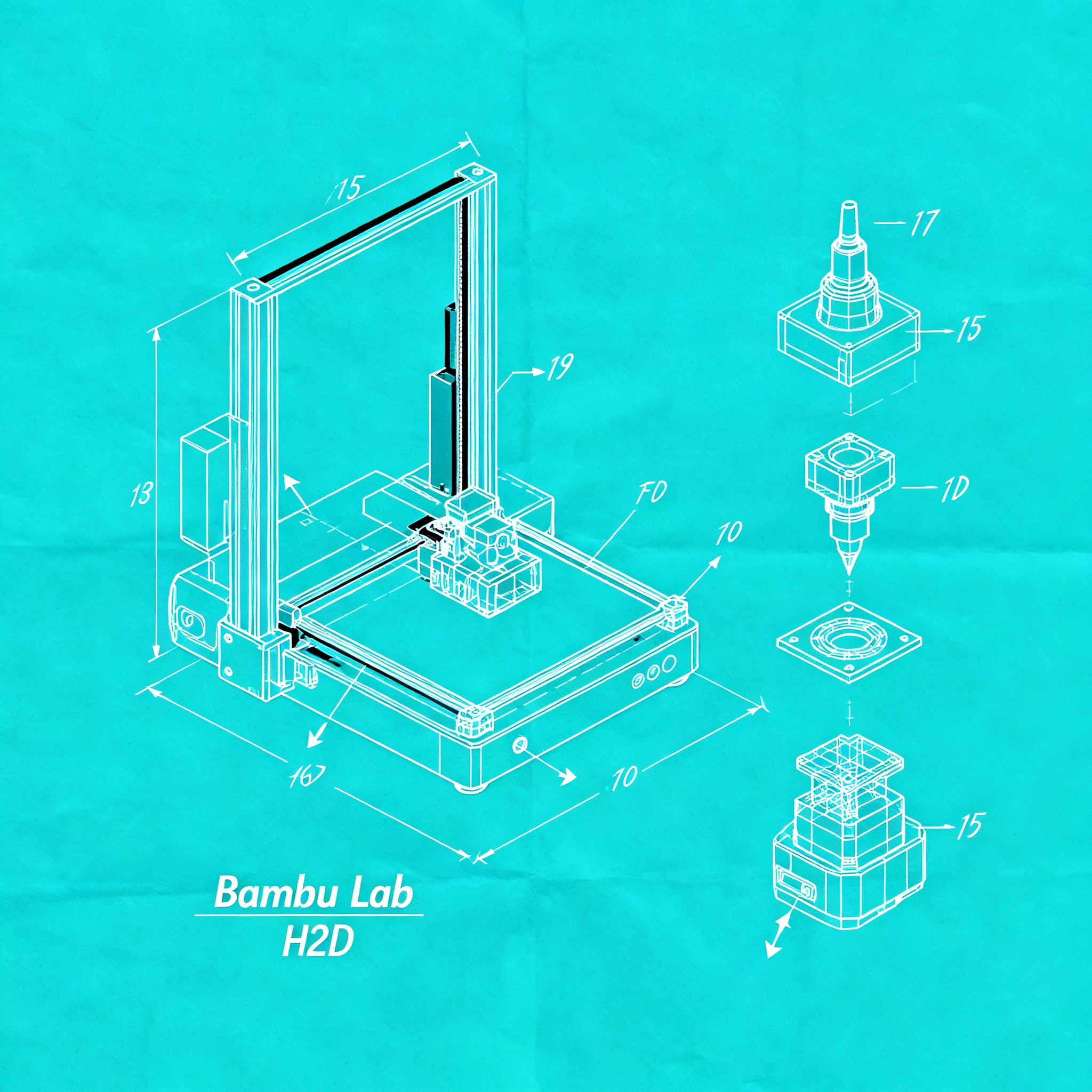
The consumer and enthusiast 3D printing market experienced extraordinary growth in 2025, driven by the expansion of Asian manufacturers and the introduction of increasingly accessible technologies. Bambu Lab has established itself as one of the most influential names in the industry, becoming a true celebrity in the world of 3D printing. The Chinese manufacturer launched its most advanced desktop printers to date, the H2D and H2S, combining technical innovation, ease of use, and a highly competitive price-to-quality ratio.
Bambu Lab has conquered not only the maker community but has also successfully expanded its presence in industrial and educational environments, bringing new audiences like children and young people closer to technology thanks to its machines. The commercial strategy included the opening of a physical store in China to increase brand visibility and strengthen the bond with users, a move rarely seen in the sector.
Key factors driving growth
Growth has been fueled by several determining elements. 2025 represented a year of technological maturity and structural adjustment for additive manufacturing: the industry consolidated real-world applications, diversified the material offering, and reconfigured the main players. Economic accessibility has become crucial: desktop 3D printers are now available at increasingly competitive prices, making the technology genuinely within reach of a broad audience.
The demand for reliable, intuitive, and cost-effective solutions remains the main engine of the market and pushes other manufacturers to rethink their positioning and strategies. The industry has moved past the experimental phase: strategic sectors such as defense and aerospace have confirmed that additive manufacturing is now used for real and highly demanding applications, not just for prototyping.
Expanding sectors: from electronics to DIY
The maker market has recorded significant expansion in various areas. An emblematic example is that of an eighteen-year-old entrepreneur who created Cruise Cup, a six-figure e-commerce business using 3D printing, with sales of approximately $300,000 in November 2025. The operation grew rapidly, moving from a few printers in a bedroom to a warehouse with over 130 machines.
Modularity has become a distinctive feature of 2025. Bambu Lab developed a software workflow that allows for a seamless transition from printing a model to laser engraving a serial number. Users can replace a print head with a laser module or a cutting plotter in a few seconds, transforming the 3D printer into a true fabrication hub suitable for the office. Prusa has also strengthened its position with the INDX system, which allows the use of up to eight different filament spools thanks to rapid and efficient tool changes.
Impact of technology and e-commerce
Technology and e-commerce have revolutionized the accessibility of 3D printing. PrintPal, an AI-powered 3D design platform launched in April 2025, surpassed 100,000 users in just eight months. The software generates 3D models from text or images and is accessible even to those without technical skills, breaking down two of the main barriers to entry for CAD: technical complexity and cost.
Artificial intelligence automatically handles model generation, mesh optimization, and print preparation, allowing users to create, share, and produce 3D models without CAD knowledge. The features are free or affordable, further democratizing access to technology. PrintPal also offers a community marketplace for sharing and selling projects, and an educational academy with free courses on 3D printing.
Future prospects and investment opportunities
Future prospects appear promising, with significant investment opportunities. The construction sector continues to stand out as a growing and increasingly mature application, driven in 2025 towards more sustainable materials, including recycled mixes and formulations with lower environmental impact. Caracol, an Italian company specializing in large-scale robotic additive manufacturing, raised 40 million dollars to accelerate its international expansion in the United States, the European Union, and the Middle East.
The growth of Asian manufacturers is no longer limited to the desktop market. Several companies in the region have strengthened their presence in the industrial segment, beginning to compete in technologies that until recently were dominated by a small group of Western players. Companies such as Farsoon, E-Plus-3D, and BLT continue to enhance their capabilities in metal additive manufacturing, expanding their solution portfolios and improving system reliability.
Conclusions and final considerations
2025 can be described as a period of maturity and adjustment for additive manufacturing in the consumer and maker sector. Over the past twelve months, the industry has consolidated real-world applications, diversified the material offering, and reconfigured the main players, highlighting how 3D printing continues to evolve towards more complete solutions adapted to the needs of hobbyists and industry.
Bambu Lab's influence grew further in 2025, reflecting broader demand for reliable, intuitive, and cost-effective solutions. This trend remains the main driver of the market and pushes other manufacturers to rethink their positioning and strategies. With economic accessibility continuously improving and technological innovation proceeding at a sustained pace, the consumer and enthusiast market is destined to continue its expansion, offering new opportunities both to individual makers and to small businesses intending to leverage the potential of 3D printing.
article written with the help of artificial intelligence systems
Q&A
- What are the two most advanced desktop printers launched by Bambu Lab in 2025?
- Bambu Lab has introduced the H2D and H2S, considered its most advanced desktop printers to date, characterized by technical innovation, ease of use, and competitive pricing.
- How did the PrintPal platform contribute to democratizing 3D printing?
- PrintPal, launched in April 2025, surpassed 100,000 users in eight months: it generates 3D models from text or images, automates optimization and print preparation, offering free or low-cost functionality even to those unfamiliar with CAD.
- Why is 2025 considered a year of maturity for consumer additive manufacturing?
- In 2025, the industry consolidated real-world applications, diversified materials, lowered desktop printer prices, and moved past the experimental phase, making the technology accessible to hobbyists, schools, and small businesses.
- What is the emblematic example of a youth-led enterprise based on 3D printing cited in the article?
- An eighteen-year-old entrepreneur created Cruise Cup, a six-figure e-commerce business that sold approximately $300,000 in November 2025, transitioning from a few printers in a bedroom to a warehouse with over 130 machines.
- In what way did Bambu Lab expand the concept of a “fabrication hub” for the office?
- Bambu Lab developed a modular software workflow that allows replacing the print head with a laser module or a cutting plotter in seconds, integrating 3D printing, laser engraving, and cutting into a single desktop machine.


