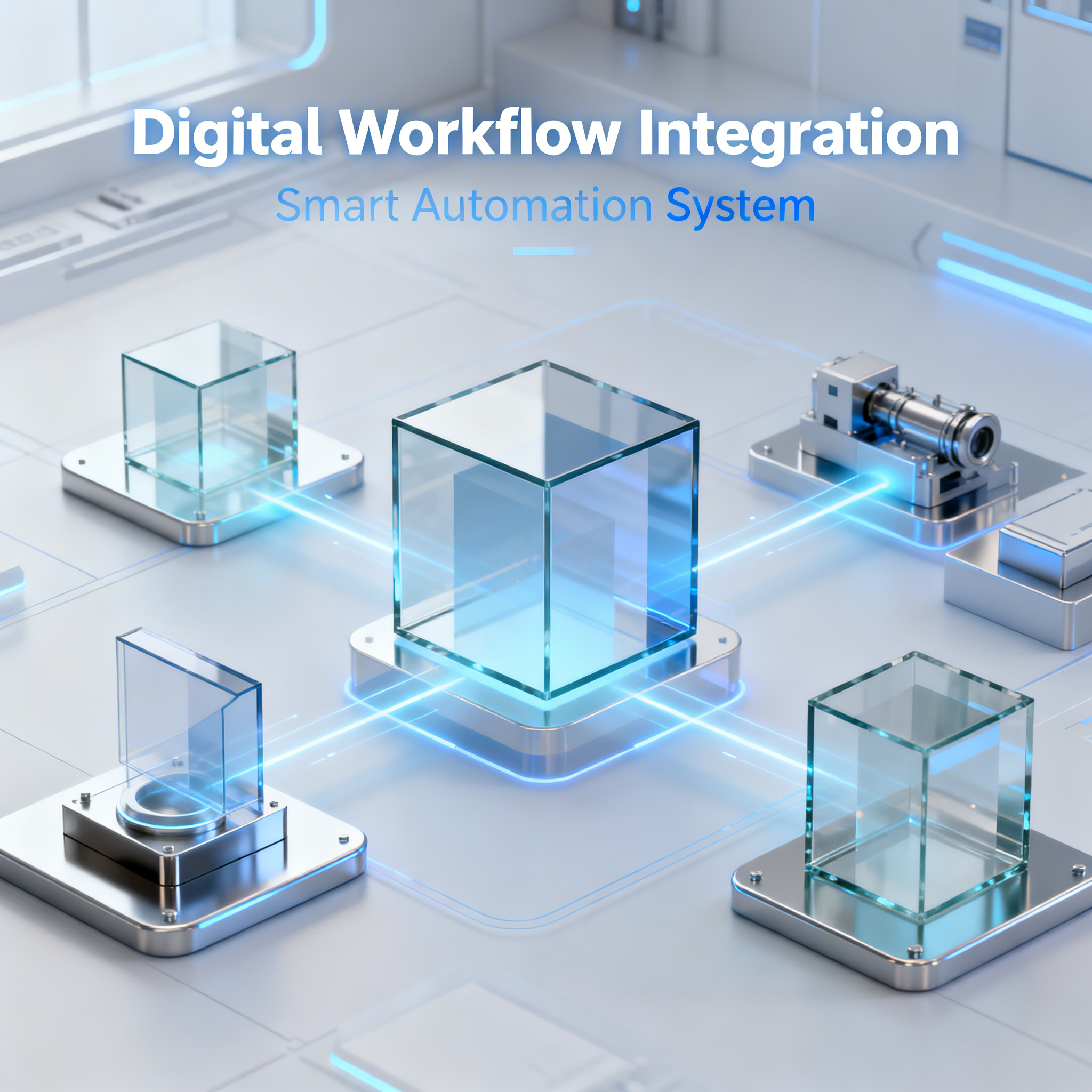
How AI is stitching together the engineering workflow with Aibuild OS
A British AI-based platform promises to unify the engineering workflow, from ideation to production, overcoming the limits of fragmentation between CAD, CAE, and CAM. The London-based software house Aibuild has presented Aibuild OS, a system that addresses a structural problem of modern engineering: the disconnection between software tools that generates costly inefficiencies and slows down innovation.
The problem of fragmentation in the engineering workflow
The disconnected use of CAD, CAE, and CAM creates inefficiencies and delays in engineering projects, forcing professionals into manual translation work between incompatible systems.
In the traditional model, the main problem is not the single machine or the single additive production process, but the fragmentation between CAD (design), CAE (simulation), and CAM (production) tools, often developed by different vendors with proprietary logic and poor interoperability. This fragmentation creates structural “data silos”: project, simulation, and production data remain confined in closed environments, forcing engineers into manual translation and cleanup work between systems that were not born to communicate with each other.
Fragmentation is not an accident, but the result of a consolidated vendor strategy: closed ecosystems, proprietary formats, and limited APIs have long been used to increase switching costs and retain customers. Transferring data between CAD, CAE, slicers, MES platforms, and quality systems becomes a linear and rigid process, based on sequential exports and imports that introduce errors and slow down the entire production cycle.
What is Aibuild OS and how it works
The platform uses artificial intelligence to integrate and automate engineering processes in a unified environment, eliminating high-risk manual steps.
Aibuild OS proposes itself as a unifying layer that orchestrates different tools as a single system, reducing dependence on sequential file exchanges and manual steps. This approach expands Aibuild's scope compared to the past: from the original vertical CAM vocation (with AiSync for robotic processes such as LFAM and WAAM) to a horizontal platform that covers the entire engineering lifecycle.
The platform represents a paradigm shift: instead of forcing engineers to adapt to fragmented tools, Aibuild OS creates an environment where different software communicate through an artificial intelligence that understands the specifics of each system and automatically manages the necessary conversions and optimizations.
I ‘Digital Engineers’: AI agents at the service of automation
These virtual agents execute complex tasks autonomously, managing multi-step workflows across various software environments without continuous supervision.
The central element of Aibuild OS is the concept of “Digital Engineers”, autonomous AI agents capable of managing multi-step workflows across various software environments without continuous supervision. In practice, these agents can take on complex tasks such as converting raw 3D scan data into production-ready meshes, automatically generating molds and fixtures from the final model, or creating print and milling paths from a 3D concept to the machine file.
These agents reduce the cognitive load of human engineers, allowing them to focus on strategic decisions and validation rather than repetitive data conversion operations. The advantage is not only in terms of speed but also in error reduction: every manual step between systems is an opportunity to introduce inconsistencies that can compromise the final product quality.
Intelligent generation of 3D models
From simple textual or 2D inputs, the platform generates production-ready 3D geometries, speeding up the entire production cycle and democratizing access to advanced design.
The platform integrates assisted generation functionalities in the initial design phases, including the transformation of textual prompts into concept images, the conversion of 2D technical drawings into 3D models, and image-to-3D workflows. This drastically reduces the time between idea, validation, and preparation of the production job.
These generative capabilities represent a significant evolution compared to traditional CAD tools, where every geometry must be built manually. With Aibuild OS, an engineer can verbally describe a component or provide a two-dimensional sketch, and the AI automatically generates an optimized three-dimensional geometry, ready to be further refined or directly sent to production.
Use cases and initial feedback from the industry
Some engineering companies have already adopted the platform, leveraging AI-driven automation to accelerate development cycles and reduce conversion errors between systems.
Although Aibuild OS is a recent platform, its approach addresses concrete needs in the advanced manufacturing sector. The growing complexity of engineering workflows, where distributed teams use a mix of desktop and cloud tools, makes integration no longer a “nice to have” but an essential requirement for real production.
The adoption of AI-driven systems for workflow orchestration fits into a broader trend: while hardware rapidly commoditizes, value shifts towards the software that transforms standardized machines into intelligent systems. As demonstrated by other cases in the sector, the competitive advantage no longer lies in the technical specifications of the hardware, but in the software's ability to generate, process, and apply data intelligently.
Conclusion
Aibuild OS represents a step forward towards the intelligent unification of engineering processes, opening new possibilities for advanced automation and reducing the software fragmentation that has been limiting the sector's efficiency for years.
The British platform addresses a structural problem that goes beyond a single company or sector: the need to make systems designed to operate in isolation communicate. While the debate on AI in engineering work often focuses on replacing human skills, Aibuild OS demonstrates a different approach: using artificial intelligence to eliminate systemic inefficiencies, allowing engineers to focus on higher value-added activities.
Explore how your company can integrate AI-driven solutions to overcome the fragmentation of industrial software and accelerate product development cycles, while simultaneously reducing errors and costs associated with manual steps between incompatible systems.
article written with the help of artificial intelligence systems
Q&A
- What is the main problem that Aibuild OS intends to solve in the engineering workflow?
- The main problem is the fragmentation between software tools such as CAD, CAE, and CAM, which generates inefficiencies, errors, and delays in engineering projects. This disconnection forces engineers to perform manual translation work between incompatible systems.
- How does Aibuild OS work to improve integration between engineering tools?
- Aibuild OS uses artificial intelligence to orchestrate different tools in a single unified environment. Instead of sequential file exchanges, the AI automatically manages the necessary conversions and optimizations between the various systems.
- What are the 'Digital Engineers' in Aibuild OS?
- Digital Engineers' are autonomous AI agents capable of performing complex, multi-step tasks across various software environments without supervision. They automate processes such as 3D data conversion, tooling generation, and the creation of production paths.
- What intelligent generation features does Aibuild OS offer?
- The platform enables the generation of production-ready 3D models from textual inputs or 2D drawings. It also includes the transformation of textual prompts into visual concepts and the conversion of sketches into optimized three-dimensional geometries.
- What benefits does the adoption of Aibuild OS bring to engineering companies?
- Adoption allows for accelerating development cycles, reducing conversion errors between systems, and decreasing the cognitive load on engineers. This enables them to focus on strategic activities rather than repetitive operations.