How 3D Printing is Revolutionizing Luxury Jewelry Production
3D printing is transforming the jewelry industry, allowing designers to create previously impossible shapes with reduced times and costs. This technology enables the production of complex details and smooth surfaces, reducing the need for manual finishing and waste of precious metals, while the digital process drastically speeds up prototyping and production.
From Digital Design to 3D Printing
Advanced CAD software allows for the design of complex and detailed geometries, transforming the jewelry creative process and making shapes real that would be impossible with traditional methods.
Digital design represents the starting point of the revolution in jewelry. CAD software allows designers to create three-dimensional models with a level of detail and complexity simply impossible to achieve with traditional methods. 3D printing allows for the production of jewelry with extremely smooth surfaces, significantly reducing the need for filing and polishing after casting.
This precision not only saves time, but also reduces waste of precious metals, translating into substantial economic savings. Digital design also facilitates the conservation of custom designs, which can be modified or recreated as needed, offering unprecedented flexibility in the creative process.
Materials and Printing Technologies for Jewelry
SLA technologies and laser powder bed fusion (LPBF) represent the most advanced solutions for the jewelry sector, allowing for direct printing in precious metals or the creation of models for casting.
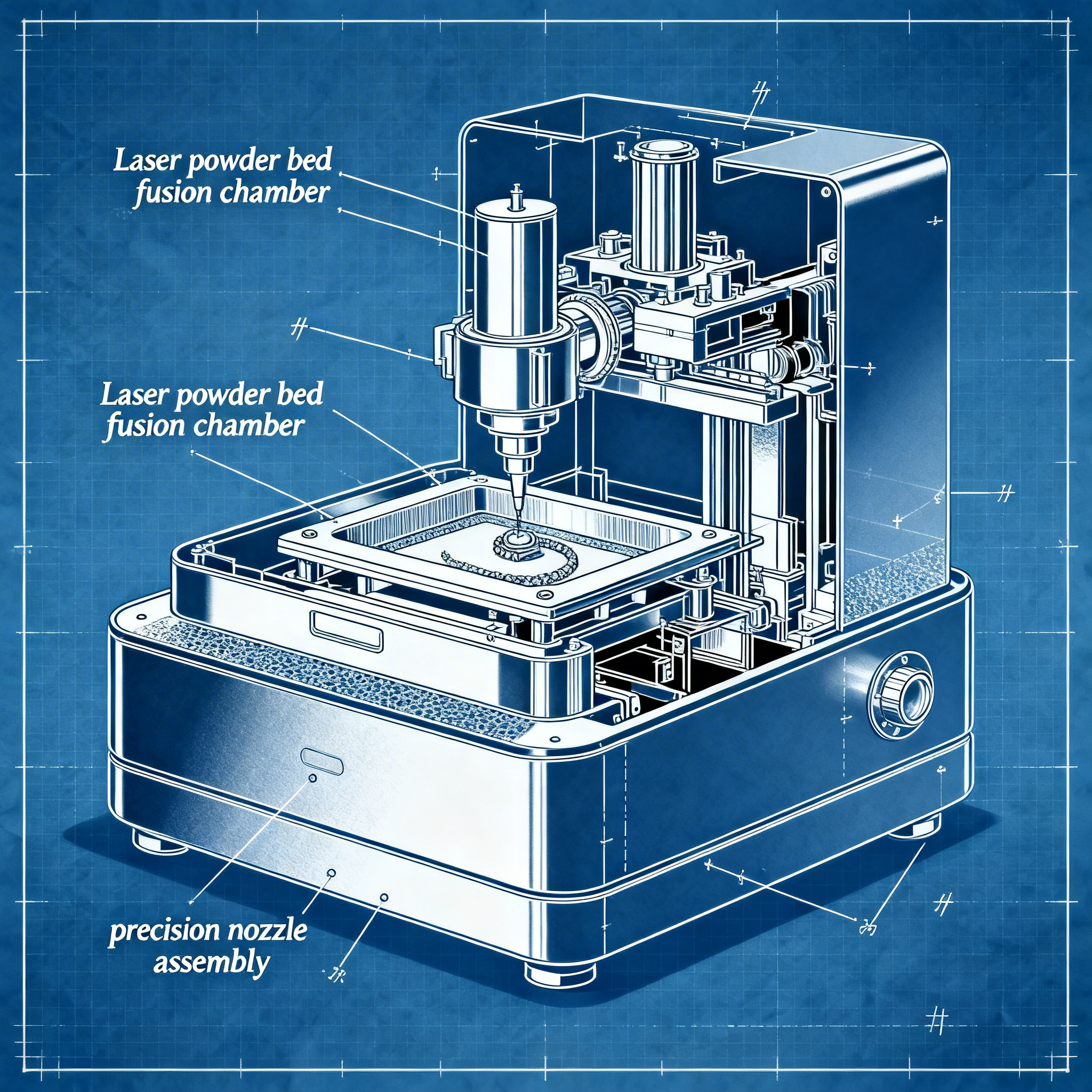
In the precious metals sector, the most widespread 3D printing process is laser powder bed fusion (LPBF), in which a bed of metal powder is fused layer by layer by a high-power laser. This technology requires accurate management of the powder grain size, the atmosphere in the chamber, and the energy parameters to avoid porosity and surface defects.
For platinum, a metal increasingly used in luxury jewelry, 3D printing offers specific advantages: good absorption of laser radiation and low reflectivity improve the energy efficiency of the process. NanoParticle Jetting (NPJ) technology has established itself as a particularly effective solution for the production of small, complex, high-value components, finding application in both precious metals and technical ceramics.
The use of 3D printers for the production of resin or wax models for casting is also widespread, an approach that allows one to exploit the geometric freedom of CAD while continuing to use traditional casting lines.
Rapid Prototyping and Waste Reduction
3D printing reduces development times from over 80 hours to a few hours, allowing designers to focus on creativity rather than repetitive production processes.
The most evident advantage of 3D printing in jewelry is the drastic reduction in production times. Creating a design and bringing it to a finished wax model can take more than 80 hours with conventional methods. With 3D printing, this process takes less than a tenth of the time, allowing designers to dedicate more hours to creating new pieces.
Additive manufacturing uses only the necessary metal and allows for the recovery of unfused powders, reducing waste compared to subtractive manufacturing. This feature is particularly relevant for expensive metals like platinum, improving production cycle efficiency and the traceability of the material used.
3D printing can eliminate the need to outsource production during the manufacture of custom jewelry and allows designs to be modified in a few hours rather than days. This enables greater responsiveness to customer requests and a reduction in operating costs.
Integration with the Lost Wax Casting Process
The combination of 3D printing and traditional lost wax casting creates a hybrid production workflow that combines digital innovation and artisanal mastery, maintaining the quality standards of high jewelry.
The integration of digital design with lost wax casting represents a particularly interesting model for goldsmith laboratories. This hybrid approach allows for leveraging the geometric freedom offered by CAD and 3D printing, while continuing to use the traditional casting lines already present in the company.
3D printed models can be used directly in the lost wax micro-casting process, where they are coated with refractory material, burned, and replaced by molten precious metal. The quality of the printed surfaces significantly reduces the finishing operations after casting.
Major luxury groups like LVMH have integrated 3D printing into the design and production workflows for watches and jewelry, primarily in combination with lost wax casting. Brands like Tiffany & Co., Bvlgari, and TAG Heuer leverage additive manufacturing for prototyping, custom collection development, and the production of complex components.
Case Studies: Custom Jewellery in Serial Production
3D printing enables the scaling of custom model production, making the manufacturing of unique or small-batch pieces economically sustainable for the luxury market.
Additive technology benefits both retailers and designers producing custom jewellery, as well as large foundries operating on an industrial scale. Jewellers can scale their business with a fleet of reliable 3D printers, producing on demand and in proximity to sales markets.
Organizations such as Platinum Guild International are actively promoting the adoption of 3D printing in platinum through contests, collaborations with high jewellery houses, and pilot projects. These initiatives demonstrate that the metal can be used for a wider range of product types beyond just wedding bands and classic solitaires.
The ability to produce pieces on demand reduces logistics costs and the environmental footprint associated with storing and transporting large quantities of jewellery. In the context of a clientele increasingly attentive to material provenance and ethical practices, the combination of responsible precious metals and advanced additive technologies becomes a differentiating element for brands.
Conclusion
3D printing not only increases creative freedom in the luxury jewellery sector, but also introduces efficiency and sustainability into the production of high-end pieces. The technology enables the realisation of complex geometries, drastically reduces development times, and minimises waste of precious materials, while maintaining the quality standards required by the luxury market.
Explore the potential of 3D printing for your next jewellery project now and discover how to integrate it into existing production processes, leveraging the combination of digital innovation and traditional craftsmanship.
article written with the help of artificial intelligence systems
Q&A
- What are the main benefits of 3D printing in the luxury jewellery sector?
- 3D printing enables the creation of complex shapes impossible with traditional methods, reduces production times and costs, and minimises waste of precious metals. Furthermore, it accelerates prototyping and allows for greater customisation of models.
- What 3D printing technologies are most used for jewelry production?
- The most widespread technologies are laser powder bed fusion (LPBF) and stereolithography (SLA). LPBF allows direct printing in precious metals, while SLA is used for resin or wax models for casting.
- How does 3D printing affect jewelry development times?
- 3D printing drastically reduces development times, from over 80 hours with traditional methods to just a few hours. This allows designers to focus more on creativity and customization.
- How does 3D printing integrate with the traditional lost-wax casting process?
- Models created in 3D can be used directly in the lost-wax casting process, maintaining high surface quality and reducing post-casting finishing operations.
- Which luxury brands are adopting 3D printing in their production processes?
- Brands such as LVMH, Tiffany & Co., Bvlgari, and TAG Heuer use 3D printing for prototyping, production of complex components, and creation of custom collections, often in combination with lost-wax casting.