
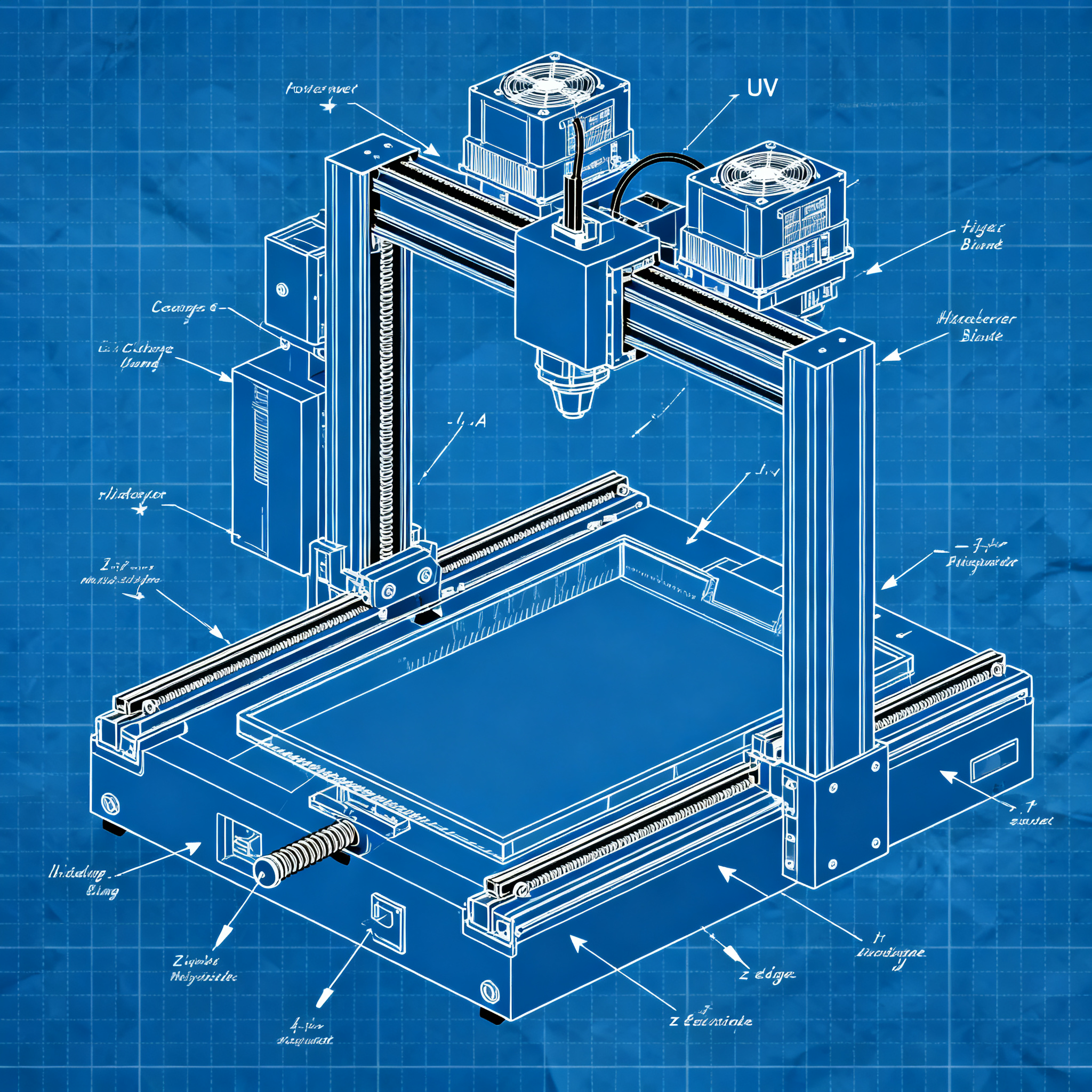
How large-scale SLA 3D printing is transforming industrial costs
The industrial bet on stereolithography is revolutionizing tooling costs, halving times and budgets without compromising quality.
In the 2026 manufacturing landscape, large-scale stereolithography (SLA) is emerging as a concrete solution to drastically reduce tooling costs. While desktop technologies migrate towards LCD, industrial giants like 3D Systems are investing massively in lasers, reducing production times from months to a few days and generating savings of up to $200,000 per single project.
The impact of large-scale SLA on production processes
The SLA process can replace traditional tooling production methods, with immediate benefits on costs and delivery times.
Industrial SLA technology has reached the maturity necessary to compete with conventional methods. High-power laser systems manufacture equipment, molds, and large-scale components with micrometric precision, eliminating outsourcing in product development. Companies design, test, and modify designs in days rather than weeks, maintaining control of the entire process.
Success depends on the ability to produce rigid and durable parts usable as final components, without compromising surface quality. This approach creates functional prototypes, custom assembly tools, and specific equipment quickly and economically, freeing up CNC machines for critical operations.
Economic benchmark: traditional tooling vs SLA 3D printing
Numerical comparisons document reductions of up to 75% in overall tooling costs and delivery times.
Traditional production of complex tools requires heavy investment in CNC machining, metal molds, and prolonged setups. With industrial SLA, costs are drastically reduced: companies record savings of up to 75% on the production of custom equipment.
The advantage is not limited to the direct cost. Eliminating outsourcing, reducing waste, and rapidly iterating designs generates significant indirect savings. An on-demand digital library of printable parts lowers warehouse costs and enables file sharing between sites, enabling distributed manufacturing.
Digitalization guarantees complete traceability and automation, transforming 3D printers into machines as reliable as CNCs.
Automotive case study: -40% on prototyping costs
A leading manufacturer integrated industrial SLA to halve lead times and cut development costs.
In the automotive sector, where efficiency and cost containment are crucial, SLA demonstrates its strategic value. Manufacturers create conceptual models, functional prototypes, Class A parts, and custom tools.
In-house adoption eliminated dependence on external suppliers and reduced development times. Printing, testing, and redesigning in a few days accelerates innovation and maintains competitiveness.
A concrete example is the production of ergonomic extensions for tanks: functional parts with a surface finish suitable for end use, obtained in times and costs lower than traditional methods.
Aerospace case study: precision and scalability at controlled cost
Micrometric precision and rigorous cost control make SLA strategic for critical components.
The aerospace sector requires high quality standards and strict cost control. Industrial SLA offers micrometric precision and repeatability, essential for critical applications.
Companies produce equipment, test components, and functional parts with tight tolerances. Creating complex geometries in a single print, without assemblies, reduces potential failure points.
Automation via dedicated software ensures the traceability required by regulations; reduced times allow for rapid response to maintenance needs and replacement of legacy components that are no longer available.
Hidden drivers of total cost
Maintenance, software, training, and post-processing influence ROI and must be included in the TCO.
The Total Cost of Ownership (TCO) for industrial SLA includes elements beyond the machine and material price. Software is critical: solutions like SmartBuild automate decisions and processes, reduce the need for specialized expertise, and improve repeatability.
Maintenance, lower than that of CNC systems, requires planning. Modern systems offer remote monitoring and real-time diagnostics for preventive interventions that minimize downtime.
Post-processing, traditionally burdensome, is reduced thanks to technologies that produce almost polished surfaces directly from the printer, drastically cutting finishing times and costs.
Staff training is an initial investment that pays off quickly through operational autonomy and continuous process optimization.
Large-scale SLA 3D printing is no longer a futuristic bet, but a consolidated tool for industrial cost control, with documented use cases demonstrating concrete savings and measurable operational improvements.
Evaluate the integration of industrial SLA into your production process today to reduce tooling costs by up to $200,000 and drastically accelerate product development times.
article written with the help of artificial intelligence systems
Q&A
- What is the average documented savings on equipment costs by switching from traditional tooling to industrial SLA 3D printing?
- Economic comparisons report reductions of up to 75% in overall equipment costs and lead times. Companies can therefore achieve savings of up to $200,000 per single project, halving times and budgets without compromising quality.
- How does large-scale stereolithography change product development times in the automotive sector?
- A leading manufacturer has halved lead times and cut prototyping costs by 40%. Printing, testing, and redesigning ergonomic tank extensions takes place in a few days rather than weeks, eliminating dependence on external suppliers and accelerating innovation.
- Why does the aerospace sector consider industrial SLA strategic?
- Aerospace requires micrometric precision and rigorous cost control. SLA offers tight tolerances, repeatability, and the ability to create complex geometries in a single print, reducing potential points of failure and ensuring traceability compliant with regulations.
- Which cost items, besides machine and materials, influence the TCO of an industrial SLA system?
- Total cost of ownership includes automation software, preventive maintenance with remote monitoring, post-processing, and staff training. Solutions like SmartBuild reduce the need for specialist expertise, while near-glossy surfaces lower finishing times.
- How does the digitization of SLA parts lower warehousing costs?
- A digital library of on-demand printable parts eliminates the need to keep physical inventory. Files can be shared between sites, enabling distributed manufacturing, full traceability, and waste reduction, with significant resulting indirect savings.


