How Color and Material Customization Works in Consumer 3D Printing
Color and material customization in 3D printing is becoming an accessible reality for consumer users, but requires a deep understanding of the chemical and physical interactions involved. As the market shifts from the “speed war” to chromatic and material versatility, innovative technologies are emerging that allow for iridescent effects and complex mixing, but bring with them technical challenges that go far beyond superficial aesthetics.
According to 2026 market data, over 65% of desktop printers in the price range above $500 include multi-material capabilities as standard, marking a structural change in the sector. However, this rapid adoption has exposed significant limits in first-generation systems: excessive waste during color changes, long transition times, and inconsistent material management. The real challenge is no longer printing quickly, but precisely controlling what and how is printed.
Structural Color Deposition Technology
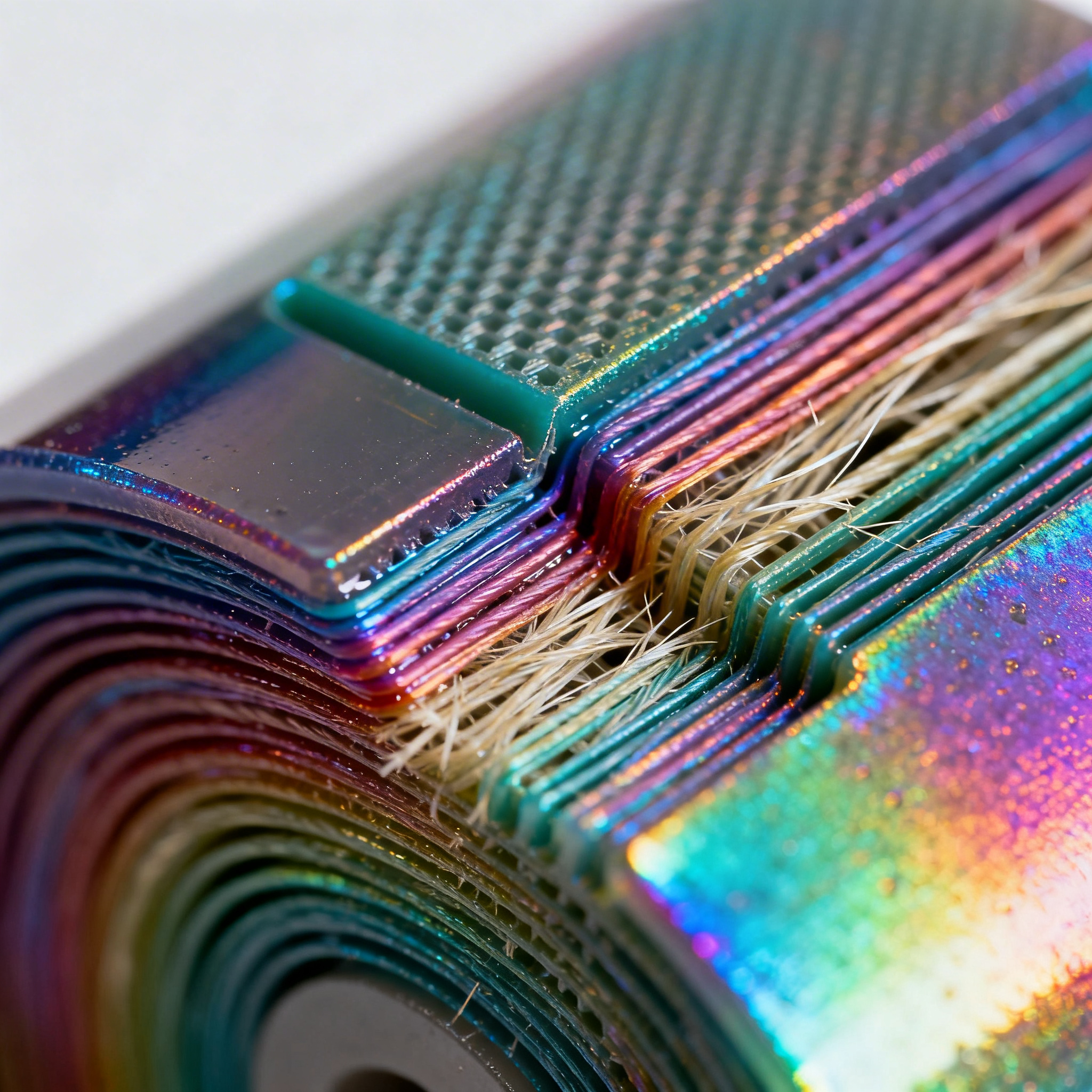
Advanced systems like MIT's MorphoChrome use laser techniques to create iridescent chromatic effects on 3D printed surfaces, transferring programmable structural colors via holographic photopolymer films.
MorphoChrome represents a radically different approach to post-print coloring. Instead of traditional pigments, the system exploits structural color – the same optical phenomenon that creates iridescence in butterfly wings or peacock feathers. The portable device, the size of a glue bottle, contains red, green, and blue lasers controlled in intensity that selectively expose a holographic photopolymer film.
The process requires differentiated exposure times for color: green saturates in about 2.5 seconds, red in 3 seconds, while blue requires about 6 seconds, reflecting the different energy requirements per wavelength. After the laser exposure phase, the film is transferred to the target object using a thin layer of epoxy resin and a brief UV cure.
Demonstrated applications range from aesthetic to functional: a butterfly charm transformed into a pendant with a gem-like appearance, applications on small surfaces like artificial nails, and a golf glove that shows green coloration when the grip is correct, using the angular change of structural color as interactive visual feedback.
However, the method presents realistic technical limits: it requires accurate management of film, resin, and UV curing, can be sensitive to surface preparation and complex geometries (sharp edges, tight curves, recesses). The current device prototype may allow light to filter through, and questions remain open regarding scratch resistance, adhesion over time, and the stability of the optical effect on everyday use objects.
Rheological Factors in Material Mixing
Ambient humidity, variations between production batches, and dye type deeply influence the rheological behavior of materials during processing, altering the properties of the final material.
When mixing materials in 3D printing, especially in large-format pellet systems (LFAM/FGF), the transition between different compositions is not instantaneous. The extruder maintains a “buffer” of the previous composition, creating a gradual transition zone where material properties, color, and flow behavior change progressively.
This transition ramp can extend for many meters of toolpath and several minutes, depending on the bead size, screw geometry, and deposition speed. Practical consequences include variations in bead width, loss of fidelity in corners, and possible local deformations. If the materials are not completely compatible, the transitional region can become the weak point for interlayer adhesion.
The critical factors influencing this transition are multiple. Moisture can significantly alter the rheology of the polymer melt. Variability between pellet batches, even of the same nominal material, introduces inconsistencies. Dyes themselves modify the transition profile, not only aesthetically but also mechanically.
In empirical tests conducted with consumer multi-material systems, using basic palettes of black, white, red, and yellow, it emerged that the printed color often visibly deviates from the software preview. The actual properties of the filaments—white tone, opacity, pigment concentration—affect the result much more than the simple displayed RGB value. Some whites tend towards “natural” ivory tones that attenuate saturated colors, while very opaque filaments deeply reduce the optical mixing effect, making the layered structure evident.
Polymer Interactions and Thermal Challenges
The combination of semicrystalline and amorphous polymers, or fillers with different fiber percentages, requires adhesion promoters and complex thermal profiles that are difficult to maintain in large-scale printing environments.
Material compatibility represents one of the most stringent constraints in multi-material customization. Mixing polymers with different molecular structures—semicrystalline like nylon or amorphous like ABS—may require specific additives to ensure interfacial adhesion. When adding fillers such as glass or carbon fibers at variable percentages, complexity increases exponentially.
The thermal profiles necessary to manage these combinations are not trivial to maintain, especially in a large heated volume. The transition from a glass-fiber filled material to an unfilled but toughened one involves not only a change in melt viscosity, but also differences in shrinkage behavior and layer-to-layer adhesion characteristics.
Recent research on the transition of polymer blends in large-format printing highlights how these seemingly minor details can propagate into dimensional drift, interlayer adhesion issues, surface artifacts, and unexpected mechanical gradients throughout the part. Understanding and predicting transient behavior becomes central to reliable multi-material work, whether the goal is cost reduction with a rigid core and tough skin, faster printing with high-productivity pellets, or color changes for visual indicators.
To maximize the optical blending effect in consumer systems, experts recommend combining very thin layers with transparent or semi-transparent materials. Thicker, opaque layers, on the other hand, lead to a segmented perception of color, making the layering visible.
Conclusion
Flexibility in color and materials opens up new aesthetic and functional possibilities in consumer 3D printing, but requires precise technical expertise to avoid operational pitfalls that can compromise quality and performance.
The shift from speed to versatility marks the maturation of the consumer 3D printing sector. Emerging technologies such as programmable structural color and advanced material mixing systems demonstrate that customization is technically possible, but not automatically simple. The gap between software preview and physical result remains significant, influenced by variables ranging from polymer chemistry to the physics of light.
To fully exploit these possibilities, it is essential to build a personal “library” of empirically tested recipes, documenting how specific materials behave under your own operating conditions. Parameter traceability, controlled management of ambient humidity, understanding of transition times, and the choice of compatible materials become fundamental skills.
Experiment with tested materials and follow precise protocols to fully exploit the potential of your 3D printer. Invest time in the calibration and sampling phase before complex projects. Systematically document results, noting brand, batch, and environmental conditions. Only through this methodical approach can the customization of colors and materials transform from a technological promise into a reliable, productive tool.
article written with the help of artificial intelligence systems
Q&A
- What are the main technical challenges in customizing colors and materials in consumer 3D printing?
- The main challenges include excessive waste during color changes, long transition times, and inconsistent material management. Furthermore, compatibility between different polymers and precise control of thermal profiles make it complex to achieve consistent, high-quality results.
- How does MIT's MorphoChrome technology for structural coloring work?
- MorphoChrome uses red, green, and blue lasers to selectively expose a holographic photopolymer film, creating iridescent chromatic effects similar to those found in nature. The film is then transferred onto the object using epoxy resin and UV curing.
- What factors influence the rheological behavior of materials during multi-material 3D printing?
- Ambient humidity, variability between production batches, and the type of dyes deeply influence rheology. These factors can alter material flow, cause color variations, and compromise interlayer adhesion.
- Why is it important to understand polymer interactions in multi-material printing?
- The combination of semicrystalline and amorphous polymers requires specific additives and complex thermal profiles. Without proper material compatibility, adhesion issues, differential shrinkage, and unexpected mechanical gradients can occur.
- What precautions are recommended to achieve better optical mixing in consumer systems?
- Experts recommend using very thin layers in combination with transparent or semi-transparent materials. In fact, thick and opaque layers tend to show visible stratification that compromises the desired optical blending effect.