How the PowTReX System Works for Advanced Management of Metal Powders
The new PowTReX by Volkmann represents a step forward in the automation of metal powder handling for additive production. Presented in January 2026 as an evolution of the platform introduced in 2018, the system integrates pneumatic transport, ultrasonic sieving, and automatic powder recovery in a closed, explosion-proof environment, meeting the needs of production contexts with multiple 3D printers and higher-volume workflows.
Every phase of the process—from powder pickup to regeneration—is designed to maximize safety, material quality, and production continuity. Compatibility with various powder types and machinery makes it suitable for scalable, multi-supplier industrial contexts, where powder quality repeatability and reduction of manual handling become critical process parameters.
PowTReX System Architecture
The PowTReX is configured as a three-in-one unit that integrates suction/transport, sieving, and collection of powder ready for reuse, with the goal of making the “powder loop” more stable in plants with repeated flows.
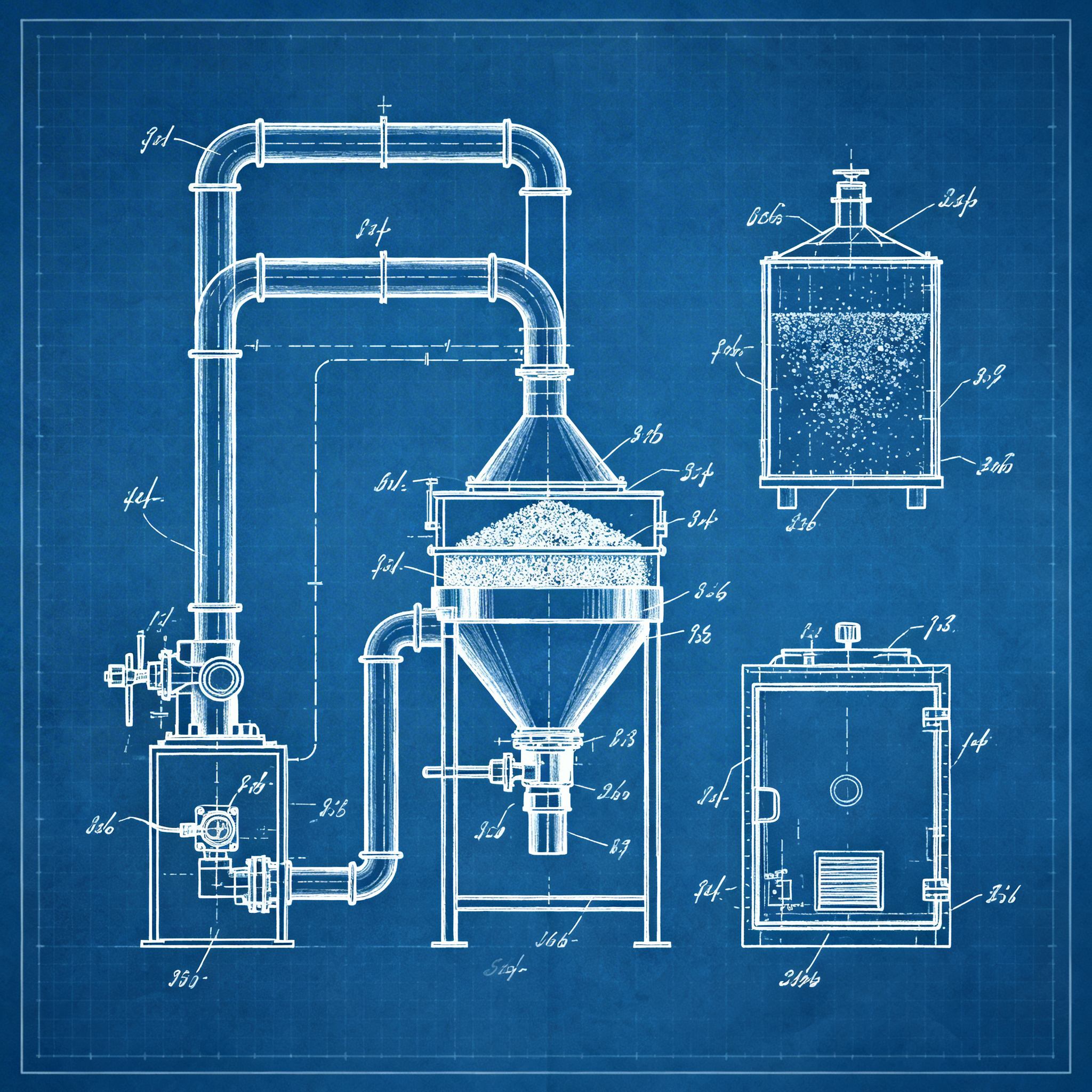
The system follows a modular architecture based on a clear operational chain: powder is suctioned from an upstream source (printer, unpacking station, container, or hopper) and conveyed to the central unit. It is then accumulated in a buffer tank that decouples extraction times from sieving times, allowing the system to operate continuously without depending on synchronization between the different phases. Subsequently, the powder is dosed onto the sieve, which uses ultrasonic cleaning to keep the mesh clear and ensure a constant flow. Agglomerates and oversized particles are conveyed to a dedicated container, while “on-spec” powder is collected for reuse or sent downstream to containers, bottles, or other equipment via pipelines.
Pneumatic Transport and Intrinsic Safety
The vacuum transport system can operate up to 25 meters away and is presented as a closed, dust-tight system with an “explosion-proof / ATEX” setting for use in contexts with combustible dust risk.
Pneumatic transport represents the core of powder handling in the PowTReX. The system suctiones material via vacuum, eliminating the need for manual handling and drastically reducing operator exposure to dust during transfers and emptying. Volkmann's proprietary technology, defined as “proven effective in over 100 additive manufacturing installations worldwide,” ensures that the material is protected from contamination throughout the entire cycle.
Safety is central: handling metal powders entails stringent requirements both for operator protection and for prevention of explosive risks. The closed, ATEX-certified system meets these plant requirements, allowing installation in regulated industrial environments. Rigid piping can also be used for conveying, offering flexibility in cell layout design.
Ultrasonic Sieving and Material Regeneration
Ultrasonic technology applied to sieving keeps the mesh free and guarantees the effective removal of agglomerates and oversized particles, preserving the physical properties of the powders for efficient reuse.
Sieving represents the critical moment for the quality of regenerated powder. In metal 3D printing, unfused powder remaining in the chamber must be extracted, cleaned (removal of agglomerates, oversized particles, and contaminants), and then reintroduced into the cycle, often together with virgin powder. The objective is twofold: to maintain granulometric quality and to reduce times and manual activities in the unpacking/recovery phase after printing.
The PowTReX uses sieving with ultrasonic cleaning, a technology that prevents mesh clogging and guarantees a continuous flow. Standard meshes are available (50, 56, 63, 75, 85, and 106 µm), with further cuts on request, allowing the system to be calibrated to granulometries and internal powder qualification specifications. These parameters are especially useful in serial production where sieve consistency is a fundamental quality control point.
Process Automation and Control
The automated architecture of the PowTReX reduces human intervention and improves process repeatability and traceability, making line productivity independent of manual steps.
The system automatically transfers powders from a container or feed hopper, extracts and sieves the used powder after a completed print job to remove oversized particles, and collects the sieved powder for reuse and return to the printing process. This complete cycle automation eliminates cumbersome manual management and reduces dead time between one print cycle and the next.
The portability of the system and its ability to integrate with “machines from all printer manufacturers” make it an adaptable process node for existing cell layouts and powder logistics. With a declared throughput of up to 800 kg/h (reference: stainless steel powder), the PowTReX is positioned to support high-volume production environments.
Multimaterial Compatibility and Industrial Scalability
The PowTReX is compatible with a wide range of metal alloys and offers customized configurations to adapt to complex production flows and multiple feeders.
The system is declared compatible with tungsten, cobalt, silver powder, iron, stainless steel, alumina, nickel-chromium, copper, titanium, carbide powder, corundum, and other metal powders. This multi-material versatility is fundamental for plants working with different alloys or needing to adapt to different customer specifications.
In addition to the standard version, an inert gas variant is available to manage controlled atmospheres when the material or internal policies require it. A version with the capacity to mix virgin powder and recovered powder in defined ratios during the sieving phase is also offered, along with customized configurations for different discharge containers. This positioning not as a single machine but as an adaptable process node addresses the needs of industrial scalability and integration in complex production ecosystems.
Conclusion
PowTReX represents a cutting-edge solution for the entire life cycle of metal powders, ideal for advanced production environments that require repeatability, safety, and operational continuity. The integration of pneumatic transport, ultrasonic sieving, and complete automation in a closed, explosion-proof system addresses the challenges of industrial-scale metal additive manufacturing.
To implement safer and more sustainable processes in your additive production, consider the integration of dedicated systems such as PowTReX. Automated powder management not only improves operator safety and material quality but also represents an enabling factor for the scalability of metal additive production in industrial contexts.
article written with the help of artificial intelligence systems
Q&A
- What are the main functionalities of the PowTReX system?
- The PowTReX system integrates pneumatic transport, ultrasonic sieving, and automatic powder recovery in a closed, explosion-proof environment. It is designed to maximize safety, material quality, and production continuity in contexts with multiple 3D printers.
- How does pneumatic transport work in PowTReX?
- Pneumatic transport operates in a vacuum up to a distance of 25 meters, suctioning powder from sources such as printers or containers. The system is closed and ATEX certified, reducing operator exposure and preventing contamination.
- What advantages does ultrasonic sieving offer?
- Ultrasonic sieving keeps the mesh screen free, removing agglomerates and oversized particles without altering the physical properties of the powder. This ensures a constant flow and repeatable quality of the regenerated material.
- What materials are compatible with PowTReX?
- PowTReX is compatible with multiple metal alloys, including stainless steel, titanium, cobalt, copper, tungsten, and other metal powders. It also offers options for inert atmospheres and mixing of virgin and recovered powders.
- How does PowTReX improve automation of the production process?
- The system automates the entire powder cycle, from suction to sieving to reuse, reducing human intervention. This increases repeatability, traceability, and productivity, especially in high-volume environments.