How the Mintion V1 3D Printing Filtration System Works: Complete Technical Guide
An intelligent filtration system can transform air quality during 3D printing, but only if applied correctly within a consistent setup. The Mintion V1 represents an affordable solution specifically designed to reduce emissions generated by FFF/FDM 3D printers, with particular attention to ultrafine particles and volatile organic compounds (VOCs) released during filament melting.
Several scientific studies have demonstrated that filament-based 3D printers release both ultrafine particles and VOCs during operation, especially when using materials such as ABS, ASA, or some technical blends. While dedicated extraction systems are common in industrial contexts, in the domestic world and small offices, protection is often limited to opening windows or improvised solutions. The Mintion V1 aims to bridge this gap, offering a compact and easy-to-install device for home users and small laboratories.
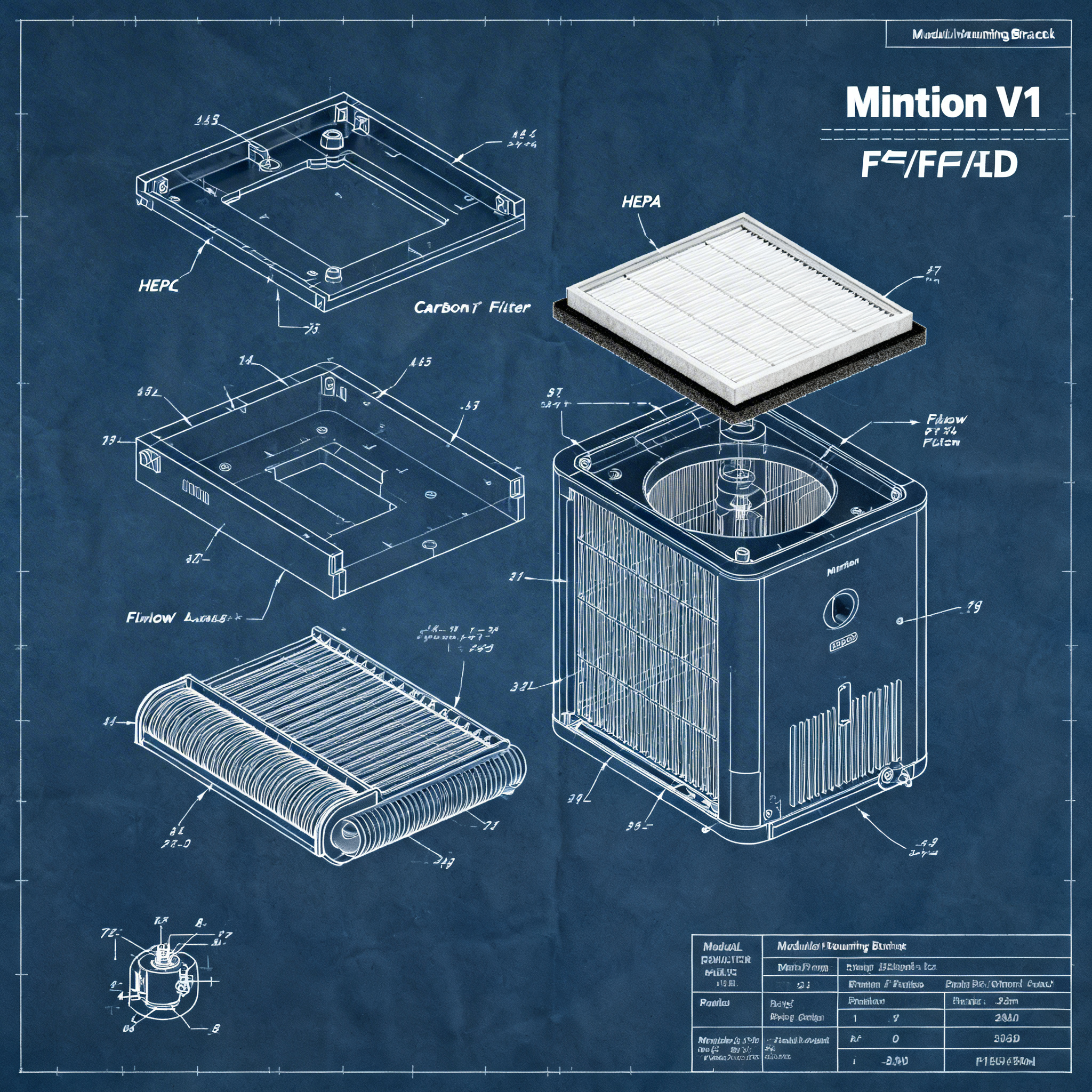
Mintion V1 Filtration System Architecture
The Mintion V1 is designed to be easily integrated into home environments or maker spaces, leveraging a modular configuration that maximizes airflow efficiency through a combination of mechanical and chemical filtration.
The system is positioned in an affordable price range, with the stated goal of making filtration systems more widespread among prosumer and maker users working in shared spaces, offices, or homes. Mintion, already known in the 3D printing world for products like the Beagle camera for remote print monitoring, thus extends its offering in the direction of workplace safety and hygiene.
The structure of the Mintion V1 includes an external filtration module that can be integrated in various ways depending on the printer configuration. The device is primarily intended for users of open printers, often lacking dedicated filters, which represent the majority of the installed base of “Ender”-style, “Prusa-like”, or DIY machines.
Operation of HEPA and Activated Carbon Filters
HEPA filters capture ultrafine particles while activated carbon filters absorb volatile organic compounds (VOCs), providing a dual barrier against pollutants emitted during printing through an optimized air path.
The Mintion V1 system employs a combination of mechanical filtration and chemical filtration to reduce both particulate matter and VOCs. The HEPA filter is designed to capture ultrafine particles, the same particles that, according to research conducted by Dublin City University, can pose a health risk in enclosed and poorly ventilated environments, particularly due to their persistence in the lungs.
The active carbon filter, on the other hand, is responsible for absorbing volatile organic compounds, significantly reducing odors and the presence of compounds with potential harmful effects. This dual action is particularly important considering that even materials perceived as harmless, such as PLA and PETG, produce particulate matter and compounds that, in a poorly ventilated room, can accumulate over time.
Optimal Placement and Interface with Enclosure
To achieve optimal results, the Mintion V1 must be strategically positioned near the print head or integrated directly into the closed enclosure, establishing a filtered airflow that reduces the accumulation of pollutants.
In many cases, users build structures from plexiglass, wood, or composite panels to reduce noise, retain heat, and isolate odors. However, without an adequate filtration system, these enclosed volumes end up accumulating particles and gases inside, which then disperse into the environment when the door or panel is opened.
By connecting the Mintion V1 to the enclosure via a port and ducting, it is possible to establish a filtered airflow that reduces the accumulation of pollutants inside and lowers the concentration of particulate matter when the user accesses the machine. Alternatively, Mintion V1 can be used near the printing area even without an enclosure, positioning the system intake to intercept the hot airflow rising from the print bed and the hotend, especially when using sensitive materials or prolonged printing sessions.
The choice of placement depends on the specific configuration of the working environment and the type of printer used. For open printers, strategic positioning near the emission source is crucial to maximize the system's effectiveness before pollutants disperse into the surrounding environment.
Limitations and Operational Considerations
Although highly effective, the system does not completely eliminate all risks related to thermoplastic emissions; therefore, it requires conscious use and complementing other good practices such as periodic ventilation and the choice of quality filaments.
The adoption of a filtration system like Mintion V1 aims to obtain benefits on two levels: reduction of long-term risk related to chronic exposure to ultrafine particles and VOCs, and immediate improvement of comfort in the work environment thanks to a decrease in odors and the perception of stale air.
The use of HEPA filters combined with active carbon does not completely eliminate the risk, but contributes to significantly reducing the concentration of pollutants. Studies on 3D printing have shown that the composition and quantity of emissions vary considerably based on the material and brand of filament, making it impossible to guarantee the total elimination of risks with a single device.
In a context where increasingly more printers are finding a place in school classrooms, fablabs, home offices, and shared labs, devices like the Mintion V1 represent a step forward towards a more aware and safe 3D printing ecosystem. However, it is essential to consider the system as part of a broader strategy that includes environmental ventilation, conscious choice of materials, and air quality monitoring.
Conclusion
The Mintion V1 represents an accessible and effective solution for improving environmental safety in 3D printing, provided it is correctly integrated into your setup. There are already dedicated filtration solutions on the market, from modules integrated into professional printers to aftermarket kits, but the Mintion V1 aims to stand out for its cost-to-performance ratio, offering a compact and easy-to-install system.
The effectiveness of the system depends on factors such as airflow positioning, enclosure airtightness, and pairing with good operational practices. To maximize benefits, it is advisable to combine the use of the Mintion V1 with periodic room aeration, a preference for low-emission materials when possible, and the awareness that no filtration system can be considered a complete solution for air quality.
Evaluate the integration of the Mintion V1 into your work environment and monitor its effectiveness through qualitative indicators such as odor reduction and respiratory comfort. In a landscape where awareness of the risks from 3D printing emissions is growing, investing in accessible filtration systems represents an important step towards safer and more comfortable work environments.
article written with the help of artificial intelligence systems
Q&A
- What are the main pollutants generated by FFF/FDM 3D printers according to the article?
- FFF/FDM 3D printers release ultrafine particles and volatile organic compounds (VOCs) during operation, especially when using materials like ABS, ASA, or technical blends. Even materials considered less problematic, such as PLA and PETG, produce these pollutants in poorly ventilated environments.
- How does the Mintion V1 filtration system work?
- The Mintion V1 uses a combination of mechanical filtration with a HEPA filter, which captures ultrafine particles, and chemical filtration with activated carbon, which absorbs volatile organic compounds. The system creates an optimized airflow to intercept pollutants near the emission source.
- For what types of users and environments was the Mintion V1 designed?
- The Mintion V1 is designed for home users, makers, small labs, and shared environments like fablabs and offices. It is particularly suitable for users of open printers like 'Ender', 'Prusa-like', or DIY models, which often lack integrated filtration systems.
- What is the optimal placement of the Mintion V1 to maximize effectiveness?
- The ideal placement is near the print head or integrated directly into a closed enclosure, to capture the hot air rising from the print bed. Alternatively, it can be used without an enclosure by strategically positioning the intake to capture pollutants before they disperse.
- What are the limitations of the Mintion V1 system?
- The Mintion V1 does not completely eliminate all risks associated with thermoplastic emissions and requires conscious use alongside other good practices. Its effectiveness varies based on the material used, environmental ventilation, and proper installation.