How Functional Grading Works in Industrial Additive Processes
The production of components with variable properties in a controlled manner is no longer science fiction, but an industrial reality based on intelligent thermal processes and real-time feedback.
In the advanced manufacturing landscape of 2026, functional grading represents one of the most significant innovations in industrial additive manufacturing. Unlike conventional techniques that physically mix different materials, this technology creates controlled transitions of mechanical and chemical properties through precise modulation of thermal energy during component construction. The result is complex structures with graded characteristics, produced in a single continuous process without physical interruptions.
Definition and Principles of Functional Grading
Functional grading distinguishes itself from traditional additive techniques by its ability to create property variations through thermal control, rather than through direct material mixing.
Functional grading in industrial additive processes is based on a fundamental principle: the controlled modification of material characteristics through the management of thermal energy during deposition. A gradient functional material additive manufacturing system utilizes multiple energy delivery devices that act on the component's build surface, creating a melt pool whose thermal management determines the final properties of the material.
This technology differs clearly from the multi-material pellet-based approach, where the transition between different materials generates physical mixing zones. In thermal functional grading, instead, properties are modified in-situ through the variation of energy input, allowing for more controlled and repeatable transitions.
Active Thermal Control: The Heart of the Process
Precise temperature control during deposition constitutes the central mechanism that enables the gradual transition of material properties without interruptions in the production process.
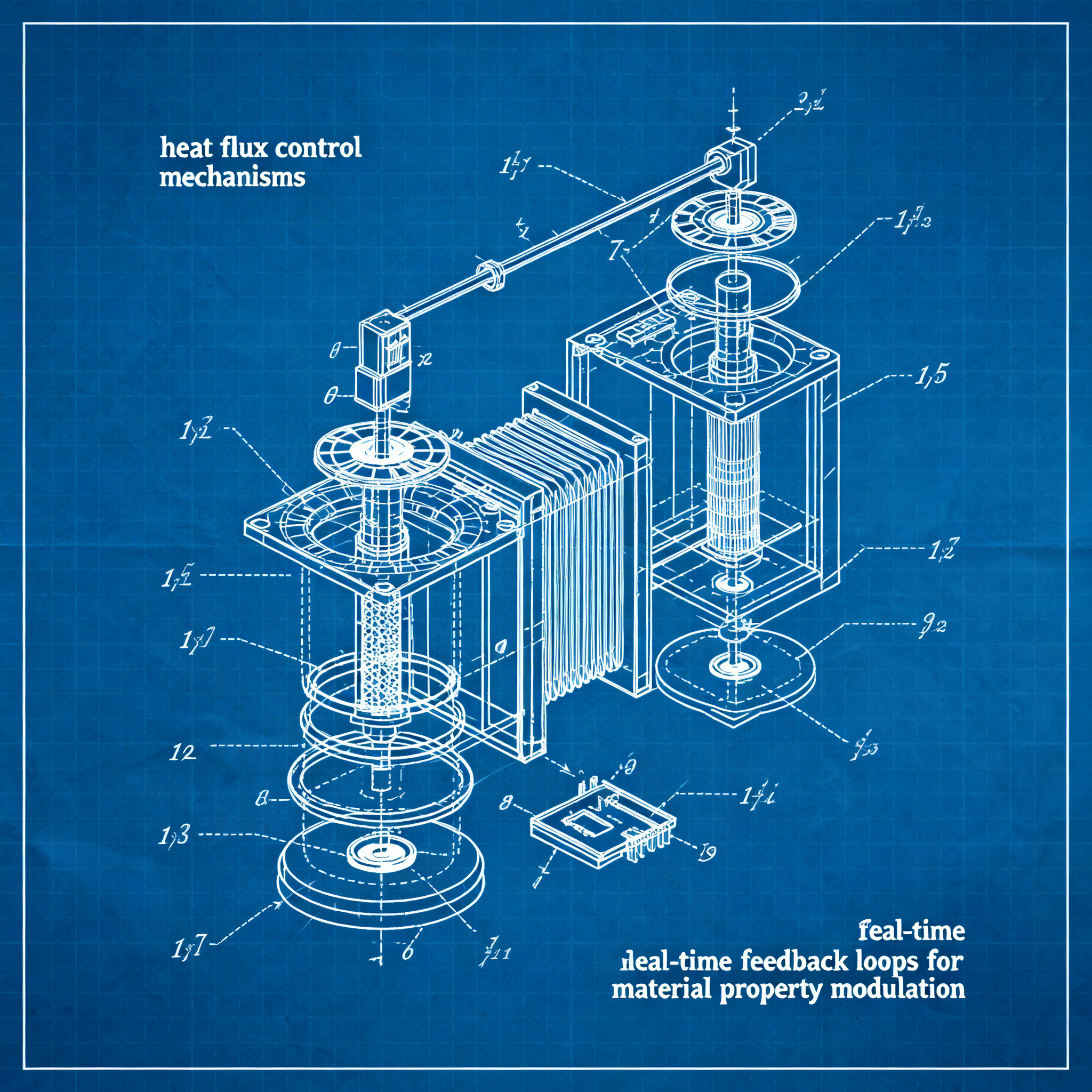
The functional grading system operates through at least two independent energy delivery devices that can be modulated differentially. The first device creates the melt pool necessary for material deposition, while the second can provide supplementary energy or thermal conditioning to modify the characteristics of the affected zone.
The key to the process lies in the ability to dynamically vary the amount of thermal energy delivered in response to data collected by sensors. This energy modulation directly influences the microstructure of the deposited material, modifying properties such as mechanical strength, ductility, and thermal behavior. In the context of large-format production with pellets, parameters such as flow rate, temperature, and back pressure influence the shape of the transition curve, but in thermal functional grading, the control is even more refined, acting directly on the thermal profile of the component.
Integrated Sensors and Real-Time Feedback
Temperature sensors integrated into the system constitute the critical element for ensuring precision and repeatability, driving real-time modifications to the energy sources.
The functional grading system incorporates at least one thermal sensor configured to acquire data indicative of the temperature of specific portions of the component under construction. This data is transmitted to a processing device which, based on the information received, controls the energy delivery devices to obtain the desired graded functional characteristics.
This real-time feedback-based approach represents a qualitative leap compared to conventional additive processes. The ability to continuously monitor temperature and immediately adapt the energy input allows for the compensation of unexpected variations and the maintenance of precise thermal profiles even in complex geometries. The control system can modify the intensity, duration, or spatial distribution of the energy delivered, creating gradual and controlled transitions between different functional zones of the component.
Industrial Applications and Operational Advantages
Functional grading offers tangible competitive advantages in advanced sectors, enabling the fabrication of complex structures with locally optimized properties without the need for assembly.
Industrial applications of functional grading range from aerospace to naval shipbuilding, where the ability to create components with controlled variable properties offers significant advantages. In the US naval context, the approach to additive material maturity emphasizes the need for rigorous characterization and understanding of sensitivity to process variations, aspects fundamental also for functional grading.
The technology enables the local optimization of mechanical properties, creating for example high-strength zones where needed and more ductile zones in other areas, all within a single component without joints. This eliminates structural weak points typical of assembled solutions and drastically reduces production times. Furthermore, the ability to map mechanical properties with high resolution becomes crucial for validating and optimizing functional grading processes.
Technological Limits and Future Challenges
Despite significant progress, functional grading still faces criticalities related to the complexity of process control and the need for specific qualification protocols for industrial production environments.
The main technological challenges concern the repeatability of the process under variable production conditions and the need to develop specific qualification protocols for functionally graded materials. Unlike homogeneous materials, where properties can be characterized through standard samples, components with functional grading require testing approaches that capture local property variations.
The complexity of thermal control increases significantly with complex geometries, where heat management becomes more difficult to predict and control. Furthermore, the correlation between process parameters and final properties still requires deeper investigation for different material and geometry combinations. The qualification framework for additive components, which includes material, machine, and process qualification activities, must be adapted to manage the intrinsic variability of functionally graded components.
Conclusion
Functional grading through active thermal control represents a crucial step towards the intelligent production of complex parts, opening new engineering possibilities that overcome the limits of homogeneous materials and assembled solutions.
The ability to create controlled property transitions in-situ, without interruptions in the production process, positions this technology as a key element for the evolution of industrial additive manufacturing. The integration of advanced sensors and real-time control systems transforms additive production from a predominantly geometric process to a process capable of modulating the functional properties of the material as well.
Deepen the thermal control protocols used in advanced AM systems to implement multifunctional solutions in your production processes. Understanding the mechanisms of thermal feedback and energy modulation strategies represents the next step to fully exploit the potential of functional grading in future industrial manufacturing.
article written with the help of artificial intelligence systems
Q&A
- What distinguishes functional grading from traditional additive production methods?
- Functional grading is based on thermal control during deposition to modify the material properties, rather than physically mixing different materials. This allows for gradual and controlled transitions without interruptions in the production process.
- What is the role of active thermal control in functional grading?
- Active thermal control modulates the energy delivered during deposition, directly influencing the microstructure and mechanical properties of the component. Use at least two independent energy devices to obtain precise and repeatable transitions.
- How do integrated sensors contribute to the functional grading process?
- Thermal sensors monitor the temperature of the build zones in real time, sending data to a control system that dynamically regulates the energy input. This ensures precision and repeatability even in complex geometries.
- What are the main operational advantages of functional grading in the industry?
- It allows for the production of components with locally optimized properties in a single process, eliminating joints and weak points. It reduces production times and enables the creation of complex structures without assembly.
- What technological challenges does functional grading present?
- The main criticalities concern the repeatability of the process under variable conditions, the need for specific qualification protocols, and the difficulty of characterizing materials with variable properties. Thermal management in complex geometries represents a further obstacle.