
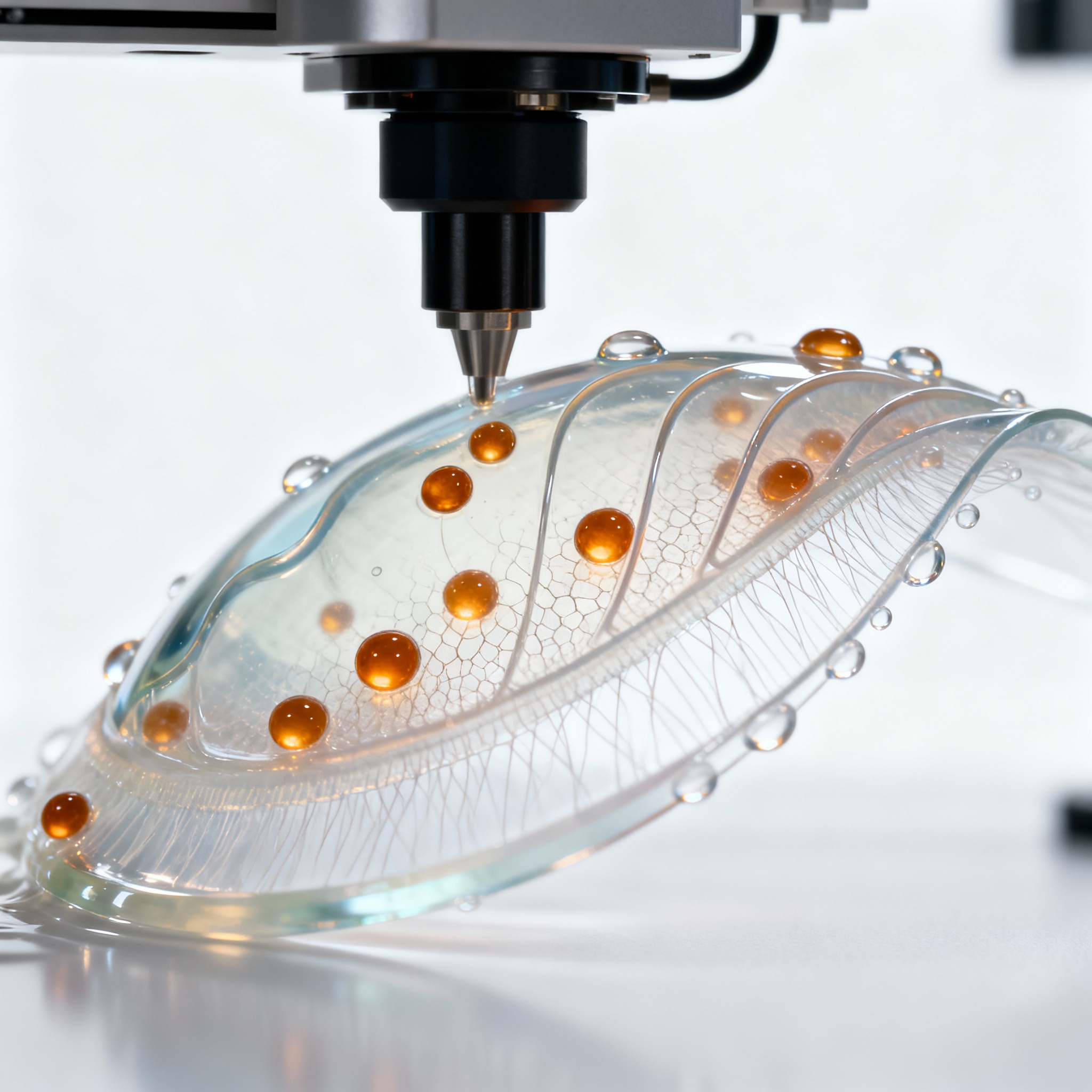
Bioprinting: the medical revolution of the future
Introduction to bioprinting
Bioprinting is one of the most promising frontiers of modern medicine and can radically transform the healthcare sector. In October 2025, the Rambam Health Care Campus in Haifa, Israel, performed the world's first transplant of a fully 3D-bioprinted cornea, created in the laboratory with living human cells. The implant, developed by Precise Bio, restored sight to a legally blind patient in the treated eye, demonstrating that the production of «natural spare parts» is no longer science fiction.
The technology is establishing itself as a transformative tool thanks to the ability to produce personalized, reproducible, and low-cost devices, addressing the chronic shortage of donor tissues. Precise Bio's platform can expand a single cornea into up to 300 transparent, layered corneal structures, capable of replicating the function of a healthy cornea without additional donor tissue.
Bioprinting technologies and methods
Modern bioprinting integrates cell biology, biomaterials, engineering, quality control, regulations, and clinical guidelines into a single platform. Precise Bio uses a 4D printing system that allows the biofabrication of complex tissues with single-cell resolution (SCR), capable of mimicking human tissue anatomy. Printing is only the productive tool: uniqueness lies in the entire cGMP chain approved by regulatory authorities.
Cellular sources range from primary cells to stem cells, iPSC or hESC; the collagen used is of GMP grade and human origin. The process starts from laboratory development, passes through in vitro and preclinical in vivo testing, up to clinical phases, all within a fully controlled production line.
Current medical applications
Beyond corneal transplantation, bioprinting finds concrete applications in oncology. A team from the Kingston Health Sciences Centre and Queen's University (Canada) has developed a 3D-printed surgical capsule for biopsies that revolutionizes the study of glioblastoma. The device, which costs only 30 cents, collects dozens of samples during the intervention and identifies their exact brain origin, allowing for the construction of detailed maps of tumor cellular variations. Currently, KHSC is the only center in the world using this tool in the operating room, but its simplicity and low cost will favor its spread.
Challenges and limitations
The main gap is between tissue engineered in the lab and clinically valid products: different mindsets, qualified supply chains, and regulatory approval are needed. The biodegradable bone scaffolds developed by UNSW Canberra, for example, replicate the strength and porosity of natural bone, but are not yet ready for clinical use and require further biological testing and regulatory work.
Bone is a deceptively complex tissue: lightweight, porous, and resistant. Metallic implants and bone grafts remain standard solutions, but rarely behave like real bone once implanted.
Future perspectives and ongoing research
Precise Bio, after the cornea, plans to develop other ocular tissues and enter cardiology, orthopedics, and nephrology. The platform allows for the fabrication of life-saving tissues and organs, the «Holy Grail» of regenerative medicine.
In the study of bone scaffolds, it has been observed that stochastic, irregular, and non-repetitive reticular structures resemble natural bone more closely and ensure excellent strength and blood and nutrient flow, a critical factor for healing. This paves the way for personalized implants based on the specific stresses of each bone.
The future of personalized medicine
Bioprinting opens an era of personalized medicine, capable of solving donor shortages and offering therapies for currently incurable diseases. As Aryeh Batt, CEO of Precise Bio, states: «Custom-made replacement parts manufactured and supplied on demand are no longer science fiction.» The democratization of low-cost devices, such as the 30-cent capsule, makes innovation accessible even to centers with limited resources, demonstrating that design choices can be just as important as the selected materials.
article written with the help of artificial intelligence systems
Q&A
- What was the first transplant in the world performed with entirely bioprinted tissue and where did it take place?
- In October 2025 at the Rambam Health Care Campus in Haifa, Israel, the first fully 3D bioprinted cornea transplant was performed, restoring sight to a legally blind patient in the treated eye.
- How does Precise Bio's platform for cornea production work?
- The platform expands a single cornea into up to 300 transparent, layered corneal structures, reproducing the function of a healthy cornea without the need for further donor tissue, using a 4D printing system with single-cell resolution.
- What is the application of bioprinting in the fight against glioblastoma developed in Canada?
- A team from Kingston Health Sciences Centre and Queen's University created a 3D-printed surgical capsule for biopsies that, costing only 30 cents, collects dozens of brain tumor samples during the procedure, allowing for the mapping of cellular variations in the tumor.
- What are the main challenges for bringing bioprinting from clinical research to everyday practice?
- Changes in mindset, qualified supply chains, and regulatory approvals are needed; furthermore, engineered tissues must undergo further biological and regulatory tests before being considered safe and effective for clinical use.
- What future prospects does Precise Bio have after the success of the bioprinted cornea?
- The company plans to develop other ophthalmic tissues and extend the platform to cardiology, orthopedics, and nephrology, aiming to manufacture customized life-saving tissues and organs, the «Holy Grail» of regenerative medicine.


