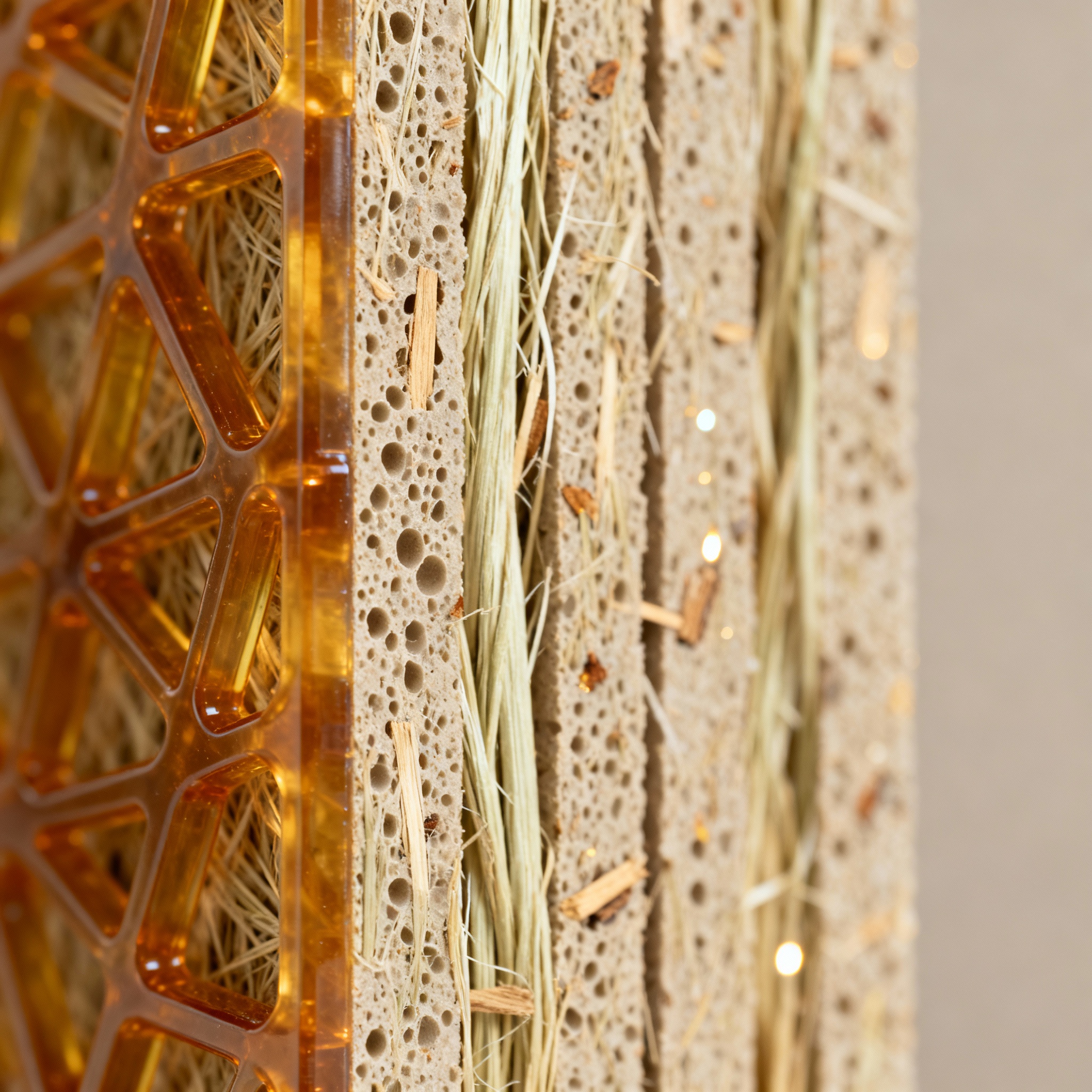
Bio-based materials and circular design: the sustainable evolution of contemporary architecture
Traditional construction is responsible for a significant share of global emissions and the production of demolition waste and processing scraps. In response to this critical issue, the construction sector is undergoing a profound transformation through the adoption of bio-based materials and the integration of circular economy principles, supported by large-scale additive manufacturing technologies.
From the linear economy to the circular approach in the construction sector
The traditional “produce-use-dispose” model of construction is giving way to an approach based on the circular economy. This paradigm aims to overcome the linear logic by introducing continuous cycles of reuse and waste reduction. Printerior has recently launched Circdal, an initiative designed to create a sustainable architectural ecosystem oriented towards 3D printing and circular design.
The project is based on fundamental principles: components and infrastructures reusable, modular, recyclable and optimized to reduce waste, produced locally with sustainable resources. 3D printing allows for building only what is needed, with efficient geometries and less material use, representing a concrete lever to reduce the environmental impact of construction and increase the sustainability of the entire life cycle.
The goal is not only to develop individual projects printed in 3D, but to build an integrated network that brings together sustainable and recyclable materials, digital production processes, architectural design oriented towards circularity, and infrastructures for additive manufacturing at a building scale.
Innovative biomaterials: from hemp fibers to mycelium composites
To make architectural 3D printing truly sustainable, the adoption of alternative materials is crucial. Circdal promotes an approach based on solutions more compatible with circularity:
- Composites based on recycled materials
- Biopolymers and natural fibers
- Optimized cement blends to reduce CO₂
- Regenerative and local materials
- Modular solutions for recovery and reuse
A concrete example is the rPETG WF, distinctive composite material composed of 97% from integrated recycled PETG with recovered wood fibers. This approach allows for the production of custom wall panels, decorative surfaces, and architectural screens through on-demand production with large 3D printers, eliminating the need for molds and drastically reducing waste.
The possibility of printing with alternative materials represents an important lever for transforming the construction industry into a more environmentally responsible sector.
Case studies: zero-impact buildings built with sustainable technologies
Additive manufacturing applied to architecture is not just about printing houses in cement. More and more companies are using additive technologies to produce complex components destined for:
- Parametric facades
- Lightweight structural elements
- Custom decorative modules
- Urban furniture and interior design
- Custom panels and components
This design flexibility allows architects to explore forms that are difficult or expensive to realize with traditional techniques, while maintaining precise control over material usage. Circdal's main applications include interior design, parametric facades, urban furniture, and custom surfaces, demonstrating how 3D printing can integrate into architecture as a productive tool and not just an experimental one.
Industrial symbiosis and reuse of waste materials
A key theme is the transition towards an increasingly digital and distributed architecture. With tools like Circdal, 3D printing can foster a distributed production model, where architectural components are manufactured locally, near the point of use.
This approach allows for:
- Reduction of transportation and of logistics emissions
- On-demand production of building elements
- Greater supply chain resilience
- Adaptation to local contexts and specific needs
For urban planning projects and sustainable infrastructure, these elements become strategic. The zero-mold production process and waste reduction through the use of recycled materials represent concrete advantages that transform industrial waste into resources for new constructions.
Energy performance and integration with renewable systems
Circdal fits into a broader trend: the transformation of the construction industry into an increasingly automated, digitalized, and intelligent production-oriented sector. In the long term, initiatives of this kind can help develop a paradigm in which:
- Architecture is designed with parametric tools
- Materials are designed to be recovered and reused
- Additive manufacturing reduces waste and production times
- Cities adopt more sustainable and flexible infrastructure
The combination of sustainability and innovative production ecosystems is one of the most significant aspects of 3D printing applied to the future of construction. The integration of bio-based materials with optimized digital processes enables the achievement of superior energy performance compared to traditional construction.
Towards a regenerative future: architecture as an engine of ecological transition
With the launch of Circdal, Printerior proposes an initiative that goes beyond a single 3D-printed project, aiming to build a sustainable architectural ecosystem based on additive manufacturing and the circular economy. Waste reduction, more responsible materials, digitalization of construction, and distributed production are the key elements of this strategy.
If this model succeeds in establishing itself, 3D printing could become one of the central pillars of the transition towards a more efficient, more adaptable, and more sustainable architecture. Digital architecture and distributed production represent the future of a sector that can transform from a primary cause of global emissions into an active engine of ecological transition.
article written with the help of artificial intelligence systems
Q&A
- What is the main objective of Printerior's Circdal initiative?
- Create a sustainable architectural ecosystem based on 3D printing and circular design, integrating recyclable materials, digital processes, and local production to reduce waste and environmental impact.
- What distinguishes rPETG WF material and how is it used?
- It is composed of 97% recycled PETG and recovered wood fibers; it is used to produce on-demand wall panels, screens, and decorative surfaces with large 3D printers, without molds and with almost zero waste.
- How does additive manufacturing favor the circular economy in the building sector?
- It allows building only what is needed, with optimized geometries and recycled materials; modular and reusable components can be disassembled and re-entered into the production cycle, reducing waste and the consumption of virgin resources.
- What advantages does the distributed production of architectural components offer?
- It lowers transport and logistics emissions, allows on-demand production adapted to the local context, increases supply chain resilience, and valorizes industrial waste as raw material.
- How do bio-based materials contribute to the energy performance of buildings?
- Combined with digital processes, they reduce emissions associated with materials, improve thermal insulation, and allow parametric solutions that optimize energy efficiency along the entire life cycle of the building.