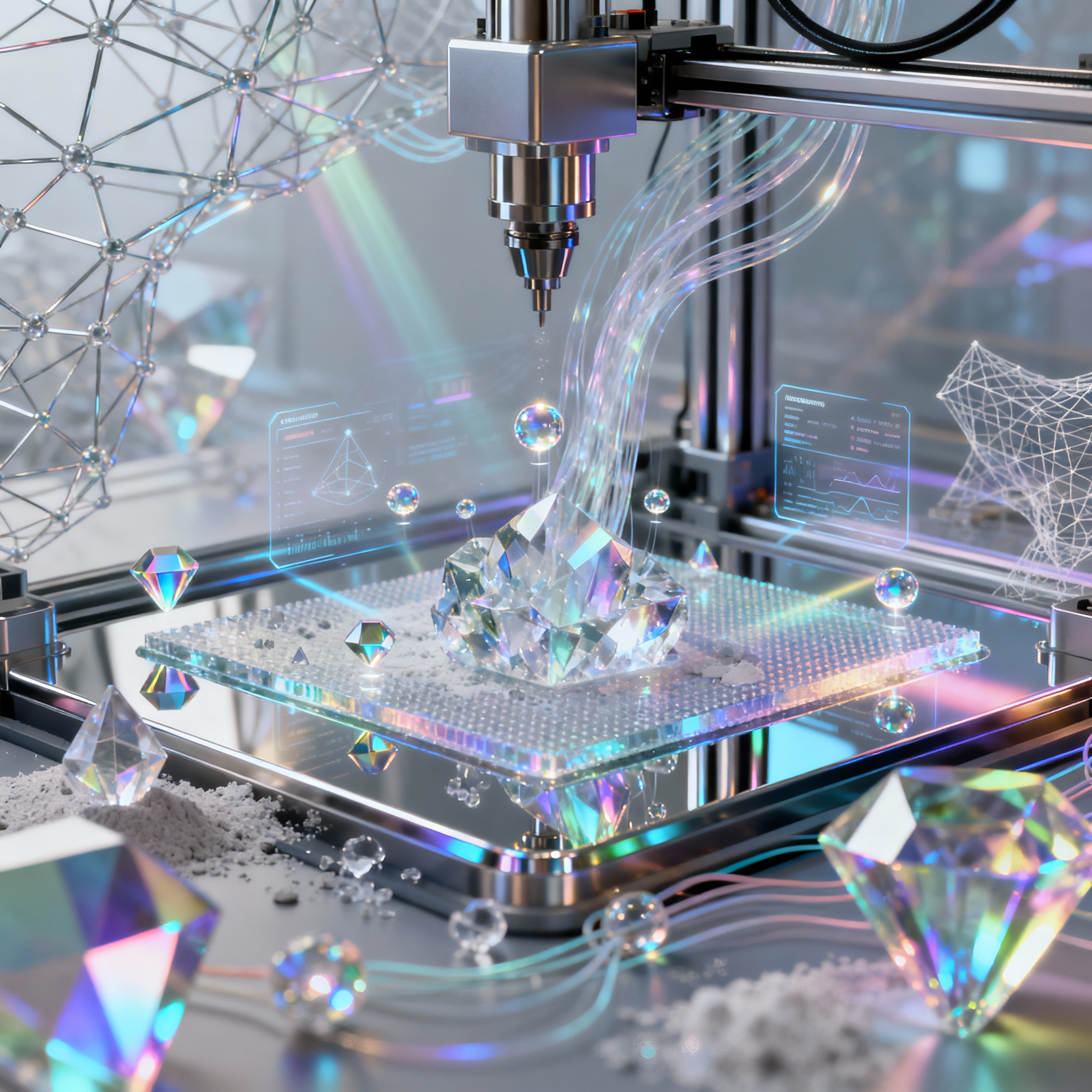
AI integration in 3D printing: an ongoing industrial revolution
Introduction to emerging technologies
Artificial intelligence is radically transforming the 3D printing sector, making technologies once reserved for experts accessible. MeshyAI presented the Creative Lab at CES 2026, a platform that automates the entire production process: from geometry repair to the selection of materials, finishes, and printing parameters, including coloring and slicing. The system provides real-time prices and production options through a network of manufacturing partners, creating a direct path from AI-generated design to the physical product.
«We have automated the most difficult parts of the process, from mesh repair to full-color production,» said Ethan Hu, founder and CEO of MeshyAI. «Now anyone who can type a prompt can hold a professional-level collectible object. It is the easiest way to bridge the gap between digital imagination and physical reality.»
Meanwhile, 3D scanning is becoming increasingly accessible thanks to solutions like Artec Studio Lite, which turns smartphones into professional-grade 3D scanners, eliminating the need for costly investments in specialized hardware.
AI and 3D printing: synergies and practical applications
The integration between artificial intelligence and 3D printing creates extraordinary synergies that redefine the boundaries of production. The MeshyAI platform is an emblematic example: it allows you to go «from prompt to product» without CAD skills, democratizing additive production and opening up unprecedented possibilities for designers, makers, and small businesses.
AI technology is not limited to generating 3D models but extends to quality control and process optimization. Creality has integrated an AI-based error detection system into the new SPARKX i7 that identifies problems in real-time during printing. The printer supports up to four colors simultaneously and, according to the company, reduces material waste by up to 50% compared to traditional multicolor systems.
MeshyAI's Creative Lab automates the selection of printing parameters based on the model's shape and intended use, eliminating the learning curve associated with professional 3D printing and making the technology accessible to a wider audience.
Case studies: successful implementations in the manufacturing sector
In the industrial sector, the integration of AI and 3D printing is producing tangible results. The Colt Group, an American company specializing in the repair of pressurized pipes with over 30 locations in the United States, has adopted Artec Leo 3D scanning technology to address the challenges of repairs in critical environments such as oil and gas refineries.
The digitization of equipment is up to 18 times faster than previous methods. Once the data is acquired, it is processed in Artec Studio to generate usable and realistic 3D models, allowing for the accurate reproduction of component geometry, anticipation of mechanical stresses, and design of customized repair solutions.
This implementation has produced measurable structural benefits: reduced exposure of technicians to dangerous environments, greater reliability of repairs, simultaneous management of multiple projects, and improved production continuity. In a sector where every hour of downtime costs thousands of euros, the 3D scanner becomes a fundamental strategic tool.
Technical challenges and ethical considerations
Despite extraordinary progress, the integration of AI and 3D printing presents significant technical challenges. The MeshyAI platform, while automating much of the process, still requires users to provide valid initial models or use predefined presets. Researchers are working to overcome this limitation, aiming for fully autonomous systems capable of generating 3D models from scratch using generative AI.
Another challenge concerns the quality and consistency of results. While the technology can guarantee automatic mesh repair and parameter optimization, final validation still requires human supervision, especially for critical applications in regulated industries.
On the ethical front, issues emerge regarding the intellectual property of AI-generated designs, liability in the case of defects in printed products, and the environmental impact of potentially unlimited production. The democratization of 3D printing through AI also raises concerns about the possible production of dangerous or illegal objects, requiring adequate regulatory frameworks.
Future perspectives and impact on the job market
The future of AI-3D printing integration promises even deeper transformations. The convergence of these technologies is creating new professional opportunities while making others obsolete. Traditional CAD technicians may see a reduced demand for basic modeling skills, while the need for experts capable of supervising and optimizing AI-driven systems will grow.
Customized mass production will become economically sustainable, allowing for the creation of unique products at the cost of mass production. This will radically change supply chains, reducing the need for large warehouses and enabling on-demand production near the point of consumption.
The increasing accessibility of these technologies will stimulate distributed innovation, with small businesses and individual creators able to compete with large manufacturers. However, this will require significant investment in training and professional reskilling to prepare the workforce for the new required skills.
Conclusion: the future is already here
The integration between artificial intelligence and 3D printing represents an epochal turning point for the manufacturing industry. The technologies presented at CES 2026, from MeshyAI to Creality, demonstrate that the transition from idea to physical product has never been so fast and accessible. Technological synergies are redefining the boundaries of personalized production, eliminating technical barriers that for decades have limited access to advanced manufacturing.
Case studies in the industrial sector, such as that of The Colt Group, highlight concrete and measurable benefits: speed, precision, safety, and operational continuity. These advantages are no longer confined to research laboratories, but are becoming daily operational realities.
However, this revolution requires preparation. Continuous training and adaptation will be fundamental keys to seizing the opportunities of this change. Companies that invest in the integration of AI and 3D printing, accompanying technology with adequate skills development strategies, will position themselves as leaders of the new manufacturing era. The future of production is not a distant prospect: it is already here, and it is transforming the way we conceive, design, and realize the objects that surround us.
article written with the help of artificial intelligence systems
Q&A
- What is the MeshyAI Creative Lab and what processes does it automate?
- It is a platform presented at CES 2026 that automates the entire 3D printing production workflow: geometry repair, material selection, finishes, printing parameters, coloring, and slicing, also providing real-time prices and production options.
- How does Creality SPARKX AI contribute to waste reduction?
- The AI-based integrated error detection system identifies defects in real-time during printing, allowing for immediate intervention; the company declares a reduction in material waste of up to 50% compared to traditional multi-color systems.
- What concrete benefits did The Colt Group obtain by using the Artec Leo 3D scanner?
- It has accelerated the digitalization of equipment by up to 18 times, improved the reliability of repairs, reduced technicians' exposure to dangerous environments, and allowed for the simultaneous management of multiple projects, limiting costly production downtime.
- What are the main ethical challenges raised by the integration of AI and 3D printing?
- Issues arise regarding the intellectual property of generated designs, liability in case of product defects, the environmental impact of potentially unlimited production, and the risk of creating illegal or dangerous objects.
- How is AI changing the job market in the 3D printing sector?
- It reduces the demand for basic CAD modeling skills, increases the need for experts in AI-driven systems, and requires extensive reskilling campaigns to prepare the workforce to supervise and optimize automated processes.
- What makes professional 3D scanning accessible according to the article?
- Artec Studio Lite turns smartphones into professional-grade 3D scanners, eliminating the need for expensive specialized hardware and thus lowering the barrier to entry for three-dimensional digitalization.