Additive Manufacturing Rewrites the Rules of the Supply Chain in Defense: 6K and AGF Defcom Sign for Productive Sovereignty
The defense industry is accelerating towards production self-sufficiency thanks to 3D printing and the regeneration of waste materials. A strategic partnership between 6K Additive and AGF Defcom is redefining supply models in the defense sector, focusing on made-in-US materials and a circular system that transforms waste into valuable resources.
6K Additive enters the supply chain of AGF Defcom
The collaboration introduces a new qualified source of made-in-US metal powder for advanced defense components, ensuring supply security and certified quality.
6K Additive has been selected as the strategic supplier of metal powder for AGF Defcom's 3D-printed silencers, a manufacturer with 25 years of experience in the sector. The agreement, presented during the Shot Show in Las Vegas in January 2026, represents a turning point for both companies in a market that has recorded a growth of 265% in just five years.
“The silencer market is accelerating at an unprecedented pace, and our investment in additive production is generating significant interest,” stated Zoltan Kovacs, owner and CEO of AGF Defcom. “To succeed with this technology, high-quality powder is an indispensable requirement.”
Frank Roberts, CEO of 6K Additive, highlighted the strategic importance of the partnership: “The fact that we are both US suppliers makes this collaboration even more significant for the defense industry and for domestic production.” The choice of a national supplier responds to growing national security priorities and the provisions of the National Defense Authorization Act (NDAA) 2026, which limits the procurement of additive technologies from countries considered strategically sensitive.
Industrial upcycling: from waste to premium material
An integrated circular system reduces supply costs and minimizes waste in additive production, transforming what was a logistical burden into a strategic asset.
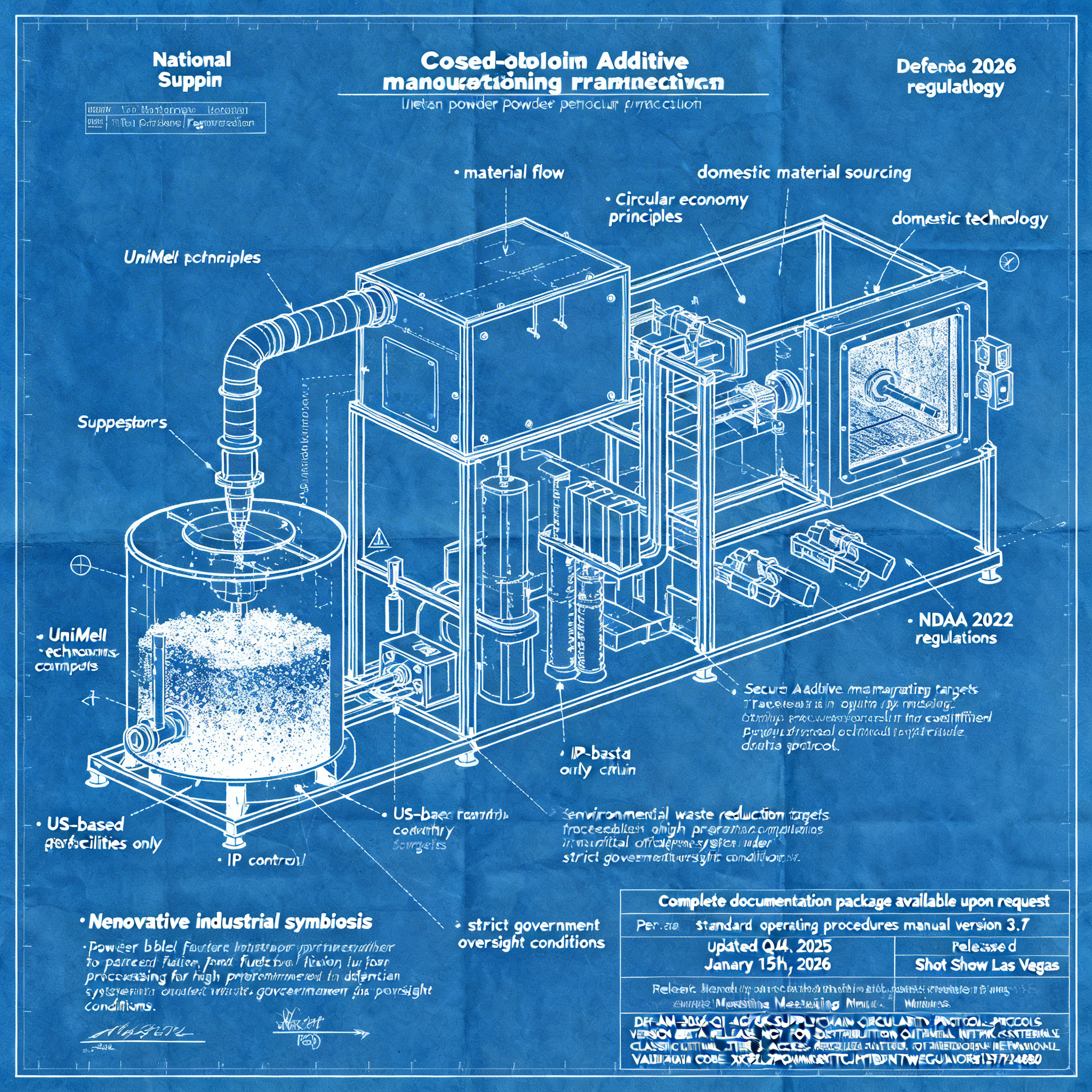
The heart of the agreement between 6K Additive and AGF Defcom is a “closed-loop” upcycling program that uses the proprietary UniMelt microwave system. This technology enables the transformation of AGF Defcom's production waste—both solids and powders—into new usable metal powder, creating a virtuous circle that drastically reduces operating costs and environmental impact.
“The ability to recycle our waste is the real game changer,” explained Kovacs. “We have successfully transformed what was once a logistical and financial burden into a high-value asset that directly improves our profits.”
The UniMelt system from 6K Additive stands out for its ability to process heterogeneous waste materials – machining chips, removed supports, unsintered powder – and regenerate them as certified powder with controlled granulometric and chemical characteristics. This approach eliminates dependence on external suppliers for each production cycle and creates a resilient supply chain, particularly critical in scenarios of high demand or global supply chain disruptions.
Circular economy applied to metal additive manufacturing is not just a matter of environmental sustainability: in the defense context, it represents a measurable competitive advantage in terms of operational continuity, lead time reduction and cost control in a market characterized by growing volumes and stringent quality requirements.
National security and resilient supply chain
The initiative responds to the growing strategic priorities of reducing dependence on external supplies in critical sectors, aligning with federal directives on industrial sovereignty.
The partnership between 6K Additive and AGF Defcom fits into a broader context of strengthening the US defense industrial base. The Department of Defense is actively pushing for the adoption of advanced manufacturing technologies to increase production capacity, resilience and supply chain response times, particularly in the naval, missile and weapon systems sectors.
The NDAA 2026 introduced significant restrictions on the procurement of additive manufacturing machines from countries such as China, Iran, North Korea and Russia, creating a structural incentive for Western companies to consolidate their position in the defense market. This dynamic favors agreements such as that between 6K and AGF Defcom, where the entire supply chain – from powder production to final component printing – remains within national borders.
The “closed loop” approach also guarantees complete traceability of materials, an increasingly stringent requirement for components destined for critical applications. The ability to certify the origin and characteristics of each batch of powder, including that regenerated from internal waste, meets the qualification protocols required by the defense sector and creates a replicable precedent for other industrial segments.
The model developed by 6K Additive and AGF Defcom demonstrates that production sovereignty in the defense sector does not pass only through the purchase of machines and technologies, but requires an integrated ecosystem that includes materials, regeneration processes and skills distributed along the entire value chain.
Conclusion
This synergy between 6K Additive and AGF Defcom represents a replicable model for a more autonomous and sustainable defense supply chain. The integration between additive manufacturing, industrial upcycling and domestic supply chain simultaneously responds to national security, economic efficiency and environmental impact reduction objectives. With the market for 3D-printed defense components rapidly expanding and regulatory pressures favoring domestic suppliers, this type of partnership could become the standard for the sector.
Follow the upcoming developments of this partnership and its impact on the local production of advanced systems. The experience gained in the defense segment could soon extend to other industrial sectors that require resilient supply chains and certified materials, from aerospace to energy, multiplying the impact of circular models in metal additive production.
article written with the help of artificial intelligence systems
Q&A
- What is the main goal of the partnership between 6K Additive and AGF Defcom?
- The goal is to redefine supply models in the defense sector, focusing on made-in-US materials and a circular system that transforms waste into valuable resources. The collaboration aims to guarantee supply security and production self-sufficiency.
- How does 3D printing contribute to the supply chain in the defense sector?
- 3D printing enables local and flexible production of advanced components, reducing dependence on foreign suppliers. Together with material recycling, it also allows for greater supply chain resilience and faster delivery times.
- What makes the choice of 6K Additive as a supplier strategic?
- 6K Additive is a US supplier of high-quality metal powder, essential for the production of silencers via 3D printing. Its UniMelt technology allows for regenerating production waste into new powder, improving sustainability and economic efficiency.
- How does the 6K Additive UniMelt system support the circular economy?
- The UniMelt system transforms production waste, such as chips and unsintered powder, into new certified metal powder. This process reduces operating costs, minimizes waste, and creates a closed and sustainable production cycle.
- Which regulations influence this partnership in the defense sector?
- The National Defense Authorization Act (NDAA) 2026 limits the use of additive technologies from countries considered strategically sensitive. This has incentivized the adoption of national suppliers such as 6K Additive and AGF Defcom to ensure compliance and national security.