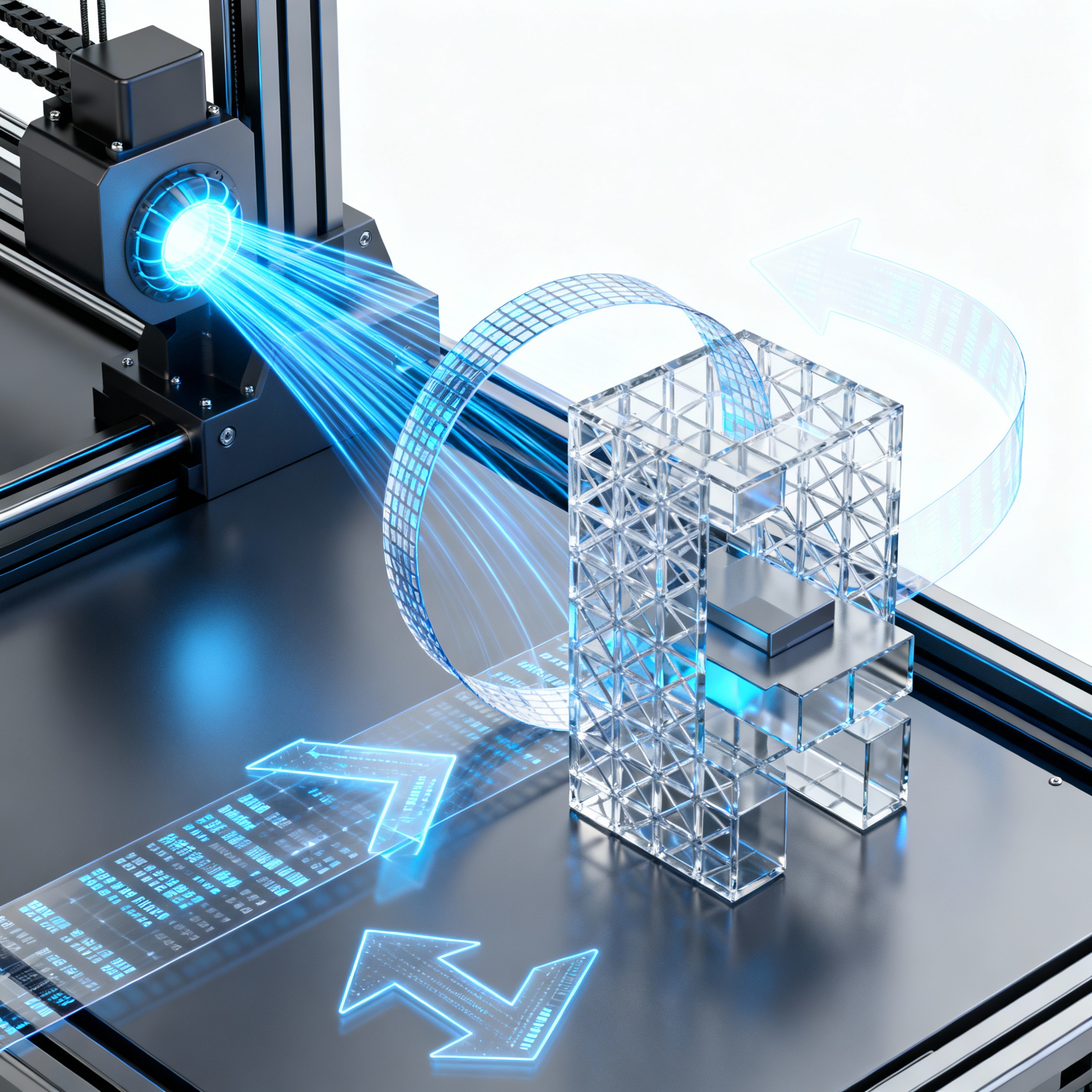
Workflow Optimization in 3D Printing: Accessories and Emerging Technologies
The 3D printing industry is undergoing a profound transformation thanks to innovations that optimize every phase of the production process. From automation of model preparation to advanced monitoring systems, new technologies reduce production times, improve part quality, and lower operating costs. These developments make additive manufacturing increasingly competitive compared to traditional methods, opening up new opportunities for the entire manufacturing sector.
3D Model Preparation Automation
Automation of the preparation phase is one of the most significant advancements in the 3D printing workflow. Meshy has developed a system that automatically repairs and adapts geometry to product and manufacturing constraints, suggesting materials, finishes, and print parameters based on the model's shape and intended use. The tool allows for going “from prompt to product” without CAD expertise, automating the most complex operations, from mesh repair to color production.
In the field of resin printing, researchers from Xiamen University and the University of California, Berkeley, have developed a method for printing thermoset materials without supports. The technique combines Direct Ink Writing with a laser polymerization system that solidifies the material instantly upon exiting the syringe, eliminating supports and accelerating the process. Mechanical and electrical properties are programmed by adjusting print parameters, allowing for the creation of soft sensors, stretchable electronic components, and magnetic robots.
Developments in Materials and Extrusion Systems
Material efficiency has increased thanks to innovations that reduce waste and optimize performance. The lower quantity of support generates cascading benefits: less waste, better material yield, reduction of manual and mechanical processing, and fewer post-print errors.
AON3D has integrated a physics engine into the Basis slicer that operates as a G-code postprocessor, typical of CNC machining. The software simulates the thermal behavior of the material during printing and modifies the extrusion path to compensate for temperature variations along the geometry. Designed for high-performance polymers like Ultem, PETG, and polycarbonate, the slicer increases deposition speed by 30-50% without compromising quality.
Material recycling is more accessible thanks to solutions like Creative3DP's ExtrudeX, a compact DIY machine (65 cm) that transforms plastic waste into reusable filament. Made predominantly with 3D printed parts, it can process supports, failed prints, and clean pellets compatible with PLA, ABS, and PETG. To obtain optimal results, it is recommended to mix 40% of crushed waste with 60% of virgin pellets.
Sensor integration and real-time monitoring
Sensors and monitoring systems transform additive manufacturing into a controlled and reliable process. The automotive industry, for example, adopts 3D printing to improve efficiency at every stage of the vehicle lifecycle. Printing on demand from a digital library drastically reduces warehousing costs and enables global file sharing for remote modification and printing, enabling distributed manufacturing.
Modern printers incorporate visual feedback: the MetalPrinting Gauss MT90, a compact metal paste printer based on PME (Paste-based Metal Extrusion), includes an LED signaling system. This technology is a safe alternative to powder or welding solutions, eliminating explosion risks and high temperatures. The machine mounts a HEPA filter to block emissions and consumes less energy, as it does not require lasers or high-power heaters.
Innovative post-production accessories
Post-production accessories are evolving to reduce times and improve the quality of finished parts. Multi-material printing reduces the use of fixings, adhesives and manual assembly, lowering labor costs. By producing rigid, flexible and specialized regions in a single build, numerous assembly phases are eliminated.
For large-format printing, LEAM Technologies has developed modular ring arrays that surround the print head with visible light LEDs to heat the underlying layer while the next one is extruded. Controlled via software, the modules manage heat at the deposition point, tackling the typical challenges of heated beds and enclosed chambers without having to adjust layer times. The accessory upgrades to existing LFAM printers, preventing delamination and deformation, improving quality.
Multi-material printing also improves the appearance and tactile feel of parts, allowing for more realistic prototypes. Designers and engineers can combine colors, textures and finishes in a single build, reducing painting and coatings. In the medical field, multicolor and multi-texture anatomical models are more comprehensible and training-effective.
Software solutions for machine fleet management
Software innovations touch every aspect of the additive workflow, making machine fleet management more efficient and integrated. Carbon has developed Custom Production Software, a computational design tool that automatically applies a design algorithm from input data such as scans or pressure maps. In addition to simplifying design, the software packages the platforms, generates supports and performs crucial tasks without manual intervention.
Materialise has launched new products under the CO-AM platform: CO-AM Professional, the single source of truth for AM data; NPI, which accelerates qualification and stores validated part recipes; Enterprise, which links production data to order management. CO-AM Build Platform, a cloud visual editor, allows design changes without a full Magics license. Everything is powered by CO-AM Brix, a low-code platform that allows the creation of automated workflows using over 800 Materialise SDK algorithms or developing new ones.
Accenture has presented Engineering Orchestrator, a natural language artificial intelligence tool that integrates with the Siemens ecosystem (NX, Simcenter Hypermesh) and third-party software such as SAP. The goal is to overcome the specialization of engineers, who often use only one or two programs. An NX designer can modify a critical dimension using natural language and ask the orchestrator to perform an FEA simulation, receiving results or warnings without changing environment.
Future perspectives in 3D printing process optimization
Workflow optimization is transforming 3D printing from a prototyping technique into a complete productive solution. The integration of artificial intelligence, automation, and monitoring promises to further reduce times and costs. The convergence between intelligent software, innovative materials, and specialized accessories is creating a mature and accessible ecosystem.
Emerging technologies such as support-free printing, in-house recycling, and AI-based design tools are democratizing additive manufacturing, making it feasible for small businesses and makers, as well as for large industries. Managing the entire production cycle digitally, from design to post-production, represents a competitive advantage in a market that requires increasing flexibility and personalization.
The future of industrial 3D printing lies in the coherent and interconnected integration of all innovations, where every phase is optimized through data, automation, and artificial intelligence, allowing additive manufacturing to compete on scale and costs with traditional production methods.
article written with the help of artificial intelligence systems
Q&A
- How does Meshy automate the 3D model preparation phase?
- Meshy automatically repairs and adapts geometry to product and manufacturing constraints, suggests materials, finishes, and print parameters. It allows to move “from prompt to product” without CAD skills, automating operations such as mesh repair and color production.
- What is the main advantage of the printing technique in resin developed by researchers from Xiamen and Berkeley?
- The technique allows printing thermosetting materials without supports, combining Direct Ink Writing with instantaneous laser polymerization. It eliminates supports, accelerates the process, and allows to program mechanical and electrical properties for soft sensors and stretchable components.
- How does the material recycling with ExtrudeX by Creative3DP work?
- ExtrudeX is a compact machine (65 cm) that transforms plastic waste into reusable filament. It processes supports, failed prints, and clean pellets of PLA, ABS, and PETG; for optimal results, mix 40% of crushed waste with 60% of virgin pellets.
- What makes the Gauss MT90 by MetalPrinting a safe solution for metal paste printing?
- It is based on PME (Paste-based Metal Extrusion), eliminating powders and high-temperature welding, reducing explosion risks. It includes a HEPA filter for emissions and consumes less energy because it does not require lasers or high-power heaters.
- How does LEAM Technologies' modular LED array improve large-format printing?
- The array surrounds the print head with visible light LEDs that heat the underlying layer during extrusion. Managed via software, it prevents delamination and deformation without modifying layer times, upgrading existing LFAM printers.
- What are the future prospects for optimizing 3D printing processes according to the article?
- The integration of AI, automation, and monitoring will transform 3D printing into a complete productive solution. Technologies like support-free printing, in-house recycling, and AI design will democratize additive manufacturing, making it competitive with traditional methods.