Reducing healthcare costs with 3D printing: the economic impact of customized devices
Custom-made personalization is not only a matter of better care, but also of tangible economic savings for healthcare facilities. In the oncology sector, where precision and efficiency directly influence clinical outcomes, the traditional “one-size-fits-all” approach can lead to high costs for facilities due to avoidable complications. The return on investment of customized 3D printing concerns not only clinical accuracy, but also represents a financial strategy capable of transforming inefficiencies, rework, and toxicity into concrete savings.
The hidden cost of standardized solutions
Traditional medical devices generate operational inefficiencies that increase the clinical burden, treatment times, and hidden costs for healthcare facilities.
In the radiotherapeutic treatment of head and neck tumors, the standard of care often involves the use of rudimentary tools such as standard bite blocks and cork. Although inexpensive to purchase, these devices prove costly in clinical practice. Inconsistent immobilization and inadequate tissue displacement introduce variability between treatment fractions, increasing the unnecessary exposure of healthy tissues to radiation.
The consequence is a true “financial toxicity”. Patients exposed to unintentional radiation frequently develop severe oral mucositis (SOM), a painful and debilitating complication that goes far beyond patient discomfort. For clinicians and administrators, this translates into strain on resources, unpredictable workflows, and rising costs. The “one-size-fits-all” approach generates what is defined as “failure demand”: the clinical and operational burden arising from the management of avoidable complications.
3D customization: economic prevention of avoidable complications
Custom-made devices significantly reduce adverse events such as oral mucositis, cutting post-operative costs and unplanned hospitalizations.
Studies show that mucositis and pharyngitis in patients with head and neck and lung cancer are associated with approximately 17,000 dollars in average additional costs per patient, caused by unplanned hospitalizations, placement of feeding tubes, and intensive supportive care.
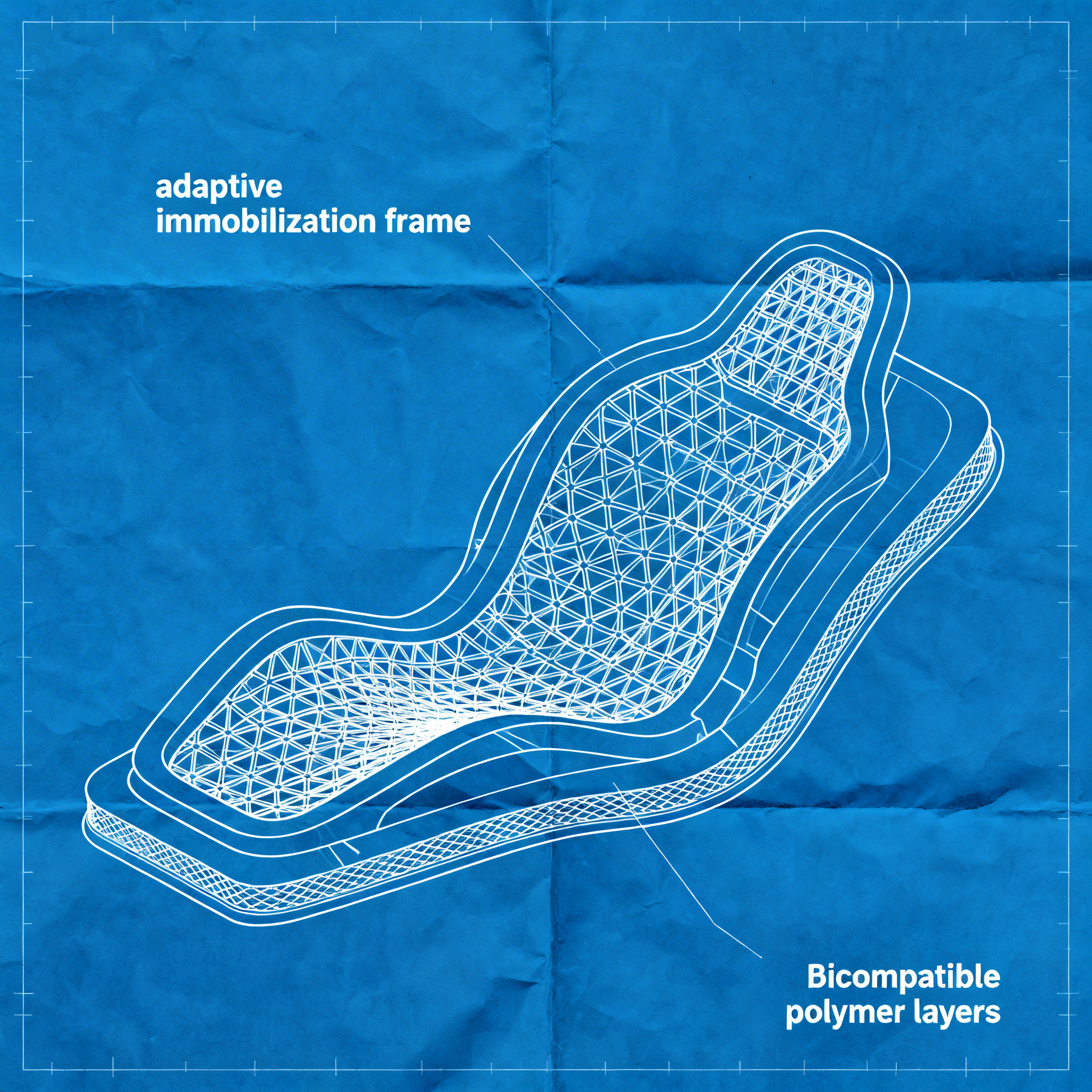
How can scalable personalization reduce hospital costs? By preventing complications that generate high-intensity spending. Platforms like Stentra by Kallisio show how patient-specific additive manufacturing solutions can be seamlessly integrated into real clinical workflows. Using a rapid standard scanning process, these systems produce customized devices that improve immobilization, reduce exposure of healthy tissues, and drastically decrease the incidence of complications such as severe oral mucositis.
Reducing complications directly translates to lower operating costs: fewer emergency hospitalizations, reduced use of pain management drugs, less need for invasive nutritional interventions, and, most importantly, greater capacity for facilities to manage more cases effectively over time.
ROI Analysis: When 3D Printing Becomes an Economic Advantage
An ROI model demonstrates how in-house 3D device production improves efficiency and reduces long-term costs.
The ROI of 3D printing in healthcare is measured through multiple cumulative benefits. It's not just about improved accuracy, but about reducing the overall operational burden. Personalization eliminates variability between treatments, reduces clinical preparation times, and decreases the need for adjustments during therapeutic sessions.
The initial investment in 3D printing technology is quickly amortized thanks to the reduction in costs related to avoidable complications. When considering the average cost of $17,000 per patient associated with radiotherapy complications, even a 30-40% reduction in the incidence of severe mucositis generates substantial savings for a facility that treats hundreds of oncology patients annually.
Furthermore, in-house production of customized devices reduces lead times compared to external procurement, improves quality control, and allows for rapid iterations based on direct clinical feedback. This approach transforms the radiotherapy department from a cost center into a more efficient and sustainable operational unit.
Case Study: Implementation in an Oncology Facility
A clinic integrated customized 3D devices into radiotherapy treatments, achieving a 25% reduction in nursing hours dedicated to post-treatment emergencies.
The implementation of patient-specific 3D printed devices in an oncology center has demonstrated tangible and measurable benefits. The facility recorded a significant reduction in treatment-related complications, resulting in a 25% decrease in nursing hours dedicated to managing post-treatment emergencies.
This improvement in operational efficiency allowed nursing staff to dedicate more time to direct patient care and the management of more complex cases, rather than responding to avoidable complications. The reduction in unscheduled workload also contributed to decreased staff burnout and improved overall quality of care.
From the patient's perspective, the experience improved significantly: less pain, less need for corrective interventions, faster recovery, and better quality of life during and after treatment. These clinical benefits translate into greater patient satisfaction and, indirectly, a better reputation for the facility.
Conclusion: A strategic shift for economic sustainability
The integration of 3D printing into clinical pathways represents a strategic shift for the economic sustainability of healthcare facilities.
Evidence shows that customized 3D printing in oncology is not an expensive luxury, but a smart financial strategy. By converting inefficiencies, avoidable complications, and toxicity into measurable savings, healthcare facilities can simultaneously improve the patient experience, support clinicians, and strengthen their economic sustainability.
Facilities aiming to optimize costs and improve the patient experience should evaluate the implementation of customized 3D solutions within the next year. With complication costs reaching $17,000 per patient and the possibility of reducing the nursing workload by 25%, investment in 3D printing technology represents not only a clinical improvement, but a strategic necessity for any oncology center that wants to remain competitive and financially sustainable in the contemporary healthcare landscape.
article written with the help of artificial intelligence systems
Q&A
- What is the main economic advantage of customized 3D printing in the oncological field?
- The main economic advantage is the reduction of avoidable complications, such as severe oral mucositis, which entail high costs for unscheduled hospitalizations, drugs, and supportive care. This leads to a direct reduction in hospital costs.
- How do standardized devices influence healthcare costs?
- Standardized devices generate operational inefficiencies, increase treatment times, and cause complications such as unintentional radiation exposure, which lead to high hidden costs and a greater demand for clinical resources.
- How much can complications like oral mucositis in oncology patients cost?
- Complications like oral mucositis can involve additional average costs of about $17,000 per patient, due to unscheduled hospitalizations, placement of feeding tubes, and intensive supportive care.
- How does 3D personalization improve operational efficiency?
- 3D personalization reduces variability between treatments, decreases clinical preparation times, and minimizes adjustments during sessions, freeing up human resources and improving workload management.
- What is the return on investment (ROI) of 3D technology in healthcare?
- The ROI is positive since the initial investment is quickly amortized thanks to reduced costs related to avoidable complications, decreased nursing workload, and improved overall operational efficiency.