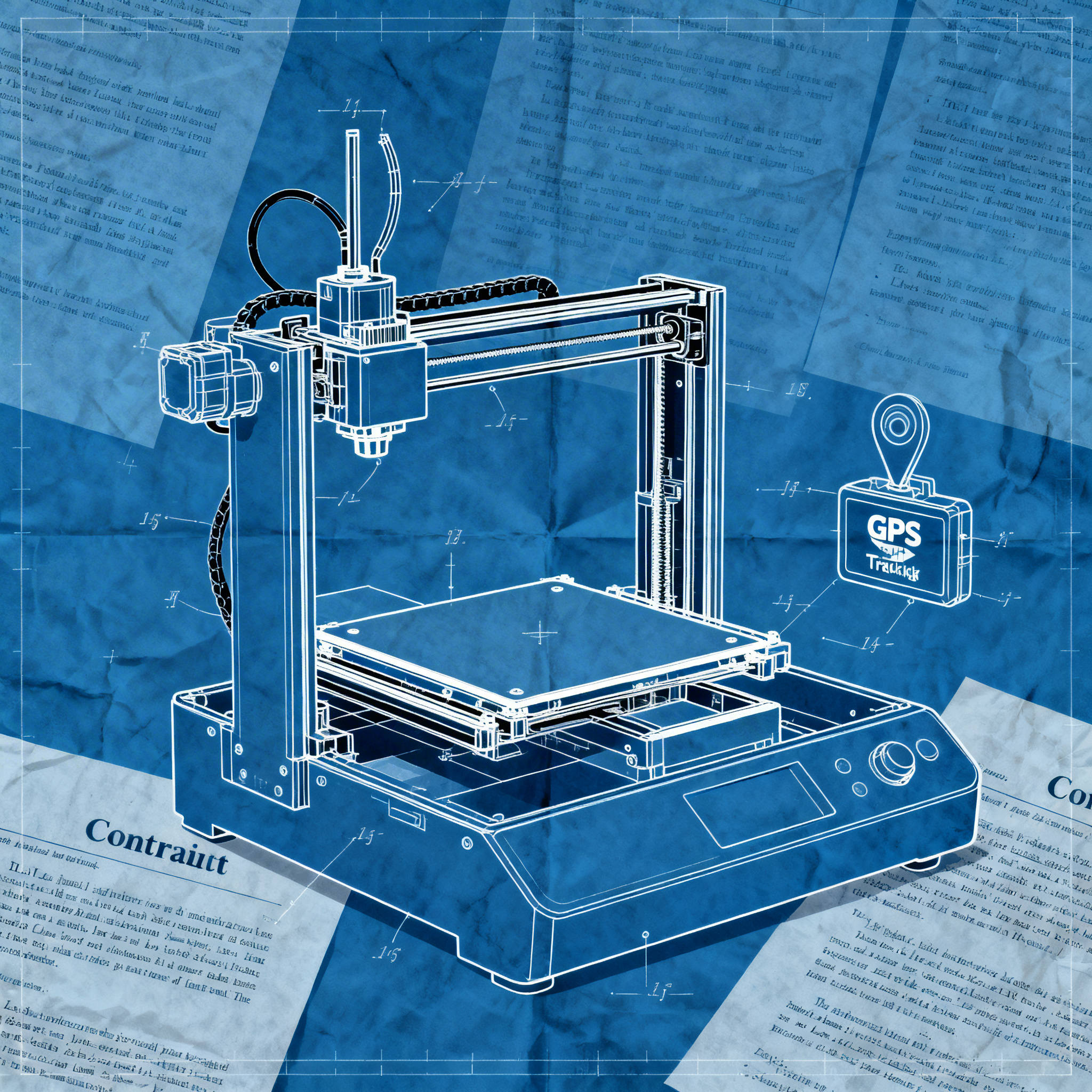
Industrial 3D Printing: Contract Clauses at Risk and How to Avoid Them
Contractual clauses in industrial 3D printing conceal often underestimated legal risks, with significant impacts on safety, liability, and jurisdiction. In a sector still lacking consolidated standards, some suppliers include provisions in contracts that unilaterally shift operational, economic, and reputational risks onto clients, creating contractual asymmetries that are difficult to manage. The increasing digitalization of additive manufacturing adds complexity: GPS tracking, geographic limits, mandatory certified training obligations, and jurisdiction clauses can turn a technology purchase into a permanent legal exposure.
Common types of unfair clauses in 3D printing contracts
Main contractual provisions unilaterally transfer risks and liabilities to industrial clients, imposing economic and operational burdens often not anticipated at the time of purchase.
Among the most problematic clauses are requests for continuous monitoring of the site and the printer, restrictions on moving the machine without prior written authorization from the supplier, and explicit recognition of the presence of GPS systems to track equipment location. These provisions, formally justified by the protection of know-how and operational safety, in practice create strong contractual asymmetry.
Particularly burdensome are clauses that impose the obligation to operate exclusively with personnel “certified” by the supplier, with training costs for each new operator charged to the client. Some contracts also include penalties for “print failures” that become public, leaving the seller broad discretion in determining whether a failure has actually occurred. The practical effect is to shift many risks onto the buyer, turning the purchase of a machine into a relationship of ongoing dependence on the supplier.
3D concrete printing and other advanced industrial applications present two levels of risk: technical-operational (material quality, rheology, environmental conditions, tolerances) and contractual. In the absence of mature standards, some vendors try to manage technical risk with highly prescriptive terms, while some buyers underestimate the need for thorough legal review before signing.
Tracking and usage limits: when the contract violates corporate privacy
Remote monitoring of printers and geographic constraints imposed by suppliers raise legal issues related to corporate privacy and contractual control of equipment.
The presence of GPS tracking in industrial printers has emerged as a factual element discussed in recent judicial disputes. Some suppliers explicitly include in contracts the client's recognition of the presence of GPS to track the machine's location, accompanied by restrictions on movement without written authorization.
This practice raises significant issues for businesses operating in regulated sectors or with stringent cybersecurity requirements. Many companies intentionally keep machines offline or on isolated networks for reasons of intellectual property, regulatory compliance (for example, in defense or aerospace) or data protection. A contractual arrangement that requires connectivity, centralized assessments or continuous firmware updates can be difficult to reconcile with “air-gapped” environments or with corporate data protection policies.
The increasing digitization of additive manufacturing makes these aspects even more critical. As highlighted in the analysis of industrial trends, additive manufacturing is digital from the outset: geometry, process parameters and machine instructions all derive from digital data. This has made 3D printing compatible with, but also increasingly dependent on, broader digital manufacturing infrastructures. Concerns regarding cybersecurity and intellectual property protection have become more prominent, especially when digital build files and process data represent valuable assets.
Competent forum and choice of jurisdiction: decisive factors for client protection
The selection of the venue for disputes can significantly affect the timing, costs and outcome of legal disputes in the industrial 3D printing sector.
Some judicial proceeding documents clearly show how the battle over jurisdiction represents a crucial strategic element. In a specific case discussed in Missouri, court documents highlighted the presence of forum selection clauses in favor of Utah included in standard terms. In an order dated September 24, 2024, the federal judge in Missouri denied a motion to challenge personal jurisdiction, considering the allegations sufficient to establish jurisdiction in Missouri at that stage of the proceeding.
However, the litigation continued to revolve around the issue of where the merits of the case should be judged, and the “Utah” issue remained strategic for both parties. Changing the forum can profoundly affect procedural timelines, legal costs, access to evidence and negotiating leverage. For a European or other US state company, being forced to litigate in Utah rather than in its own jurisdiction may mean travel costs, difficulty in finding witnesses, the need for local attorneys and extended timelines.
The choice of the competent forum therefore becomes a contractual element to be negotiated carefully before signing, not a formal detail to be passively accepted. Forum selection clauses included in standard contracts by suppliers systematically tend to favor the jurisdiction most convenient for the seller, creating a structural disadvantage for the client in the event of a dispute.
Defensive strategies: how to negotiate fairer contracts
Identifying and modifying risky clauses before signing requires precise operational guidelines and the involvement of specialized industrial technology consultants.
The first defense consists in identifying critical clauses early during the negotiation phase. Areas to examine with particular attention include: limitations on machine mobility, presence of tracking systems, obligations for certified training with costs borne by the client, penalty clauses for “failures” defined unilaterally by the supplier, connectivity requirements or remote updates, and the choice of the competent forum.
For businesses operating in regulated sectors or with cybersecurity requirements, it is essential to verify the compatibility of contractual clauses with internal policies and regulatory obligations. A contract that imposes permanent connectivity or remote access by the provider may violate air-gapping requirements or the protection of sensitive data.
Contractual negotiation should aim to:
- eliminate or limit unjustified GPS tracking clauses not justified by documented technical needs;
- obtain freedom of movement for the machine within the company's production sites;
- objectively and verifiably define what constitutes a relevant “failure” for contractual purposes;
- negotiate jurisdiction in a neutral or otherwise accessible forum;
- ensure the right to operate machines offline when necessary for security reasons.
Practical lessons for buyers and integrators of industrial 3D printing technology converge on one point: in the absence of mature standards, contract risk can exceed technical-operational risk. A thorough legal review before signing is not a luxury, but a necessity to prevent the purchase of an innovative technology from turning into a permanent operational and legal constraint.
A well-drafted contract is the essential tool to prevent conflicts and ensure operational continuity in the industrial 3D printing sector. Unfair clauses are not inevitable: they can and must be identified, discussed, and modified before signing. The growing maturity of the sector requires a more balanced approach, in which risks are distributed equitably between provider and customer, and responsibilities are defined clearly and verifiably.
Verify your contractual conditions now with a specialized industrial technology consultant to avoid unexpected legal exposures. Prevention during negotiation always costs less than managing an already open dispute.
article written with the help of artificial intelligence systems
Q&A
- What are the main legal risks hidden in the contractual clauses of industrial 3D printing?
- Contractual clauses can unilaterally transfer operational, economic, and reputational risks to clients, creating contractual asymmetries. They may include obligations for continuous surveillance, geographical limits, certified training at the client's expense, and penalties for vaguely defined printing failures.
- How can suppliers use GPS tracking to influence 3D printing contracts?
- Some suppliers insert clauses that explicitly acknowledge the presence of GPS systems to track the machine's position, accompanied by limits on movement without authorization. This may violate business privacy and conflict with internal cybersecurity policies.
- Why is the choice of jurisdiction a crucial factor in industrial 3D printing contracts?
- The forum selection clause can significantly impact the timing, costs, and outcomes of legal disputes. Being forced to litigate in an unfavorable jurisdiction can entail additional costs and logistical difficulties, making it essential to negotiate a neutral or accessible forum.
- What strategies can buyers adopt to negotiate fairer contracts in 3D printing?
- Buyers can identify critical clauses early, eliminate or limit unjustified GPS tracking, obtain freedom of movement for the machine, objectively define contractual 'failures', and negotiate a neutral or otherwise accessible jurisdiction.
- How does the lack of established standards impact 3D printing contracts?
- The absence of mature standards leads suppliers to insert prescriptive terms to manage technical risk, while buyers often underestimate the need for legal review. This can turn the purchase into a permanent operational and legal constraint if not managed properly.